
Re-Air: Startling Deathbed Visions & What People Get Wrong About Human Consciousness | Dr. Martha Jo Atkins
Episode of Mayim Bialik's Breakdown · November 27, 2026 · 1 h 22 min
Mayim Bialik and Jonathan Cohen talk with end-of-life counselor Martha Jo Atkins about deathbed visions, the dying process, shared death experiences, and caregiving.
Summary
In this re-aired episode, released for National Family Caregivers Month, Mayim Bialik and Jonathan Cohen interviewed Martha Jo Atkins, an end-of-life counselor and death doula who said she has been present for more than a thousand deaths. Atkins described love as the core of her work and argued that people fear death largely because they avoid talking about it. She described signs of approaching death, including what she called "tucking in": sleeping more, withdrawing, repeatedly asking the time, and speaking in metaphors such as wanting to go home, wanting luggage, or asking for chains to be removed. She urged families to treat such statements as meaningful rather than as confusion.
Atkins outlined a typical trajectory of deathbed visions, in which dying people first see unknown figures outside, later hear voices, and finally see deceased family members near the bed. She discussed common symbols such as trains, doors, bridges, and rivers, as well as children's visions. She also covered pain medication in hospice, which she said does not hasten death, and warned that the U.S. hospice system is unprepared for aging baby boomers. She described shared death experiences, citing the research of William Peters, and recounted her own experiences: dreams of deceased people, feeling a hand hold hers after her brother died, and a space-clearing at the Abode care home in San Antonio. She also described using ketamine-assisted psychotherapy to help grieving people.
Bialik spoke about caring for her father, who had a Parkinsonian condition, in his final months. She played music and read Finnegans Wake to him, reassured him that she would take care of her mother, and helped bring about a moment in which he told her mother how much he loved her, a scene later dramatized in her film As They Made Us. Bialik also described a period when her house seemed haunted. The episode closed with Bialik reading Linda Ellis's poem "The Dash" and with reflections on Steve Jobs's reported last words.
Chapters
- 0:04
Introduction and caregiving month framing
Bialik introduces the re-aired episode with Martha Jo Atkins and frames it around National Family Caregivers Month.
- 4:57
Love, fear, and talking about death
Atkins describes her work as rooted in love and explains why people avoid discussing death.
- 9:02
Bialik's caregiving for her father
Bialik recounts using music, reading, and messages to care for her father with a Parkinsonian condition.
- 17:50
The dying process and tucking in
Atkins describes the emotional, spiritual, and physical signs of letting go, including withdrawal and the role of pain medication.
- 29:33
Deathbed visions and their trajectory
Atkins explains how deathbed visions progress from strangers outside to family members at the bedside, and argues they are not mere delirium.
- 34:27
Metaphors and symbols of the dying
Atkins discusses phrases such as wanting to go home and taking the chains off, and common symbols like trains and doors.
- 40:59
Society's treatment of the dying
Atkins argues that how a society cares for its elders and dying reflects its values, and that children can be included.
- 46:02
Permission, unfinished business, and timing
The group discusses giving permission to die, Bialik's reassurance to her father, and resolving unfinished business.
- 53:55
Sensing death and shared death experiences
Atkins describes sensing active dying and shares accounts of shared death experiences studied by William Peters.
- 1:02:09
After-death communication and personal experiences
Atkins recounts dreams of deceased people, a woman's vision of her late boyfriend, and feeling her hand held after her brother died.
- 1:07:56
Complicated relationships and ketamine therapy
Atkins says abuse survivors need not act as caregivers and explains her use of ketamine-assisted psychotherapy for grief.
- 1:13:07
Energy at death and hauntings
The hosts and Atkins discuss the energy at the moment of death, a troubled death, and space clearings at Abode and Bialik's home.
- 1:20:21
Steve Jobs's last words and closing reflections
Atkins reflects on Steve Jobs's last words, Bialik tells the story behind a scene in As They Made Us, and she reads "The Dash."
Key points
What was said, by whom, with the exact words. Timestamps jump to the moment.
- Martha Jo Atkins
Atkins argues that fear of death and silence about it reinforce each other in a vicious cycle.
“don't talk about the dying. We don't talk about stuff, then we get scared of it. And when we're scared of things, we don't talk about them”
- Martha Jo Atkins
Atkins says it is the physical illness, not dying itself, that causes pain.
“Bone pain hurts. Cancer hurts. Dying doesn't hurt. It's the physicalness of how we get out of this body that hurts”
- Martha Jo Atkins
Atkins says pain medication in hospice does not hasten death but lets the body continue its process.
“Many people don't want to get pain medicine because they're afraid the pain medicine is going to hasten death. That is not the case”
- Martha Jo Atkins
Atkins warns that the U.S. hospice system is unprepared for aging baby boomers because of funding and staffing shortfalls.
“the baby boomers are going to start using the health care system and hospice system in a way that's never been used before. And we're not ready”
- Martha Jo Atkins
Atkins argues that delirium and confusion at the end of life should not be dismissed but treated as part of the experience.
“The delirium and the confusion and all that stuff gets discounted. And I don't think we should. I think it's part of the experience and there's more to it”
- Martha Jo Atkins
Atkins describes a common trajectory of deathbed visions, beginning with unknown people seen outside.
“The people who are dying will often see people they don't know first”
- Martha Jo Atkins
Atkins says dying people's metaphorical statements should be met where they are rather than corrected.
“It's that place of meeting your person where they are and trusting that their experience is their experience”
- Mayim Bialik
Bialik compares supporting the dying to supporting someone on a psychedelic journey, saying an altered state of consciousness is real and meaningful to the person in it.
“if someone else is having a different experience in their consciousness, it is true. It's true for them. It's real for them. And it has meaning”
- Martha Jo Atkins
Atkins, citing Stephen Jenkinson, argues that how a society cares for its elders and its dying reveals its character.
“I think the way we care for our elders, the way we care for our dying says a lot about us. We're all going to be there”
- Martha Jo Atkins
Atkins favors including children in the dying process when they want to be involved.
“I know some people don't think that's a good thing at all. I think it's a very good thing for kids who want to be involved”
- Mayim Bialik
Bialik recounts reassuring her dying father that she would take care of her mother, which visibly relieved him.
“what I did is I told him that I'm going to take care of her. And I didn't get specific”
- Martha Jo Atkins
Atkins prefers telling the dying that loved ones will stay with them over repeatedly telling them it's okay to go.
“Some people need that. Some people need something else. I'm inclined to, we're going to be right here with you until you're ready to go”
- Martha Jo Atkins
Atkins reports that several people at a bedside sometimes have the same experience, though she is unconcerned with proving it.
“There are many occasions where several people at the bedside have the same experience”
- Martha Jo Atkins
Atkins advised a woman that she did not have to care for parents with whom she had an abusive history.
“A woman emailed me and asked me if she had to care for her parents. And I said, no”
- Martha Jo Atkins
Atkins says ketamine mimics dying and can help grieving people make new meaning of a loved one's death.
“For people who are grieving, having a ketamine experience can open them up to meaning making about how their person might have died”
- Martha Jo Atkins
Atkins says the most important thing to know before dying is the value of time spent with loved ones.
“That connections with the people you love, spending time with the people you love. That's the good stuff. And love stays”
- Mayim Bialik
Bialik says space clearers brought to her home located the spot her son associated with a darkness without being told where it was.
“I didn't tell her where the darkness was and she found it”
People
In the conversation
- Mayim BialikActress, neuroscientist and host of Mayim Bialik's Breakdown
- Jonathan CohenExecutive producer and co-host of Mayim Bialik's Breakdown, writer and energy worker
- Martha Jo AtkinsDeath doula who has witnessed over a thousand deaths (archival clip)
Discussed
- Andrea GibsonAmerican poet and subject of the documentary Come See Me in the Good Light, who died in 2025
- Elisabeth Kübler-RossPsychiatrist and co-author of On Grief and Grieving
- Bruce GreysonPsychiatrist and near-death experience researcher at the University of Virginia Division of Perceptual Studies (archival clip)
- William PetersFounder of the Shared Crossings Project in Santa Barbara
- Frank OstaseskiEnd-of-life educator and co-founder of the Zen Hospice Project
- Stephen JenkinsonAuthor and teacher on dying and grief
- Teresa CaputoAmerican medium known as the Long Island Medium
- Steve JobsCo-founder of Apple
- Linda EllisPoet who wrote "The Dash"
- Dustin HoffmanAmerican actor who got Hill his first audition
- Candice BergenAmerican actress who appeared in As They Made Us
- James JoyceIrish author of Finnegans Wake, favored by Bialik's father
Topics
Related episodes
 Elizabeth Gilbert: The Truth About Love Addiction & How to Stop Losing Yourself in Relationships
On Purpose with Jay Shetty · Nov 23, 2026 · 1 h 41 min
Jay Shetty talks with Elizabeth Gilbert about love addiction, recovery, caring for her dying partner Rayya Elias, grief, surrender and her relationship with God.
 The Deathbed Doctor: At The End Of Your Life, Only 1 Thing Will Matter! | Dr Christopher Kerr
The Diary Of A CEO with Steven Bartlett · Oct 19, 2026 · 1 h 23 min
Hospice physician Christopher Kerr tells Steven Bartlett what 1,500 dying patients reveal about end-of-life dreams, what matters at death, pain, grief, and love.
 Healthcare Fixed: No Insurance Needed, Same Doctors, 60% Less - David Goldhill
Proven Podcast · Sep 9, 2026 · 59 min
Charles Schwartz talks with Sesame founder David Goldhill about why American healthcare costs so much and how cash-price markets and telemedicine could lower costs.
 #2529 - Zach Bush
The Joe Rogan Experience · Jul 22, 2026 · 2 h 58 min
Physician Zach Bush tells Joe Rogan his theories on hospice, nature disconnection, glyphosate, autism as telepathy, ancient pyramids and why universal high income would harm humanity.
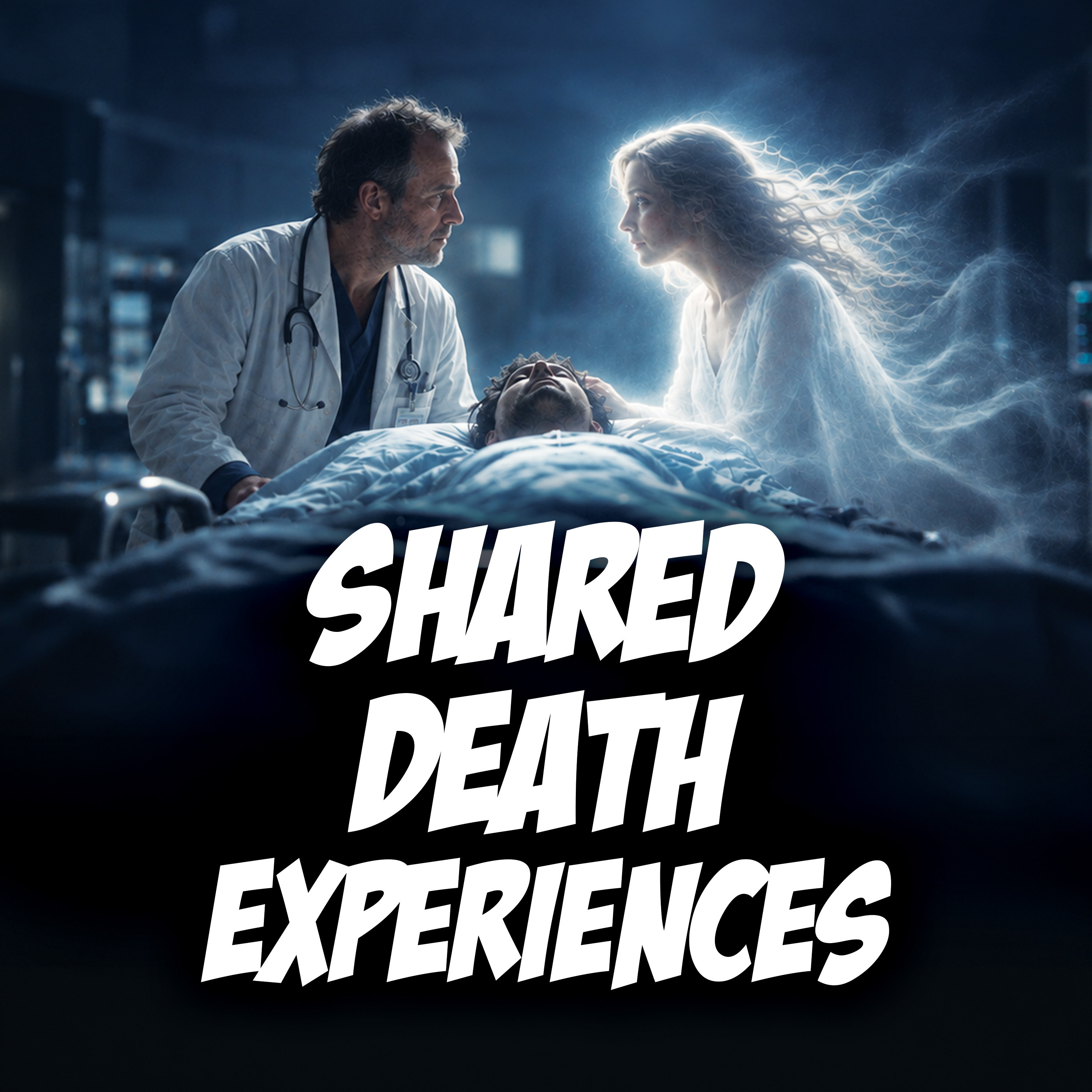 What Really Happens After Death - Doctors & Nurses Are Afraid To Tell You
Mayim Bialik's Breakdown · Oct 16, 2026 · 49 min
Mayim Bialik and Jonathan Cohen explore shared death experiences and after-death communication, drawing on clips from Raymond Moody, Bruce Greyson, Martha Jo Atkins and Tara Swart.
More from Mayim Bialik's Breakdown
 Fast & Furious Star Michelle Rodriguez on an Ancient Toltec Prophecy, Lucid Dreaming & the Psychic Proof That Made Her Believe
Nov 24, 2026 · 49 min
Actress Michelle Rodriguez tells Mayim Bialik and Jonathan Cohen about her path into acting, addiction, spiritual searching, and the Toltec teachings in her new book.
 UFO Crash Program Hidden From Presidents for 80 Years. “Age Of Disclosure” Director and Producer Dan Farah on Senior Government Officials, Navy SEAL Recoveries and Why He Believes Non-Human Craft Operate in Our Oceans
Nov 20, 2026 · 51 min
Mayim Bialik interviews filmmaker Dan Farah about his documentary The Age of Disclosure, the alleged Legacy UAP crash-retrieval program, and the ongoing government disclosure process.
 Part Two: Aliens Are Talking to the Military. Why A Psychic Was Sent In to Question One | Dr. Jacques Vallée
Nov 18, 2026 · 52 min
UFO researcher Jacques Vallée tells Mayim Bialik and Jonathan Cohen about religion and UFOs, a psychic's alleged contact with an entity, his teenage sighting, and remote viewing at SRI.
 Aliens Are Talking to the Military. Why A Psychic Was Sent In to Question One | Dr. Jacques Vallée
Nov 17, 2026 · 52 min
UFO researcher Jacques Vallée tells Mayim Bialik and Jonathan Cohen about UFO crashes, anomalous material samples, disclosure, and repeat experiencers.
 Re-Air: Crypto Conspiracy Exposed: Hidden Bribes Threaten U.S. Security - Jon Favreau
Nov 13, 2026 · 1 h 15 min
Mayim Bialik and Jonathan Cohen talk with former Obama speechwriter Jon Favreau about polarization, DOGE, the Big Beautiful Bill, Trump's meme coin and Democrats' path forward.
From the publisher
This week, in honor of National Family Caregivers Month, we’re revisiting an amazing episode from last year with Dr. Martha Jo Atkins, licensed end-of-life counselor and death doula. Drawing on decades of guiding people through their final moments, she reveals the spiritual, biological, emotional, and psychological changes that occur when consciousness leaves the body—offering profound insights into life after death and the mysteries of the dying process. You’ll hear jaw-dropping stories of deathbed visions, including dream shifts, visits from deceased loved ones, and shared death experiences where relatives actually feel what the dying person is experiencing. Dr. Atkins shares what she’s witnessed that made her believe in the afterlife, what understanding death can teach us about living, and her own supernatural encounters—from speaking to deceased loved ones in dreams to eerie hospice hauntings. Dr. Atkins also breaks down: Why we’re so afraid to talk about death—and how doing so makes us more human How sensory perception shifts as people begin to let go, and the signs that death is near The difference between a natural death and dying before your time—and what that means for the soul’s journey Could Ketamine-Assisted Psychotherapy help us process grief in healthier ways? Why presence matters most in a loved one’s final days How our treatment of elders reflects our values as a society, and why end-of-life care matters deeply Plus, Mayim opens up about the raw, painful, yet beautiful experience of caregiving for her father in his final days. Whether you’re grieving, caregiving, or simply seeking answers to what happens when we die, or wondering what leaves the body when we die, this episode offers rare wisdom and comfort for life’s most inevitable transition. Quince: Go to https://www.quince.com/ or download the Quince app for free shipping on your order and 365-day returns. Go to https://helixsleep.com/breakdown to receive up to 30% off your Helix mattress. Follo…
Summary, chapters and key points were generated from the episode transcript on November 28, 2026. Quotes are checked word for word against the transcript.