
Dominic Sandbrook
British historian, author and co-host of The Rest Is History
Dominic Sandbrook (British historian, author and co-host of The Rest Is History) hosts The Rest Is History. Topics they speak about most include Mayerling incident, Burr–Hamilton duel, Fall of Maximilien Robespierre.
In their words
Positions and remarks grouped by topic, each with the exact quote and where it was said.
Mayerling incident6 of 8
Sandbrook contends Rudolf was not a very consequential figure yet his story continues to resonate, as seen by the flowers at his tomb.
“you could argue he was not a terribly consequential person. But there's clearly something about his story that speaks to people”
The Rest Is History: 690. A Murderous Affair: Death at Mayerling (Part 2) (Jul 22, 2026) · Listen from 1:07:07
Sandbrook argues that historians' treatment of Mayerling as symptomatic of imperial decline is largely overblown, as the deaths are explained by Rudolf's personal condition.
“But as with the Titanic, I think a lot of this is massively overblown. So we know why Mary and Rudolf killed themselves”
The Rest Is History: 690. A Murderous Affair: Death at Mayerling (Part 2) (Jul 22, 2026) · Listen from 1:07:37
Sandbrook suspects the story of Mary's delayed curtsy to Stephanie at the German embassy reception was invented afterwards.
“supposedly it's a moment, I think this is made up actually, where Stephanie and Mary came face to face”
The Rest Is History: 690. A Murderous Affair: Death at Mayerling (Part 2) (Jul 22, 2026) · Listen from 26:31
Sandbrook argues it is impossible to know how far Mary was coerced into the pact given Rudolf's age and status.
“We cannot know how much she was coerced. You know, he's 30. He's the crown prince”
The Rest Is History: 690. A Murderous Affair: Death at Mayerling (Part 2) (Jul 22, 2026) · Listen from 22:56
Sandbrook expresses doubt about the popular story that Mitzi Kaspar reported Rudolf's death-pact talk to the police, noting Morton's book mentions only her laughing.
“I'm not convinced how true that, I mean, it may be true”
The Rest Is History: 690. A Murderous Affair: Death at Mayerling (Part 2) (Jul 22, 2026) · Listen from 22:09
Sandbrook characterizes Rudolf as a deeply troubled man, likely suffering from gonorrhoea and on morphine, and stifled by his role.
“He's almost certainly suffering from incurable gonorrhoea. He's probably off his face on morphine, and he is suffocated by the kind of expectations of his role as crown prince”
The Rest Is History: 690. A Murderous Affair: Death at Mayerling (Part 2) (Jul 22, 2026) · Listen from 4:47
Burr–Hamilton duel6 of 8
Sandbrook says stories of Burr celebrating in New York taverns were untrue, as he actually fled south to Georgia.
“I mean, this is actually just totally untrue. Because actually what happened is that Burr fled New York straight away and he went all the way south to Georgia”
The Rest Is History: 685. Hamilton: Duel to the Death (Part 3) (Jul 5, 2026) · Listen from 1:06:50
Sandbrook concludes it is most likely that Hamilton fired first and deliberately missed.
“I think it's very plausible that Hamilton did fire first and he ostentatiously missed fire. That seems most likely to me”
The Rest Is History: 685. Hamilton: Duel to the Death (Part 3) (Jul 5, 2026) · Listen from 59:29
Sandbrook rejects the death-wish theory about Hamilton's show with his glasses, arguing he was taunting Burr.
“I think that's highly unlikely. I think he's basically just trolling Burr. He's taunting him. He's winding him up”
The Rest Is History: 685. Hamilton: Duel to the Death (Part 3) (Jul 5, 2026) · Listen from 50:38
Sandbrook believes Hamilton declined the hair trigger because he feared being accused of cheating.
“I think the answer is obvious. Hamilton is very anxious about He doesn't want to be accused of cheating because that would be very bad for his reputation”
The Rest Is History: 685. Hamilton: Duel to the Death (Part 3) (Jul 5, 2026) · Listen from 47:47
Sandbrook notes the cynical interpretation that Hamilton's pre-duel statement functioned as a press release to blacken Burr's name after his death.
“you could argue it's basically a press release. it would be used after his death to blacken Burr's name”
The Rest Is History: 685. Hamilton: Duel to the Death (Part 3) (Jul 5, 2026) · Listen from 40:43
Sandbrook judges Hamilton's reply to Burr as unconciliatory and somewhat pedantic and smug.
“It's important to say this is not at all a conciliatory letter. There's something perhaps a little bit pedantic, a little bit smug about Hamilton's letter”
The Rest Is History: 685. Hamilton: Duel to the Death (Part 3) (Jul 5, 2026) · Listen from 28:55
Fall of Maximilien Robespierre6 of 7
Sandbrook judges that Robespierre made too many enemies and that his final speech was a catastrophic misjudgment.
“He made too many enemies. He was really poor at making friends. And his speech, in particular, was a catastrophic misjudgment”
The Rest Is History: 712. The Terror: The Fall of Robespierre (Part 6) (Oct 7, 2026) · Listen from 1:26:17
Sandbrook says Robespierre most likely shot himself in a botched suicide attempt rather than being shot by a trooper.
“But he shot himself, made a mess of it, shot himself in the jaw”
The Rest Is History: 712. The Terror: The Fall of Robespierre (Part 6) (Oct 7, 2026) · Listen from 1:20:10
Sandbrook argues that Robespierre's indecision at the Hôtel de Ville shows he was not the tyrant his enemies claimed.
“If Robespierre had been the tyrant of his enemies' claims, if he had been the dictator, if he'd been the power-crazed despot that people said he was, this was his moment”
The Rest Is History: 712. The Terror: The Fall of Robespierre (Part 6) (Oct 7, 2026) · Listen from 1:14:28
Sandbrook argues that by not naming names Robespierre frightened deputies into resisting rather than into silence.
“instead of intimidating them into silence, he's actually scaring them into answering back”
The Rest Is History: 712. The Terror: The Fall of Robespierre (Part 6) (Oct 7, 2026) · Listen from 47:22
Sandbrook argues Robespierre's great mistake in his final speech was making vague threats without naming targets.
“his great mistake, same as Couton at the club before the break, he's made some very vague threats and allegations about monsters and conspirators”
The Rest Is History: 712. The Terror: The Fall of Robespierre (Part 6) (Oct 7, 2026) · Listen from 44:49
Sandbrook compares Robespierre's withdrawal and veiled attacks on his own government to Tony Benn's conduct in the 1970s.
“Anyway, do you know who this reminds me of, actually? Tony Benn in the 1970s. It's exactly what Tony Benn did”
The Rest Is History: 712. The Terror: The Fall of Robespierre (Part 6) (Oct 7, 2026) · Listen from 25:07
Gallipoli campaign6 of 7
Sandbrook argues that even a successful Gallipoli operation would have achieved little, since the fleet could not have taken Constantinople.
“But the mad thing is, even if the Gallipoli campaign had worked. So what? So what?”
The Rest Is History: 676. The First World War: Churchill’s Calamity (Part 6) (Jun 3, 2026) · Listen from 58:50
Sandbrook contends that blaming the Gallipoli generals is too harsh because politicians placed them in an impossible situation.
“I think blaming the generals for this is too harsh. They're in an impossible situation and it's, you know, it's Churchill's fault”
The Rest Is History: 676. The First World War: Churchill’s Calamity (Part 6) (Jun 3, 2026) · Listen from 32:45
Sandbrook says the planners of D-Day were shaped by the lesson of Gallipoli's failure.
“Gallipoli is at the back of their minds all through D-Day because it was such a shambles”
The Rest Is History: 675. The First World War: Slaughter at Gallipoli (Part 5) (May 31, 2026) · Listen from 57:41
Sandbrook defends Sir Ian Hamilton, saying he was not a donkey though critics could call him a dilettante.
“I mean, he's definitely not a donkey. If you were being very critical of him, you'd say he was a bit of a dilettante”
The Rest Is History: 675. The First World War: Slaughter at Gallipoli (Part 5) (May 31, 2026) · Listen from 44:04
Sandbrook likens the War Council's decision to escalate after the naval defeat to American escalation in Vietnam.
“A really good analogy is Vietnam. You know, a humiliation or a defeat here would be so catastrophic for America's image abroad”
The Rest Is History: 675. The First World War: Slaughter at Gallipoli (Part 5) (May 31, 2026) · Listen from 39:13
Sandbrook argues that many War Council members treated the scheme as a low-cost sideshow and did not take it seriously enough.
“I think a lot of the people around the table just do not take this seriously enough”
The Rest Is History: 675. The First World War: Slaughter at Gallipoli (Part 5) (May 31, 2026) · Listen from 28:11
Other remarks
Sandbrook argues that had the royal family's flight to Varennes succeeded, France would have faced civil war.
“The result would have been a civil war in France”
The Rest Is History: 709. The Terror: The Execution of Marie Antoinette (Part 3) (Sep 27, 2026) · Listen from 53:26
Sandbrook likens Kaiser Wilhelm II's hectoring conduct toward the Austrians to Donald Trump's approach to diplomacy.
“you know, he's got a sort of Donald Trump approach to diplomacy”
The Rest Is History: 689. A Murderous Affair: The Habsburgs’ Greatest Scandal (Part 1) (Jul 19, 2026) · Listen from 1:03:44
Sandbrook judges Rudolf's Catholic faith to have been superficial at best.
“I think it is skin deep at best. I would guess. I don't think it's his bag at all”
The Rest Is History: 689. A Murderous Affair: The Habsburgs’ Greatest Scandal (Part 1) (Jul 19, 2026) · Listen from 52:27
Sandbrook believes Elisabeth probably suffered from depression, explaining her listlessness and recklessness.
“She probably suffers very badly from some form of mental health issue such as depression”
The Rest Is History: 689. A Murderous Affair: The Habsburgs’ Greatest Scandal (Part 1) (Jul 19, 2026) · Listen from 23:37
Sandbrook speculates that Elisabeth's sudden departure to Madeira may reflect severe postnatal depression.
“They might have had a row or I think quite possibly she's suffering extreme postnatal depression”
The Rest Is History: 689. A Murderous Affair: The Habsburgs’ Greatest Scandal (Part 1) (Jul 19, 2026) · Listen from 19:26
Sandbrook suggests the death of her daughter Sophie was a shattering blow from which Empress Elisabeth never recovered.
“I think this was probably for Cece, who was only 20 at the time, a shattering moment from which she probably never really recovered”
The Rest Is History: 689. A Murderous Affair: The Habsburgs’ Greatest Scandal (Part 1) (Jul 19, 2026) · Listen from 16:58
Deutschlandlied
Sandbrook gives his personal verdict that the current German anthem is good and that he would sing it enthusiastically if German.
“I think if I was German, I would sing it with great enthusiasm”
The Rest Is History: 679. Germany: The Song Hitler Stole (Part 3) (Jun 14, 2026) · Listen from 1:07:27
Sandbrook states that polls in the early 1950s showed a majority of West Germans backed Adenauer's wish to restore the old anthem.
“polls showed that Adenauer spoke for the majority. So seven out of 10 people in the early 50s said, come on, we want the old one back”
The Rest Is History: 679. Germany: The Song Hitler Stole (Part 3) (Jun 14, 2026) · Listen from 45:02
Sandbrook says the song was originally a liberal rather than conservative idea, beloved of students and poets.
“And at the time, this is not a conservative idea. It's a liberal idea. So the people who are singing this song”
The Rest Is History: 679. Germany: The Song Hitler Stole (Part 3) (Jun 14, 2026) · Listen from 17:24
Sandbrook argues that 'Deutschland über alles' was a call for Germans to put unity above regional loyalties, not a militaristic or expansionist slogan.
“Hoffman would have been amazed to hear people say this is militaristic and a call for expansionism”
The Rest Is History: 679. Germany: The Song Hitler Stole (Part 3) (Jun 14, 2026) · Listen from 16:34
Sandbrook claims the German anthem has perhaps the most fascinating history of any national anthem, including Britain's.
“I think it has actually perhaps the most fascinating history of any national anthem, including Tom Our Own”
The Rest Is History: 679. Germany: The Song Hitler Stole (Part 3) (Jun 14, 2026) · Listen from 6:52
Sandbrook argues that the German anthem is commonly misnamed in Britain and is actually titled Das Lied der Deutschen, written in 1841.
“Actually, it's not called Deutschland über alles. It was written in 1841”
The Rest Is History: 679. Germany: The Song Hitler Stole (Part 3) (Jun 14, 2026) · Listen from 4:06
The Star-Spangled Banner
Sandbrook maintains that the art can be separated from the artist, pointing to an 1844 abolitionist rewrite of the anthem.
“I think we've generally always had the position on the show that you can separate the art from the artist”
The Rest Is History: 677. USA: The Star-Spangled Banner (Part 1) (Jun 7, 2026) · Listen from 1:04:22
Sandbrook argues the song beat America the Beautiful because of its military associations and a veterans' petition campaign.
“The Star Spangled Banner won precisely because of its military associations. So the lobby group, the Veterans of Foreign Wars, organized a petition”
The Rest Is History: 677. USA: The Star-Spangled Banner (Part 1) (Jun 7, 2026) · Listen from 58:26
Sandbrook notes that the song's exceptional vocal range makes it difficult even for professional singers.
“The Star Spangled Banner demands a range of 19 semitones, and even some professional singers are not capable of that range”
The Rest Is History: 677. USA: The Star-Spangled Banner (Part 1) (Jun 7, 2026) · Listen from 55:47
Sandbrook says early efforts to make the song the anthem failed over its British melody and other objections, not its slavery reference.
“And the reason he keeps losing is not because of the words hireling and slave. It's because, A, some people say it's a British melody”
The Rest Is History: 677. USA: The Star-Spangled Banner (Part 1) (Jun 7, 2026) · Listen from 55:04
Sandbrook rejects the popular story that Key wrote the poem on the back of an envelope, noting envelopes were rarely used in 1814.
“So you will often read on the internet that he writes it on the back of an envelope that he'd found in his pocket”
The Rest Is History: 677. USA: The Star-Spangled Banner (Part 1) (Jun 7, 2026) · Listen from 21:02
Winston Churchill and the Dardanelles
Sandbrook doubts that Churchill truly learned from Gallipoli, seeing his love of risky schemes as part of his character.
“So did he really learn from it? I don't think he did, actually. I think it's always part of his character”
The Rest Is History: 676. The First World War: Churchill’s Calamity (Part 6) (Jun 3, 2026) · Listen from 1:04:42
Sandbrook finds Churchill's description of Gallipoli as stakes Britain could afford to lose more shocking than his use of the word gamble.
“But the shocking thing about that to me is not the word gamble. It's the stakes we could afford to lose because the stakes”
The Rest Is History: 676. The First World War: Churchill’s Calamity (Part 6) (Jun 3, 2026) · Listen from 1:02:07
Sandbrook, citing Andrew Roberts, argues that Churchill was the primary culprit and deserved to be blamed.
“And Churchill is definitely the primary culprit. Even Andrew Roberts in his biography says, you know, he's the scapegoat in chief, but he deserves to be the scapegoat in chief”
The Rest Is History: 676. The First World War: Churchill’s Calamity (Part 6) (Jun 3, 2026) · Listen from 1:01:11
Sandbrook says Churchill's decision to serve on the Western Front is where the comparison with Boris Johnson breaks down.
“And I think this is the point where the comparison with, yeah, Boris Johnson evaporates”
The Rest Is History: 676. The First World War: Churchill’s Calamity (Part 6) (Jun 3, 2026) · Listen from 53:50
Sandbrook compares Churchill's grandiose post-dismissal rhetoric about the Dardanelles to Boris Johnson.
“You know who he reminds me of there? I mean, who he undoubtedly is like. He is Boris Johnson at this point”
The Rest Is History: 676. The First World War: Churchill’s Calamity (Part 6) (Jun 3, 2026) · Listen from 34:15
History of wine
Sandbrook disagreed with Holland's framing of wine history as partnership, arguing it is about competition.
“That's a nice note on which to end. I think it's about competition, frankly,”
The Rest Is History: 666. Wine and the Birth of Civilisation (May 3, 2026) · Listen from 1:11:58
Sandbrook noted that wine drinking in England remained elite, with most English people not drinking wine as late as the 1950s.
“as late as the 1950s most english people never ever drank wine in any given year”
The Rest Is History: 666. Wine and the Birth of Civilisation (May 3, 2026) · Listen from 57:13
Sandbrook argued that wine retained prestige after Rome because it was a marker of sophistication tied to Roman culture.
“Isn't the point that wine then, as now, is a marker of sophistication?”
The Rest Is History: 666. Wine and the Birth of Civilisation (May 3, 2026) · Listen from 24:45
Sandbrook suggested post-Roman barbarians preferred beer partly because it is easier to produce.
“Well, beer is easier to produce. You don't need such a sophisticated system to produce beer”
The Rest Is History: 666. Wine and the Birth of Civilisation (May 3, 2026) · Listen from 23:53
Sandbrook said Georgians consider their country the oldest wine-producing place on earth and that most people would agree.
“They argue that Georgia is the place on earth where wine has been produced for longer than anywhere else”
The Rest Is History: 666. Wine and the Birth of Civilisation (May 3, 2026) · Listen from 10:44
Habsburg monarchy
Sandbrook argues Franz Joseph's personal suffering became a political asset, with the press presenting him as a man of sorrows devoted to his peoples.
“his suffering actually worked quite well as a political asset because the papers would call him the man of sorrows”
The Rest Is History: 690. A Murderous Affair: Death at Mayerling (Part 2) (Jul 22, 2026) · Listen from 1:13:31
Sandbrook doubts that Rudolf's marriage would actually have been annulled, given Habsburg attitudes.
“Personally, I don't think they were going to do that, because I think that would have been a very difficult thing for a family like the Habsburgs to accept”
The Rest Is History: 689. A Murderous Affair: The Habsburgs’ Greatest Scandal (Part 1) (Jul 19, 2026) · Listen from 52:13
Sandbrook agrees that Franz Joseph and Elizabeth II were comparable monarchs who chose to embody continuity amid change.
“I think they're both monarchs who, in an age of change, decide to play the part. They decide to become the embodiments of continuity”
The Rest Is History: 689. A Murderous Affair: The Habsburgs’ Greatest Scandal (Part 1) (Jul 19, 2026) · Listen from 10:11
Sandbrook argues that Franz Joseph's emotional coldness helps explain how Rudolf turned out.
“not a man who will show strong feeling to his son, which I think is a factor in explaining how Crown Prince Rudolf gets to where he gets to”
The Rest Is History: 689. A Murderous Affair: The Habsburgs’ Greatest Scandal (Part 1) (Jul 19, 2026) · Listen from 9:04
Brazilian National Anthem
Sandbrook recounts that land-reform protesters in the 1990s sang the anthem, one saying it was the best way to stop police attacking them.
“it was the best way to stop the police from attacking us. They had no way of shooting at unarmed people who were singing the Brazilian national anthem”
The Rest Is History: 681. Brazil: The Emperor’s Anthem (Part 5) (Jun 21, 2026) · Listen from 1:00:13
Sandbrook judges the current anthem lyrics generic, flowery and meaningless.
“They're so generic and so flowery and meaningless, I think. I just don't think they're great”
The Rest Is History: 681. Brazil: The Emperor’s Anthem (Part 5) (Jun 21, 2026) · Listen from 55:36
Sandbrook reports that historians regard Ovídio Saraiva's 1831 lyrics as terrible, notable mainly for their hostility to the Portuguese.
“the general consensus among historians is that Ovidio Sarraiva's lyrics for this anthem are absolutely terrible”
The Rest Is History: 681. Brazil: The Emperor’s Anthem (Part 5) (Jun 21, 2026) · Listen from 37:25
Sandbrook contends that Brazil's anthem long lacked lyrics because its fundamental instability made a unifying national story impossible to agree on.
“It's hard to tell a collective story about Brazil's history behind which everybody can unite. And that explains why for so long, The national anthem didn't have any lyrics”
The Rest Is History: 681. Brazil: The Emperor’s Anthem (Part 5) (Jun 21, 2026) · Listen from 8:32
Lusitania conspiracy theories
Sandbrook observes that conspiracy theories blaming Britain are popular among American isolationists.
“they're very popular among sort of American isolationists who would now probably be of quite a MAGA tendency”
The Rest Is History: 673. The First World War: The Submarine Strikes (Part 3) (May 24, 2026) · Listen from 1:00:55
Sandbrook rejects the claim that Churchill deliberately exposed the Lusitania, noting an escort would have made no sense for so fast a ship.
“this is clearly complete rubbish. So basically, it would have been mad to give the Lusitania an escort, because the Lusitania was so fast”
The Rest Is History: 673. The First World War: The Submarine Strikes (Part 3) (May 24, 2026) · Listen from 1:02:28
Sandbrook dismisses the theory that the second explosion came from secret explosives, attributing it to the boilers.
“I think this is bonkers. Most historians think this is bonkers. And what was actually happening was something to do with the boilers”
The Rest Is History: 673. The First World War: The Submarine Strikes (Part 3) (May 24, 2026) · Listen from 48:54
Sandbrook argues that U-20 encountered the Lusitania by chance rather than deliberately targeting it.
“they end up coming across it by chance rather than by design”
The Rest Is History: 673. The First World War: The Submarine Strikes (Part 3) (May 24, 2026) · Listen from 28:14
Ku Klux Klan
Sandbrook says Klan violence in Texas towns such as Goose Creek amounted to a reign of terror concealed by local officials who were themselves Klansmen.
“Klan vigilantes had conducted, I mean, genuinely a kind of reign of terror in the small town Goose Creek. The local people had been completely cowed into submission”
The Rest Is History: 656. The Ku Klux Klan: Birth of a Nation (Part 3) (Mar 29, 2026) · Listen from 1:11:34
Sandbrook describes the Dallas Klan's funding of Hope Cottage as evidence that the Klan often behaved like an ordinary charitable fraternal body.
“the Dallas branch of the Klan raised $85,000 to restore it. And they presented it as a gift to the city of Dallas at the Texas State Fair”
The Rest Is History: 656. The Ku Klux Klan: Birth of a Nation (Part 3) (Mar 29, 2026) · Listen from 1:07:17
Sandbrook notes the Klan's 1922 electoral success in Texas, including the election of avowed Klansman Earl Mayfield to the US Senate.
“they elected their first avowed Klansman as a U.S. senator, who was a guy called Earl Mayfield, a Democrat, a fan of prohibition”
The Rest Is History: 656. The Ku Klux Klan: Birth of a Nation (Part 3) (Mar 29, 2026) · Listen from 1:06:47
Sandbrook says the Klan in Oregon won near-total legislative control and pushed through a referendum banning Catholic schools, later struck down by the courts.
“the Klan pushed through a referendum to ban Catholic schools in the state of Oregon. Now, this measure was later thrown out by the courts”
The Rest Is History: 656. The Ku Klux Klan: Birth of a Nation (Part 3) (Mar 29, 2026) · Listen from 1:05:25
Slavery in the United States
Sandbrook says Jefferson has been at the center of a culture war over America's founding sin for at least three decades.
“he's been the center, hasn't he, of what can only be described as a culture war that has raged for at least 30 years”
The Rest Is History: 686. Jefferson: The Betrayal of Liberty (Part 4) (Jul 8, 2026) · Listen from 31:22
Sandbrook gives his personal view that Key's lyric was probably aimed at escaping slaves who aided the British.
“And personally, I think his text probably is aimed at slaves who are trying to escape and are helping the British”
The Rest Is History: 677. USA: The Star-Spangled Banner (Part 1) (Jun 7, 2026) · Listen from 1:04:13
Sandbrook contends that both the wartime context and Key's own views give reason to think the verse referred to African-American slaves.
“There are reasons to think that Key was talking about African-American slaves. And one is to do with the context, and the other is to do with Key himself”
The Rest Is History: 677. USA: The Star-Spangled Banner (Part 1) (Jun 7, 2026) · Listen from 37:51
George Washington
Sandbrook argues Washington was chosen president because only he had the dignity and self-control to transcend factional and regional divisions.
“he's the only one of the founding fathers. who has the dignity and the self-control and the kind of paternalistic vibe that allows him to transcend all the factional and regional differences”
The Rest Is History: 683. Washington: Hero of the Revolution (Part 1) (Jun 28, 2026) · Listen from 1:10:35
Sandbrook assesses Washington as a poor battlefield tactician but brilliant at managing his men.
“on the battlefield, Washington is not a brilliant tactician at all. I mean, he loses most of his battles, but he's brilliant”
The Rest Is History: 683. Washington: Hero of the Revolution (Part 1) (Jun 28, 2026) · Listen from 36:15
Sandbrook argues Washington resented being denied a royal commission after the Seven Years' War, believing the British looked down on him as a colonial.
“he was denied a royal commission by his British superiors. They said, no, you know, he's not quite good enough or whatever. And he felt a deep sense of resentment”
The Rest Is History: 683. Washington: Hero of the Revolution (Part 1) (Jun 28, 2026) · Listen from 13:15
Predictions
1 came true
- Came true
Sandbrook states that Christopher Nolan's film of The Odyssey was due for release on 17 July.
“Christopher Nolan, by an extraordinary coincidence, has made a film of The Odyssey that is coming out later this week”
The Rest Is History: 687. The Odyssey: Hero of the Trojan Horse (Part 1) (Jul 12, 2026) · Listen from 5:01 · The Odyssey (2026 film)
Christopher Nolan's The Odyssey premiered in London on July 6, 2026, and Universal released it in US and UK cinemas on July 17, 2026, within the week after the July 12 episode. The Hollywood Reporter recorded a $124 million opening weekend.
Sources: The Odyssey (2026 film) - Wikipedia · The Odyssey Box Office: Christopher Nolan Opening at $124 Million
Checked Oct 9, 2026
Podcasts hosted
- The Rest Is History · 24 episodes in TMT
Appearances
 712. The Terror: The Fall of Robespierre (Part 6)
The Rest Is History · Oct 7, 2026 · 1 h 37 min
Dominic Sandbrook and Tom Holland recount the summer of 1794, the coup of 9 Thermidor and the execution of Robespierre, concluding their French Revolution series.
- 709. The Terror: The Execution of Marie Antoinette (Part 3)
The Rest Is History · Sep 27, 2026 · 1 h 12 min
Tom Holland and Dominic Sandbrook recount Marie Antoinette's imprisonment, trial and execution in 1793, Jacques Hébert's campaign against her, and her son Louis Charles's fate.
- 691. Elizabeth I vs The Catholics: The Queen’s Spymaster (Part 1)
The Rest Is History · Jul 26, 2026 · 1 h 12 min
Tom Holland and Dominic Sandbrook open a series on Elizabeth I's Catholic enemies, focusing on William Cecil, Mary Queen of Scots, the Ridolfi plot and the papal excommunication.
- 690. A Murderous Affair: Death at Mayerling (Part 2)
The Rest Is History · Jul 22, 2026 · 1 h 19 min
Dominic Sandbrook and Tom Holland recount the affair of Crown Prince Rudolf and Mary Vetsera, the Mayerling murder-suicide of 1889, its cover-up and aftermath.
- 689. A Murderous Affair: The Habsburgs’ Greatest Scandal (Part 1)
The Rest Is History · Jul 19, 2026 · 1 h 13 min
Tom Holland and Dominic Sandbrook set the scene for the 1889 Mayerling incident, tracing Crown Prince Rudolf's troubled family, 1880s Vienna, and his first meetings with Mary Vetsera.
- 688. The Odyssey: Return of the King (Part 2)
The Rest Is History · Jul 15, 2026 · 1 h 6 min
Tom Holland and Dominic Sandbrook retell the second half of Homer's Odyssey, from Telemachus's journey and Calypso's island to the slaughter of the suitors and reunion with Penelope.
- 687. The Odyssey: Hero of the Trojan Horse (Part 1)
The Rest Is History · Jul 12, 2026 · 1 h 12 min
Tom Holland and Dominic Sandbrook retell the first half of Homer's Odyssey, from Troy's fall to Calypso's island, and probe its roots in Greek colonisation.
- 686. Jefferson: The Betrayal of Liberty (Part 4)
The Rest Is History · Jul 8, 2026 · 1 h 22 min
Tom Holland and Dominic Sandbrook conclude their Founding Fathers series with Thomas Jefferson's political career, his relationship with Sally Hemings, and his betrayal of liberty through slavery.
- 685. Hamilton: Duel to the Death (Part 3)
The Rest Is History · Jul 5, 2026 · 1 h 16 min
Tom Holland and Dominic Sandbrook recount Alexander Hamilton's rise, his feud with Aaron Burr, and the disputed 1804 Weehawken duel that killed him.
- 684. Franklin: Revenge of the American Genius (Part 2)
The Rest Is History · Jul 1, 2026 · 1 h 13 min
Tom Holland and Dominic Sandbrook trace Benjamin Franklin's life from Puritan Boston boyhood and Enlightenment fame to revolutionary diplomat, Constitution signatory and late abolitionist.
- 683. Washington: Hero of the Revolution (Part 1)
The Rest Is History · Jun 28, 2026 · 1 h 16 min
Dominic Sandbrook and Tom Holland trace George Washington's origins and character and examine the winter at Valley Forge in 1777–78 that made his reputation.
- 682. South Africa: Mandela and the Death of Apartheid (Part 6)
The Rest Is History · Jun 24, 2026 · 1 h 11 min
Tom Holland and Dominic Sandbrook trace South Africa's anthem Nkosi Sikelel' iAfrika, the fall of apartheid, and Nelson Mandela's use of the 1995 Rugby World Cup final.
 681. Brazil: The Emperor’s Anthem (Part 5)
The Rest Is History · Jun 21, 2026 · 1 h 10 min
Tom Holland and Dominic Sandbrook trace Brazil's national anthem from Dom Pedro I's independence hymn through decades without lyrics to its 1922 text and protest uses.
- 679. Germany: The Song Hitler Stole (Part 3)
The Rest Is History · Jun 14, 2026 · 1 h 13 min
Tom Holland and Dominic Sandbrook trace the history of Germany's national anthems, from Haydn's Austrian hymn through Nazi, West and East German anthems to reunification.
- 677. USA: The Star-Spangled Banner (Part 1)
The Rest Is History · Jun 7, 2026 · 1 h 11 min
Dominic Sandbrook and Tom Holland trace the Star-Spangled Banner from the 1814 bombardment of Fort McHenry to its adoption as anthem and the controversy over slavery.
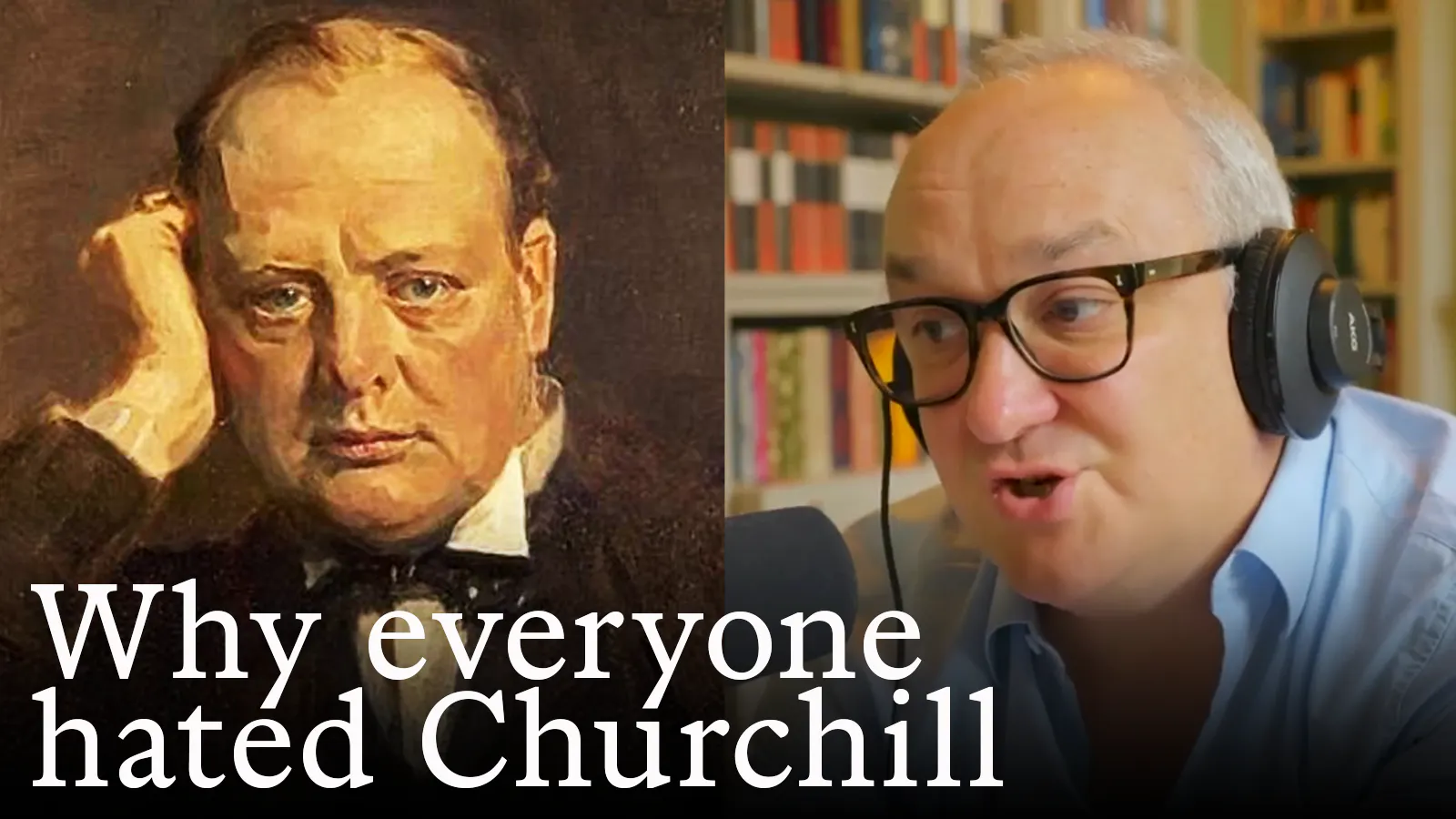 676. The First World War: Churchill’s Calamity (Part 6)
The Rest Is History · Jun 3, 2026 · 1 h 17 min
Tom Holland and Dominic Sandbrook conclude the Gallipoli campaign, covering Churchill's fall, the failed August Offensive, the evacuation, and the birth of the Anzac legend.
 675. The First World War: Slaughter at Gallipoli (Part 5)
The Rest Is History · May 31, 2026 · 1 h 17 min
Tom Holland and Dominic Sandbrook recount the origins of the Gallipoli campaign, Churchill's Dardanelles scheme, and the bloody Allied landings of 25 April 1915.
 674. The First World War: The Spy Who Took on the Germans (Part 4)
The Rest Is History · May 27, 2026 · 1 h 8 min
Dominic Sandbrook and Tom Holland recount the life, resistance work, trial and 1915 execution of British nurse Edith Cavell in German-occupied Belgium, and her posthumous legend.
- 673. The First World War: The Submarine Strikes (Part 3)
The Rest Is History · May 24, 2026 · 1 h 17 min
Tom Holland and Dominic Sandbrook recount the 1915 sinking of the RMS Lusitania by U-20, its conspiracy theories, propaganda aftermath and effect on American opinion.
- 668. Greece vs Persia: The Rise of the First Superpower (Part 1)
The Rest Is History · May 10, 2026 · 1 h 13 min
Tom Holland and Dominic Sandbrook trace Darius I's rise, the Ionian Revolt and Athens' role in burning Sardis, leading up to the Persian landing at Marathon in 490 BC.
- 667. The Mystery of the Mona Lisa
The Rest Is History · May 6, 2026 · 1 h 10 min
Tom Holland and Dominic Sandbrook trace the Mona Lisa's origins, the debate over its sitter, and how it became the world's most famous painting.
- 666. Wine and the Birth of Civilisation
The Rest Is History · May 3, 2026 · 1 h 16 min
Tom Holland and Dominic Sandbrook trace the history of wine through seven key moments, from Neolithic Georgia and Rome to Islam, English bottles, French terroir and the 1976 Judgement of Paris.
- 658. Dawn of the Samurai: The Shadow of the Sword (Part 1)
The Rest Is History · Apr 5, 2026 · 1 h 3 min
Tom Holland and Dominic Sandbrook trace the origins of Japan's samurai, from the Tokugawa shogunate and the Bushido myth back to the 10th-century warlord Taira no Masakado.
- 656. The Ku Klux Klan: Birth of a Nation (Part 3)
The Rest Is History · Mar 29, 2026 · 1 h 15 min
Tom Holland and Dominic Sandbrook trace the 1915 rebirth of the Ku Klux Klan as a mass fraternal, marketing-driven, anti-Catholic movement.
Often appears with
- Tom Holland · 24 shared episodes
- Paul Rouse · 1 shared episode