
What Does it Mean to Be an American?
Episode of Pod Save America · May 31, 2026 · 1 h 20 min
Jon Favreau talks with Ben Rhodes about his book "All We Say," tracing the 250-year argument over American identity through fifteen consequential speeches.
Summary
Jon Favreau interviewed fellow former Obama speechwriter Ben Rhodes about his book "All We Say: A History of the United States in 15 Speeches," published around the United States' 250th anniversary. Rhodes described the book as the final part of a trilogy that let him come to terms with the end of the Obama era, and explained that he framed American history as a contest between an inheritance-based, blood-and-soil nationalism and a creedal, progressive nationalism rooted in the Declaration of Independence. He opened the book with JD Vance's Claremont speech, which he said articulated the first story openly, and argued that all citizens are equally American regardless of lineage.
The two discussed individual speeches: Benjamin Franklin's closing argument at the Constitutional Convention on the virtue of compromise and his warning about despotism; Alexander Stephens's Cornerstone Speech, which Rhodes said recast white supremacy as an enlightened moral truth; Lincoln's second inaugural; Frederick Douglass's defense of Chinese immigrants; Martin Luther King Jr.'s ad-libbed "I Have a Dream" passage; and Obama's 2008 race speech, which Favreau helped draft. Rhodes argued that activists like Douglass and King claimed America's founding language rather than rejecting it, while reactionaries have appropriated progressive heroes.
Favreau and Rhodes lamented the absence of moral, often religiously inflected language in contemporary Democratic politics, with Rhodes suggesting such language would serve a 2028 presidential candidate. Discussing Trump's second inaugural, both argued that Trump's departure from American tradition lies in his dictatorial disregard for the constitutional framework rather than in his populism or xenophobia. Rhodes said Democrats should link democracy and economic messages, citing Jon Ossoff, Raphael Warnock, Chris Murphy and Alexandria Ocasio-Cortez as circling that argument.
Chapters
- 3:55
The book as the end of a trilogy
Rhodes explains how writing "All We Say" completed his memoir trilogy and helped him make peace with the end of the Obama era.
- 8:09
Opening with JD Vance's Claremont speech
Rhodes lays out the two competing stories of American identity and explains why Vance's speech framed the inheritance-based version.
- 15:20
Immigration and equal citizenship
Rhodes and Favreau discuss immigrant stories in the book and argue that no American is more American than another.
- 21:56
Franklin and the virtue of compromise
Rhodes discusses Franklin's closing Constitutional Convention speech and his warning about despotism, which ends the book.
- 27:28
The book's structure and Alexander Stephens
Rhodes outlines the first five speeches and analyzes Stephens's Cornerstone Speech framing white supremacy as a moral truth.
- 34:35
Appropriating Douglass and King
The hosts discuss how reactionaries repackage progressive heroes and how activists claimed the founding documents as their own.
- 43:20
Lincoln's second inaugural and empathy
Rhodes recounts Lincoln's evolution, his framing of American slavery, and his meeting with Douglass after the speech.
- 47:28
Obama's race speech
Favreau and Rhodes revisit the writing of Obama's 2008 race speech, Reverend Wright, and the speech's treatment of white resentment.
- 59:57
Going high and going big: Douglass and King
Rhodes discusses Douglass's defense of Chinese immigrants and King's ad-libbed dream sequence at the March on Washington.
- 1:03:42
Moral and religious language in politics
The two argue Democrats have lost the moral language of past speakers and discuss Dolores Huerta and Bernie Sanders.
- 1:10:58
Trump's second inaugural as a departure
Favreau and Rhodes argue Trump's dictatorial rhetoric sets him apart from earlier reactionaries.
- 1:15:10
Winning the argument going forward
Rhodes urges Democrats to connect democracy and economic messages and names politicians attempting it, before the pair pick favorite speeches.
Key points
What was said, by whom, with the exact words. Timestamps jump to the moment.
- Ben Rhodes
Rhodes said that studying all of American history let him see Trump's election following Obama as part of a recurring pattern rather than an anomaly.
“reliving all of American history kind of allowed me to situate our experience in a continuum where it's actually not that unusual that this happened”
- Ben Rhodes
Rhodes argued that one of two competing American stories is an inheritance-based nationalism he likens to originalism or blood-and-soil nationalism.
“there is one story that is a nationality of inheritance that you can call it originalism. You can call it blood and soil nationalism”
- Ben Rhodes
Rhodes said Vance's Claremont speech openly articulated the inheritance-based story, which is why he opened the book with it.
“And so I actually think that JD did the service of framing the other story for me”
- Ben Rhodes
Rhodes argued that citizenship must be equal and that the U.S. is anchored in law and the Declaration's creed rather than lineage.
“How can some people be more American than other people? We are supposed to be a nation anchored in laws, the Constitution, and a creed, the Declaration of Independence”
- Jon Favreau
Favreau argued that the ability of anyone to become American is the core of American exceptionalism.
“anyone can come to America and become American. And like that, that is a very that is a unique, exceptional quality of America”
- Ben Rhodes
Rhodes noted that Franklin's closing convention speech said nothing about the Constitution's contents and focused entirely on compromise.
“The entire speech is about the virtue of compromise itself”
Listen from 24:00 · Benjamin Franklin's closing speech at the Constitutional Convention
- Ben Rhodes
Rhodes argued that Stephens presented white supremacy not as a necessary evil but as an enlightened discovery to motivate poor white Southerners.
“He turns white supremacy into like a progressive enlightenment discovery, philosophical moral truth, as you quoted”
- Ben Rhodes
Rhodes said conservatives such as Reagan appropriated King's rhetoric while omitting his demands on government.
“Reagan loved to cite King and the content of your character, not the color of your skin, while leaving out those parts”
Linked moment · 41:52Skip to 41:52 using a listen link in the info box.
Jon FavreauFavreau argued that the Declaration of Independence has fallen out of favor with national conservatives because activists used it to demand equality.
“Which, by the way, is why it has fallen out of favor with J.D. Vance and some of the national conservatives today”
- Ben Rhodes
Rhodes argued that advancing rights today requires embracing the whole American story, including its flawed founders, as Douglass and King did.
“if you want to persuade people and if you want to advance rights in this country, you actually have to embrace the whole story, like even the parts we don't like”
- Ben Rhodes
Rhodes described Lincoln's second inaugural as an unapologetic, near-religious case for abolition as a second founding.
“he does give an absolutely unapologetic and almost religious case for abolition as the second founding of the United States”
Listen from 45:40 · Abraham Lincoln's second inaugural address
- Ben Rhodes
Rhodes said he now sees Reverend Wright as part of the Black church jeremiad tradition shared by Douglass, Stewart and King.
“Reverend Wright emerges out of the black church tradition of the Jeremiad, which is a speech that is intended to call out a nation's sins”
- Ben Rhodes
Rhodes recounted that the dream passage was absent from King's prepared text and was ad-libbed.
“He did not have the dream in there. He ad-libbed the whole dream sequence”
- Ben Rhodes
Rhodes argued that Douglass's unpopular defense of Chinese immigrants may have ultimately prevailed despite the Chinese Exclusion Act.
“Maybe because he went high and he went big, maybe he won in the end”
Listen from 1:01:04 · Frederick Douglass's Composite Nation speech
- Ben Rhodes
Rhodes argued that a candidate who harnesses moral language about dignity and caring for one's neighbor would benefit in the 2028 presidential race.
“I think that kind of language, whoever can harness that and capture that, I think that would be very useful in a 2028 presidential candidacy”
- Jon Favreau
Favreau argued that policy slogans like Medicare for All or abolish ICE signal ideology but are insufficient without a larger moral story.
“Like slogans to signal that you exist on a certain area of the political spectrum is fine for signaling to certain in-groups”
- Jon Favreau
Favreau said Trump's dictatorial rhetoric and actions stand out even compared with the reactionaries featured in the book.
“It is the dictatorial quality of Trump's rhetoric and the actions really stand out even from all the other reactionaries in the book”
- Ben Rhodes
Rhodes argued Trump's radicalism lies in rejecting the constitutional framework rather than in his xenophobia or populism.
“The radicalism of Trump is not in the underlying xenophobia or populism. It's in putting that in service of someone who believes not in the constitutional framework”
- Ben Rhodes
Rhodes said younger Democrats such as Ossoff, Warnock, Murphy and Ocasio-Cortez are figuring out how to link Trump's radicalism to people's lives.
“I think the notably younger Democrats, by the way, are figuring this out”
- Ben Rhodes
Rhodes argued Democrats should connect their democracy message to economic outcomes such as corruption and higher prices.
“We have to not have the separation of the democracy message and the kind of economic message because they're connected”
People
In the conversation
- Jon FavreauCo-host of Pod Save America and former speechwriter for President Barack Obama
- Ben RhodesFormer Obama speechwriter and deputy national security adviser, Crooked Media co-host and author of "All We Say"
Discussed
- JD VanceVice President of the United States
- Benjamin FranklinAmerican founder credited by Williams with inventing the printing press he used; his portrait appears on the $100 bill
- Alexander H. StephensVice President of the Confederacy who delivered the Cornerstone Speech in 1861
- Abraham LincolnU.S. president cited for suspending habeas corpus during the Civil War
- Frederick DouglassAmerican abolitionist who commemorated British emancipation and met Thomas Clarkson
- Martin Luther King Jr.American civil rights leader who nominated Thich Nhat Hanh for the Nobel Peace Prize
- Barack ObamaFormer president referenced in comparing 2010 midterm conditions
- Donald TrumpPresident of the United States whose conduct of the Iran war is the episode's main subject
- Jeremiah WrightObama's former pastor at the center of the 2008 race speech
- Dolores HuertaLabor activist whose farmworker march speech is featured
- Maria StewartNineteenth-century Black abolitionist and feminist speaker
- Red JacketSeneca chief whose speech appears in the book
- William Lloyd GarrisonAbolitionist who broke with Douglass over the Constitution
- Ronald ReaganFormer US president to whom Pape compared Trump's political skill
- Zohran MamdaniNew York Democratic politician described by Pape as a left-wing parallel to Trump's rapid rise
- Bernie SandersU.S. Senator from Vermont who discussed mail-in ballots before the 2020 election
- Jon OssoffU.S. senator from Georgia cited as connecting corruption and economics
Topics
- All We Say (Ben Rhodes book)
- American national identity
- JD Vance Claremont Institute speech
- Benjamin Franklin's closing speech at the Constitutional Convention
- Cornerstone Speech
- Abraham Lincoln's second inaugural address
- A More Perfect Union (speech)
- I Have a Dream
- Second inauguration of Donald Trump
- Immigration to the United States
- Democratic Party messaging
- Speechwriting
- Frederick Douglass's Composite Nation speech
- United States Semiquincentennial
Related episodes
 Heather Cox Richardson on Trump’s 250th Celebrations
Pod Save America · Jun 21, 2026 · 1 h 4 min
Historian Heather Cox Richardson and Alex Wagner discuss Trump's 250th-anniversary celebrations, his Washington building projects, patriotism, and JD Vance's blood-and-soil nationalism.
More from Pod Save America
 Have Republicans Already Blown the Midterms?
Oct 18, 2026 · 1 h 11 min
Dan Pfeiffer and Cook Political Report's Amy Walter assess the 2026 midterm landscape two weeks out, covering Senate and House races, polling, Trump, and redistricting.
 Trump Plans to Shove What Where?
Oct 6, 2026 · 1 h 21 min
Jon Favreau, Jon Lovett and Tommy Vietor assess Democrats' red-state polling surge before the 2026 midterms, and Vietor interviews Texas gubernatorial nominee Gina Hinojosa.
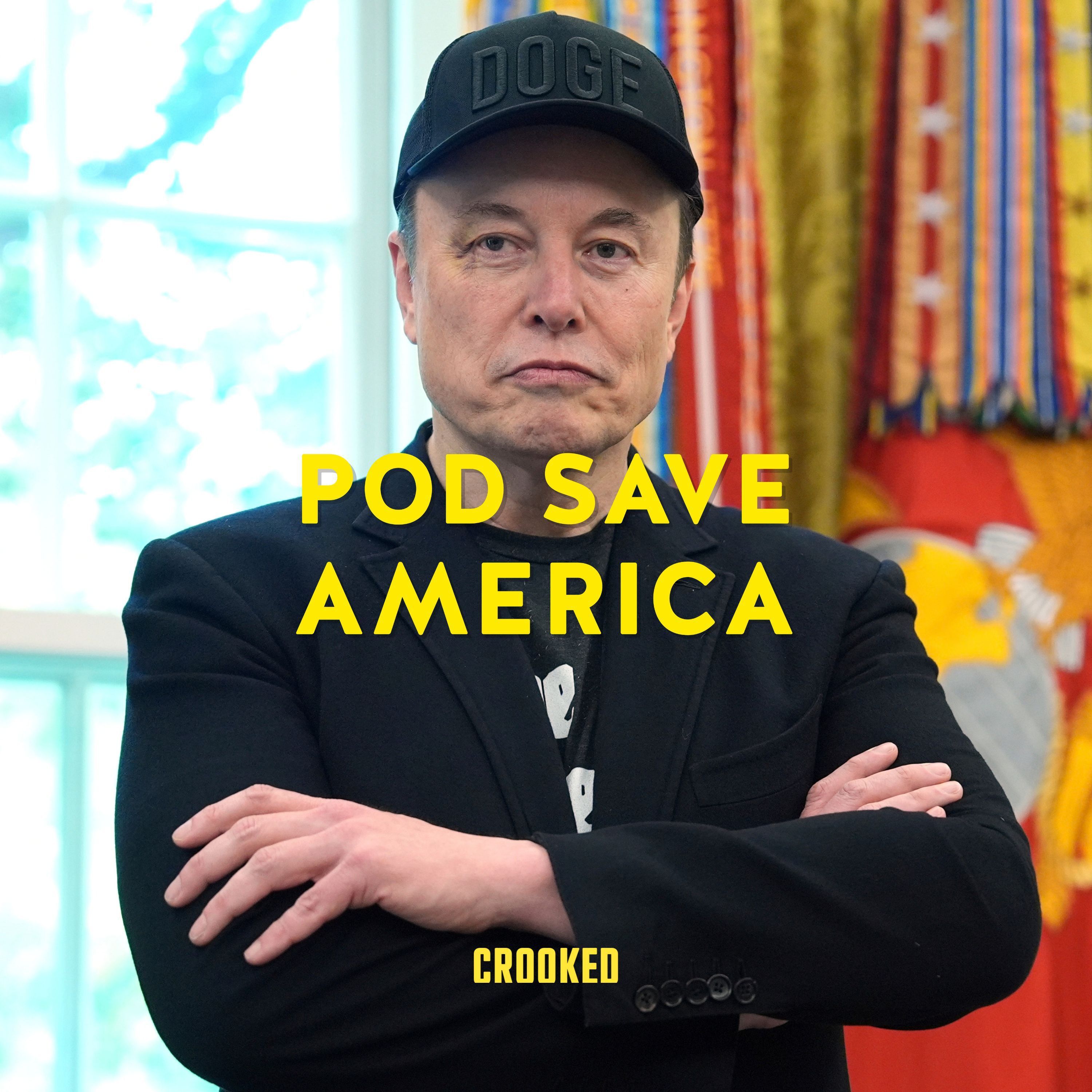 Deep State Rebels v. Trump (with Michael Lewis)
Oct 4, 2026 · 1 h 4 min
Jon Lovett interviews author Michael Lewis about his book Blockers, on federal employees who resisted DOGE and the Trump administration's reshaping of government.
 Impeach Pete Hegseth?
Sep 29, 2026 · 58 min
Jon Favreau, Tommy Vietor and Jon Lovett discuss diesel prices, a Republican data center bill, rogue AI models, a possible Pete Hegseth impeachment and Trump's taxpayer-funded ads.
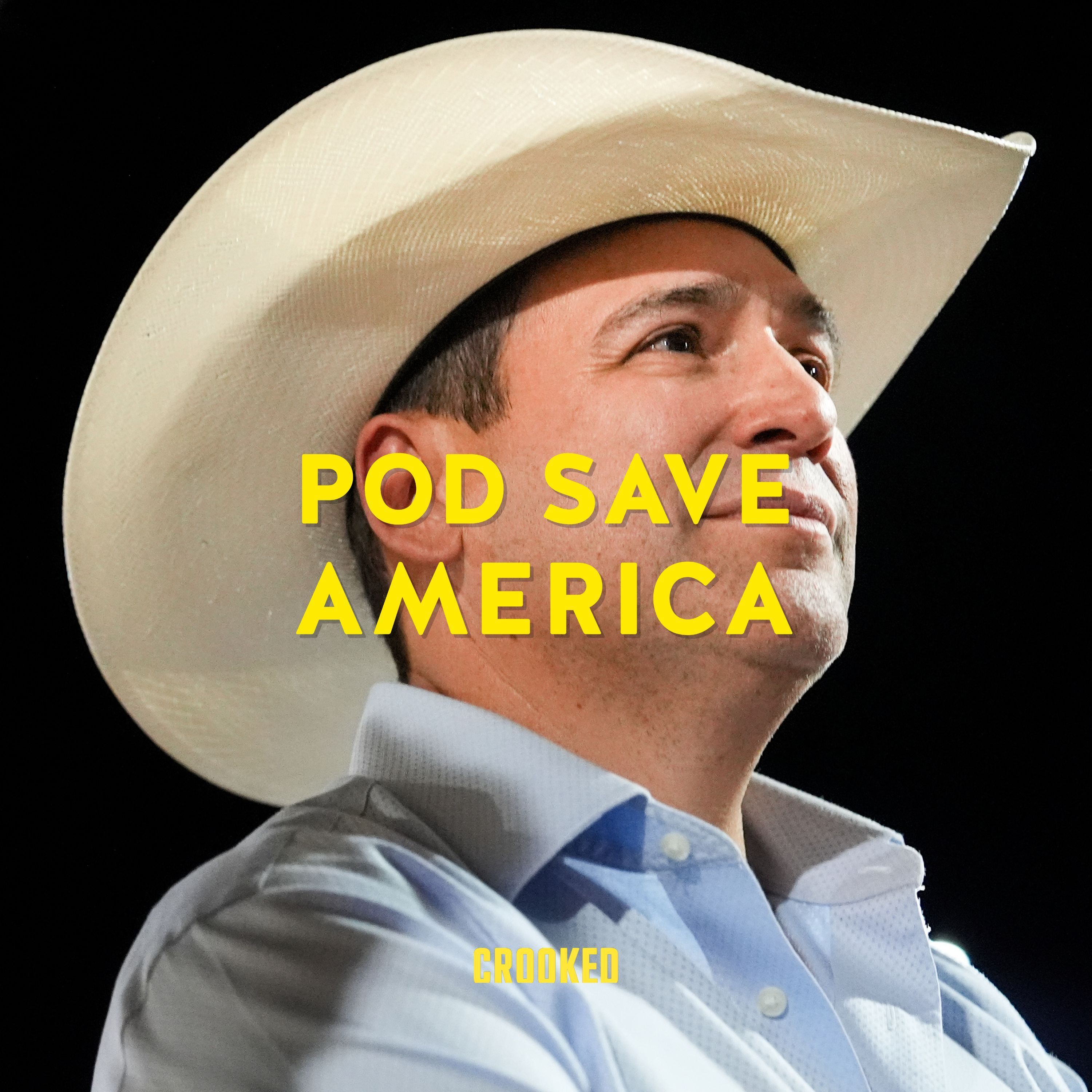 Choosin' Texas with Bobby Pulido
Sep 27, 2026 · 1 h 2 min
Live at the Texas Tribune Festival, the Pod Save America hosts assess Texas and national midterm races, Xi Jinping's visit, and interview congressional candidate Bobby Pulido.
From the publisher
Jon sits down with our own Ben Rhodes to talk about how American leaders tell the story of who we are — and who they think we should be — through the speeches they give. The two go through the seminal speeches Ben selected for his new book "All We Say," discussing their power for good (Frederic Douglass on human rights) and evil (Alexander Stephenson on the "moral truth" of white supremacy), and their own memories of writing presidential addresses for Barack Obama when the stakes were highest. For a closed-captioned version of this episode, click here . For a transcript of this episode, please email transcripts@crooked.com and include the name of the podcast, episode title, and episode date.
Summary, chapters and key points were generated from the episode transcript on September 28, 2026. Quotes are checked word for word against the transcript.