
Martin McDonagh Has a Vision for Hope. It's Not for the Faint of Heart.
Episode of The Daily · October 31, 2026 · 50 min
David Marchese interviews filmmaker Martin McDonagh about his CIA film Wild Horse Nine, provocation versus offense, violence, punk rock, faith, legacy, and whether art changes the world.
Summary
David Marchese interviewed writer-director Martin McDonagh, across two sessions, for The Interview from The New York Times, centered on McDonagh's film Wild Horse Nine, in which Sam Rockwell and John Malkovich play CIA agents sent to destabilize Salvador Allende's government in Chile. McDonagh said researching CIA activity in the late twentieth century undermined the Western belief he grew up with that America was the good guy, and he maintained that his characters are never mouthpieces for his own politics.
Marchese pressed McDonagh on the darkness, provocation and violence in his work. McDonagh distinguished being outrageous from being offensive, argued that political correctness had worsened over the past decade, objected to requests to change words in his decades-old plays, and said he had reflected on critiques by Hilton Als of A Behanding in Spokane while disagreeing more with Wesley Morris's critique of Three Billboards Outside Ebbing, Missouri. He said his work has become less violent over time and that he now tries to avoid the coolness of cinematic violence, distancing himself from comparisons to Quentin Tarantino.
McDonagh described losing his Catholic faith and discovering The Clash at 12, leaving school at 16, living on the dole, and going from unemployment to a Broadway run within about a year. He said his anti-religious feeling had become more entrenched, credited Joe Strummer's song Washington Bullets with first teaching him about Chile, and said Fleabag by his partner Phoebe Waller-Bridge taught him about love. He also discussed his eccentric film titles, his dialogue style influenced by Pinter and Mamet, and his enjoyment of awards season. Marchese shared his own ethical struggle after a childhood friend's suicide.
The conversation ended on whether art can change the world. McDonagh conceded that murder has probably changed more things than art, but Marchese pointed to the Pinochet regime's killing of singer Victor Jara as evidence that art matters, and McDonagh argued the world is better for the poems, books and films people love.
Chapters
- 0:00
Introduction
Marchese introduces McDonagh and his new film Wild Horse Nine with clips.
- 0:57
America and the CIA in Chile
McDonagh discusses America's moral image and the CIA's role in undermining Allende's Chile.
- 3:27
Characters, politics and darkness
McDonagh denies his characters voice his views and argues that making art is hopeful even when dark.
- 9:36
Provocation, offense and political correctness
McDonagh distinguishes outrageousness from offensiveness and criticizes requests to alter words in old plays.
- 14:42
Critiques on race and violence
McDonagh responds to critiques by Hilton Als and Wesley Morris and to charges of gratuitous violence.
- 19:50
Legacy and male friendship
McDonagh discusses leaving films behind and portraying tender male friendships, and Marchese recounts his friend's suicide.
- 26:20
Punk rock, faith and early life
McDonagh recalls losing his Catholic faith, The Clash, his provocative early persona, and rising from the dole to Broadway.
- 32:33
The teenage self
McDonagh reflects on what his younger self would admire and criticize, citing Joe Strummer's influence.
- 36:17
Titles and dialogue
In a second session, McDonagh discusses his film titles, dialogue style, and the Pinter, Mamet and Tarantino influences.
- 42:39
Phoebe Waller-Bridge and awards season
McDonagh praises Fleabag and says he enjoys the Oscar race without changing his work for it.
- 46:41
Can art change the world?
McDonagh and Marchese debate art's power, invoking Victor Jara and the Pinochet regime.
Key points
What was said, by whom, with the exact words. Timestamps jump to the moment.
- Martin McDonagh
McDonagh says learning about CIA activity in Chile made him doubt the West's moral narrative, since it helped overthrow a democratic government.
“to destabilize and help overthrow a democratically elected government, which ended up in fascist horrors for 15 years”
Listen from 2:57 · United States involvement in regime change in Chile
- Martin McDonagh
McDonagh maintains that his characters do not serve as mouthpieces for his own politics.
“none of my characters are ever mouthpieces for my politics or the opposite”
- Martin McDonagh
McDonagh distinguishes offensiveness, which aims to hurt an audience, from outrageousness, which delights in the unexpected.
“one is deliberately trying to hurt or attack an audience, whereas the other is to almost delight in something you haven't heard before”
- Martin McDonagh
McDonagh says that only in the past decade has he been asked to change words in his older plays because of offense.
“only in the last 10 years have I been asked to change words in plays from 25, 30 years ago because of offense taken by certain words”
- Martin McDonagh
McDonagh argues that those who object to a play's language should not stage it rather than altering it.
“if you don't like that in a play, you should just not do the play. You shouldn't try and change the play 25 years later”
Linked moment · 16:51Skip to 16:51 using a listen link in the info box.
Martin McDonaghMcDonagh disagrees with critiques of Three Billboards, saying viewers misread the film as redeeming a character.
“i feel like the film was taken as a redemption to a character that i didn't feel was true”
Listen from 16:51 · Three Billboards Outside Ebbing, Missouri
- Martin McDonagh
McDonagh says his stage violence stemmed from a belief that plays should be as exciting as the best films.
“I did think plays should be as exciting as the best films, and that meant you should be able to do anything on stage”
- Martin McDonagh
McDonagh says his work has become steadily less violent over time.
“I think I've been getting less and less violent. If you discount all the fingers in Banshees, there's hardly any violence at all”
- Martin McDonagh
McDonagh says he wanted Wild Horse Nine to show the gentleness and depth of male friendship rather than an empty buddy movie.
“I like the gentleness of my male friendships and I guess to show a bit more of that”
- Martin McDonagh
McDonagh links his loss of Catholic faith at 12 to the anti-authoritarian punk ethic of The Clash.
“which is sort of the punk rock ethic, naturally the Catholic Church are going to be right in the firing line”
- Martin McDonagh
McDonagh says his anti-religious feeling has grown more entrenched and he sees religion as one of the worst things happening in the world.
“I think I'm getting more and more sort of entrenched in some kind of anti-religious feeling in general”
- Martin McDonagh
McDonagh recounts going from unemployment to a Broadway run with his first play within about a year.
“i went from completely unemployed unemployable and poor to having a play on broadway for a year within the space of a year”
- Martin McDonagh
McDonagh says that Wild Horse Nine is the first of his films Joe Strummer might be proud of for its anger and political viewpoint.
“i feel like for the first time joe might be proud of this one”
- Martin McDonagh
McDonagh credits Pinter and Mamet with showing him a poetic heightening of real speech in dialogue.
“it was like pinter and mamet particularly who who made me think that there was like a poetic heightening of how people really speak”
- Martin McDonagh
McDonagh rejects strong Tarantino comparisons, saying their approaches to violence differ despite surface similarity.
“i don't think our approach to violence is quite the same even though it might appear to be the same”
- Martin McDonagh
McDonagh says Phoebe Waller-Bridge's Fleabag was game-changing and taught him about women, storytelling and love.
“Fleabag was, like, game-changing and eye-opening and just so insightful and funny”
- Martin McDonagh
McDonagh says he enjoys awards season but would never alter his work to win or make Oscar bait.
“I would never change what the work is to get one or make something Oscar-baity”
- Martin McDonagh
McDonagh concedes that murder has probably changed more things than art has.
“I think art has changed things. But I think murder has probably changed a lot more things”
- David Marchese
Marchese argues that the Pinochet regime's killing of Victor Jara shows that art matters.
“if the Pinochet regime didn't think it mattered... they probably would have left that guy alone”
- Martin McDonagh
McDonagh argues that art changes the world simply by existing, making it better.
“this world is better because of the poems we love and the books we love and the films we adore”
People
In the conversation
- David MarcheseNew York Times journalist and host of The Interview
- Martin McDonaghBritish-Irish playwright and Academy Award-winning filmmaker
Discussed
- John MalkovichAmerican actor starring in Wild Horse Nine
- Sam RockwellAmerican actor seen with Bateman at a Knicks game
- Salvador AllendeSocialist president of Chile overthrown in 1973
- Victor JaraChilean folk singer and activist killed by the Pinochet regime
- Augusto PinochetChilean general and dictator who seized power in 1973
- Hilton AlsPulitzer Prize-winning American theater critic
- Wesley MorrisPulitzer Prize-winning New York Times critic
- Peter CookBritish comedian and satirist
- Joe StrummerLate frontman of The Clash and The Mescaleros, credited with the saying 'no input, no output'
- Quentin TarantinoAmerican filmmaker whose films draw on samurai imagery
- Phoebe Waller-BridgeBritish writer and actress who created Fleabag
- Sean ConneryScottish actor
- Harold PinterBritish playwright
- David MametAmerican playwright
- Leonard CohenCanadian singer-songwriter quoted in Lamott's TED Talk on cracks and light
- Brendan GleesonIrish actor in The Banshees of Inisherin
Topics
More from The Daily
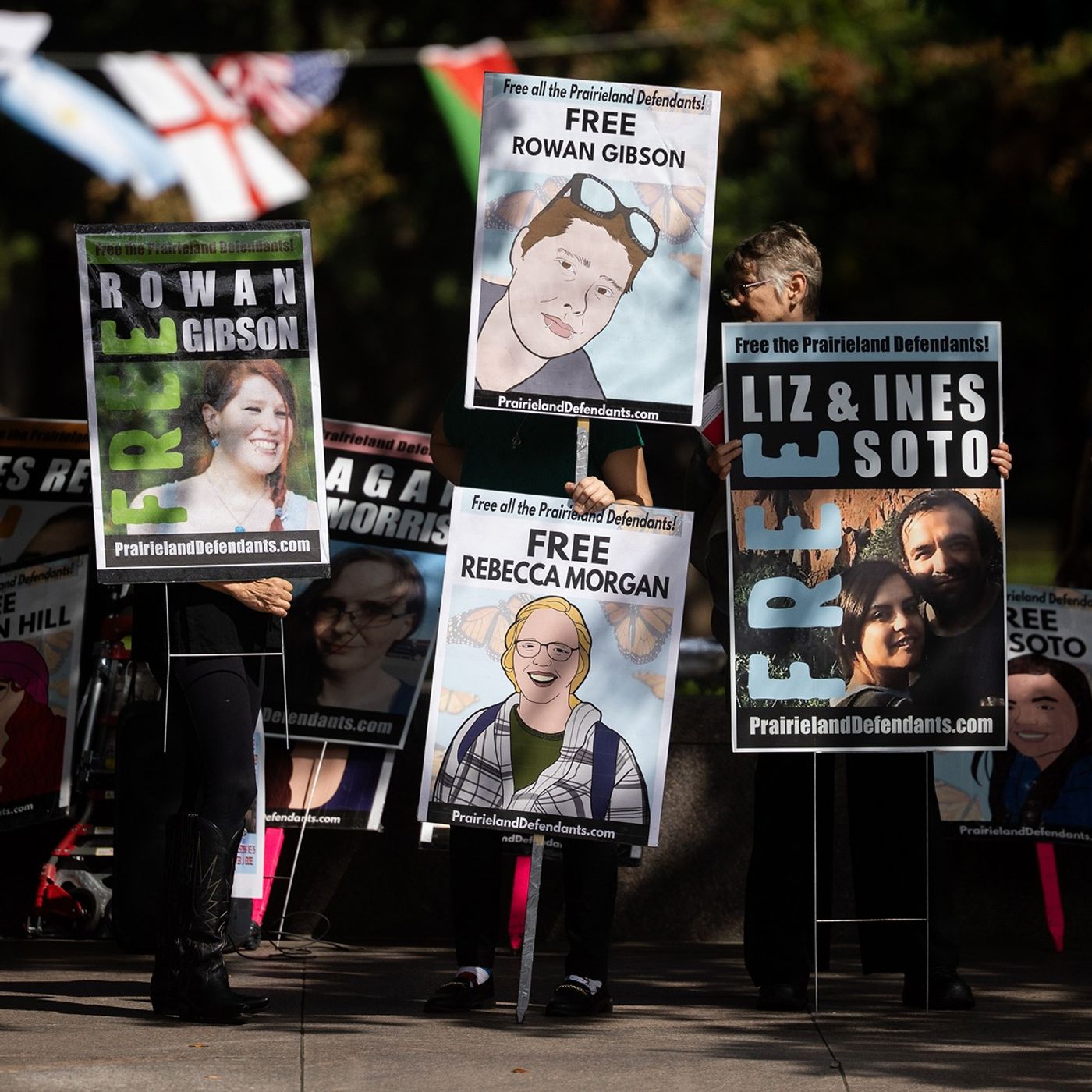 They Protested ICE. Now They’ve Been Convicted of Terrorism.
Oct 27, 2026 · 47 min
Michael Barbaro and Janet Reitman examine the Prairieland case, the first federal terrorism prosecution of American protesters, labeled an Antifa cell after an ICE protest shooting.
 Chris Rock Has Been Thinking About Forgiveness
Oct 3, 2026 · 1 h 3 min
Chris Rock tells David Marchese about his film Misty Green, forgiveness, cancel culture, therapy and an NVLD diagnosis, Hollywood, and why comedy needs nuance.
 The Best TV Shows of the 21st Century
Sep 27, 2026 · 57 min
Natalie Kitroeff talks with Times colleagues Gilbert Cruz and James Poniewozik about the New York Times list of the 100 best TV shows of the 21st century.
 Sylvester Stallone Hid His Struggles for Decades. Now He’s Coming Clean.
Sep 26, 2026 · 1 h 17 min
Sylvester Stallone tells Lulu Garcia-Navarro about his abusive childhood, anxiety, bulimia and steroid use, his rivalry with Schwarzenegger, and career collapses and comebacks.
 What’s Epic About the ‘Odyssey’? Everything.
Jul 12, 2026 · 51 min
Natalie Kitroeff talks with translator Emily Wilson and novelist Madeline Miller about the Odyssey ahead of Christopher Nolan's film adaptation.
From the publisher
The writer-director, known for his dark and bleak work, believes in film’s power to change our lives.
Summary, chapters and key points were generated from the episode transcript on November 1, 2026. Quotes are checked word for word against the transcript.