
Sylvester Stallone Hid His Struggles for Decades. Now He’s Coming Clean.
Episode of The Daily · September 26, 2026 · 1 h 17 min
Sylvester Stallone tells Lulu Garcia-Navarro about his abusive childhood, anxiety, bulimia and steroid use, his rivalry with Schwarzenegger, and career collapses and comebacks.
Summary
On The Interview from The New York Times, Lulu Garcia-Navarro spoke with Sylvester Stallone, then 80, about his memoir The Steps, published to coincide with the 50th anniversary of Rocky. Stallone described a traumatic birth in which forceps partially paralyzed his face and left him with slurred speech, being raised in a boarding house by strangers, and parents he said were never nurturing. He recounted his mother leaving the family and his father's violence, including being kicked in the street over a loaf of bread, and said he had only one memory of physical affection from his father.
Stallone described weeks spent in a locked ward at the Devereux school, which he called the Snake Pit, and an assault there by another resident; he said the experience taught him he could not be broken. He recalled his years as a struggling actor in New York, working as a theater usher and taking notes on audience reactions, frequenting the Museum of Modern Art, and holding out to star in Rocky when studios offered him money to step aside. He said his father botched the bell-ringing in the climactic fight scene and that his mother declined to attend the Oscars.
The actor spoke at length about the personal costs of his career: panic attacks beginning at 36, refusal of therapy, becoming bulimic while getting down to 2.6 percent body fat for Rocky III, and steroid use that he said is unavoidable for such physiques. He described his son Sage's death in 2012, his rivalry and later friendship with Arnold Schwarzenegger, and the late-1990s period when studio heads told him he was finished before he wrote Rocky Balboa at 60.
In a second conversation, Stallone named Cop Land his most underappreciated performance, said he was responsible for flattening Rambo into a bravado-driven cartoon, and stated that he now considers all war futile despite his gung-ho public statements in the 1980s. He argued that the perception of him as politically conservative arose from naivete, and said he is in "panic mode" about the time he has left.
Chapters
- 0:29
Introduction
Lulu Garcia-Navarro introduces Sylvester Stallone and his memoir The Steps on the 50th anniversary of Rocky.
- 1:31
Birth and early abandonment
Stallone describes his traumatic birth, the forceps injury that affected his speech, and being raised in a boarding house.
- 7:33
His parents' divorce and his father's violence
Stallone recounts clinging to his mother's leg as she left, his father's beatings, and the single moment of affection he remembers.
- 15:44
Devereux and the Snake Pit
Stallone describes being confined in a psychiatric ward as punishment, an assault there, and concluding that he could not be broken.
- 20:22
New York, art and the making of Rocky
Stallone recalls ushering at a movie theater, studying audiences, visiting MoMA, and refusing studio money to give up the Rocky role.
- 29:27
Parents, fame and public humiliation
Stallone discusses casting his father in Rocky, his mother's refusal to attend the Oscars, and his parents' 1992 on-air fight with Howard Stern.
- 34:36
Anxiety, family and the loss of Sage
Stallone describes his first panic attack at 36, his shortcomings as a parent, and the death of his eldest son in 2012.
- 41:41
Overnight fame and the Schwarzenegger rivalry
Stallone recalls the instant transformation of his life after Rocky and his long antagonism with Arnold Schwarzenegger that later became friendship.
- 50:35
The body, bulimia and steroids
Stallone discusses using his physique as armor, becoming bulimic, using steroids, and the surgeries that followed.
- 59:30
Second interview: Cop Land and career collapse
Stallone names Cop Land his proudest underappreciated work and describes being written off by Hollywood before writing Rocky Balboa at 60.
- 1:09:36
Rambo, war and politics
Stallone says he flattened the Rambo character, now regards all war as futile, and explains how he came to be perceived as politically conservative.
- 1:15:16
Tulsa King, mortality and regret
Stallone explains why he keeps working and says he is in panic mode about how little time he has left.
Key points
What was said, by whom, with the exact words. Timestamps jump to the moment.
- Sylvester Stallone
Stallone argues that parents shape their children like sculptors, for better or worse.
“the parents are the mold makers they're sculptors they don't realize it But they're sculptors. They're Rodin's. And they're sculpting their masterpiece or their disaster”
- Sylvester Stallone
Stallone says his emotionally deprived childhood made him tough in an unhealthy way and delayed his capacity for real love until around age 70.
“I literally haven't figured out real, real, real, real true love until, you know, like 70”
- Sylvester Stallone
Stallone recounts being confined for weeks in a padded cell at an institution he calls the Snake Pit, and says the experience convinced him his will could not be broken.
“I always felt I was unbreakable in that way. My heart could be broken, all that kind of stuff, like every human being, but I'm talking about will”
- Sylvester Stallone
Stallone says visiting MoMA repeatedly awakened a lasting thirst for art and led him to start painting.
“And then I developed this unbelievable thirst for art. which is to this very day, and I started to paint”
- Sylvester Stallone
Stallone says the breakdown at the end of First Blood was not scripted and came from his identification with veterans who felt dismissed by their country.
“I really identified with this dismissive attitude that I grew up with. All the time”
- Sylvester Stallone
Stallone says he refused to sell the Rocky role because he knew he would never forgive himself, despite having barely any money.
“I know in my heart that I will regret this for the rest of my life, and I will be more of a broken man than if I had never done this in the first place”
- Sylvester Stallone
Stallone says he cast his father as the timekeeper hoping for approval, but the scene ended in an altercation.
“I just want you to love me for a little bit. A little bit. Like, look what I did. Share it with me”
- Sylvester Stallone
Stallone contrasts his mother's claim to have no regrets with his own sense of living on regret.
“I live on regrets. I can make a castle out of regrets. I mean, when people say I have no regrets, I go, bullshit”
- Sylvester Stallone
Stallone says he never went to therapy because he believed it would not help, and that anxiety stems from deep-rooted causes.
“No. I said it's not going to help. It's just not going to help because it doesn't go away”
- Sylvester Stallone
Stallone describes his first panic attack at 36 while watching dailies and says the episodes have recurred, including in crowds.
“It was the first time I did is when I was 36. And I was watching dailies. And then all of a sudden, I stood up, and the hair on my neck went up”
- Sylvester Stallone
Stallone says he was not a good parent during his first marriage and treated the movie set as reality while his life felt unreal.
“Reality was the movie set. The surreal world was my life. I have no control out here. I'm at everyone's beck and call”
- Sylvester Stallone
Stallone describes learning of his son Sage's death by phone and breaking down alone a week later.
“And then about a week later, I was all alone in my room and a whale came out of me. I've never heard before since. It was just such pain and grief and guilt”
- Sylvester Stallone
Stallone characterizes his overnight shift from obscurity to fame after Rocky's opening as uniquely rapid and documented.
“It's the rarest combination of obscurity to fame in a matter of two hours that's documented”
- Sylvester Stallone
Stallone says fame did not break him but made him combative and lacking in humility, alienating the press.
“I managed to alienate the entire press. I really did. And people that believed in me and so on, I just was not, I was just not humble”
- Sylvester Stallone
Stallone discloses that his obsession with staying lean for roles led him to become bulimic, reaching 2.6 percent body fat for Rocky III.
“It became to the point where I became bulimic. You didn't know that. Okay. You heard it here first”
- Sylvester Stallone
Stallone says he and others using such physiques rely on steroids, cycling six weeks on and six weeks off.
“Oh my God, you have to. But you do it in a sense, in a way, six weeks on, six weeks off. And people go, oh, you don't get that way naturally. No, you don't”
- Sylvester Stallone
Stallone says he regrets doing his own stunts and lists numerous surgeries resulting from the physical toll.
“I've had nine back operation, two shoulder operation, three neck fusions, you know, everything. Everything is held together with bailing wire”
- Sylvester Stallone
Stallone explains Rocky's success as recognition for people who live without acknowledgment.
“everyone has that character that very few people get recognition for. They live in quiet suffering”
- Sylvester Stallone
Stallone names Cop Land his most underappreciated performance and says he worked on it for free as an experiment.
“I did the whole thing for free because the experiment was well worth it”
- Sylvester Stallone
Stallone says studio heads told him he and Rocky were finished, and that writing Rocky Balboa at 60 was the hardest and proudest moment of his life.
“So the hardest and the proudest moment by far in my life is Rocky Balboa because nobody wanted it. I was done”
- Sylvester Stallone
Stallone describes Rocky as an imagined father figure and role model that served as his substitute for therapy.
“So I found this to be like a therapeutic beyond anything I've ever, like you asked, you know, you go to therapy. That was my Sigmund Freud right there”
- Sylvester Stallone
Stallone takes responsibility for turning Rambo into a shallow, bravado-driven character in the sequels.
“Absolutely right. That's my fault. It's my fault”
- Sylvester Stallone
Stallone says he now considers all war futile and profit-driven, reversing his earlier gung-ho public stance.
“And now I realize all war is futile. It's stupid. It's a mechanism to make tons of money for the war department and manufacturers”
- Sylvester Stallone
Stallone attributes his reputation as a political conservative to naivete, saying he had never voted and did not know the parties apart when Rocky came out.
“When Rocky came out, I was so naive. I'd never even voted. I was like pushing 30 years. So I had zero. I didn't even know the difference between Democrat and Republican”
Linked moment · 1:15:38Skip to 1:15:38 using a listen link in the info box.
Sylvester StalloneStallone likens his continued acting to a racehorse that cannot stop running, saying performers cease to exist without the format.
“It's like a racehorse. You just keep going until it falls down. It doesn't know how to walk. It knows how to run”
- Sylvester Stallone
Stallone says he is in panic mode about mortality and is trying to make up for a lifetime of regrets.
“I built a castle with thousands of stones made of regrets. And I'm trying to make up for it in my own petty way. And I don't know if there's enough time”
People
In the conversation
- Lulu Garcia-NavarroNew York Times journalist and host of The Interview
- Sylvester StalloneAmerican actor, screenwriter and director known for the Rocky and Rambo franchises; author of the memoir The Steps
Discussed
- Arnold SchwarzeneggerAustrian-American bodybuilder, action star and former California governor, described as Stallone's longtime rival and later friend
- Jackie StalloneSylvester Stallone's mother, later known as a celebrity astrologer and psychic
- Frank Stallone Sr.Sylvester Stallone's father, a hairdresser and polo enthusiast described as violent and competitive
- Sage StalloneSylvester Stallone's eldest son, who died in 2012 of an undiagnosed heart condition
- Jennifer FlavinSylvester Stallone's wife, whom he credited with raising their daughters and saving his life
- Carl WeathersAmerican actor who played Apollo Creed opposite Stallone in Rocky
- Howard SternAmerican radio host on whose show Stallone's parents argued in 1992
- Taylor SheridanAmerican screenwriter and producer, creator of Tulsa King
- Bruce WillisAmerican actor and co-founder of Planet Hollywood with Stallone and Schwarzenegger
- Lloyd NolanAmerican actor whose son Stallone says assaulted him at the Devereux institution
- Robert De NiroAmerican actor cited by Stallone as someone who cannot stop performing
- Burt ReynoldsAmerican actor invoked by a Hollywood agent in a 1992 comparison to a declining Stallone
Topics
Related episodes
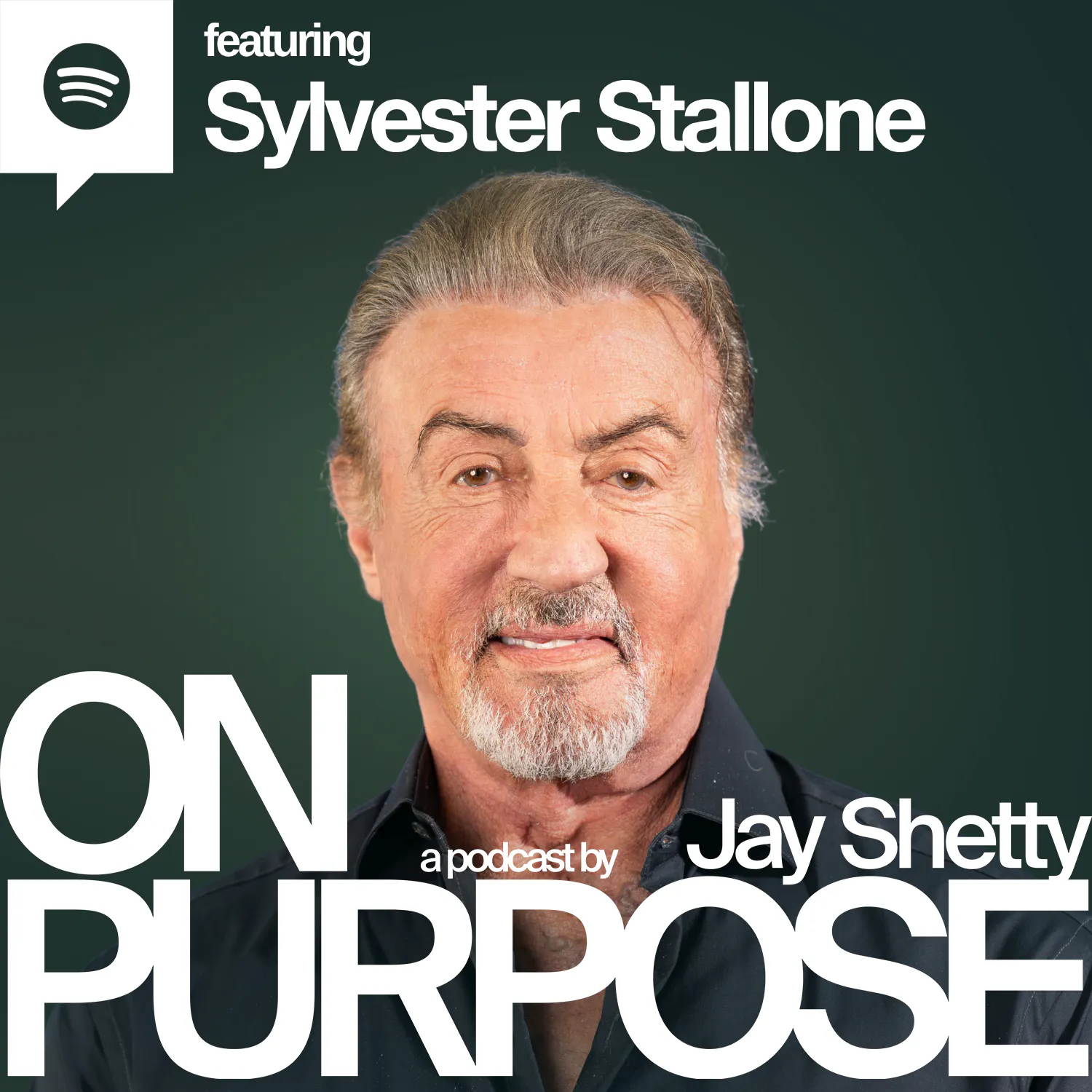 SYLVESTER STALLONE: “I Wasn’t Stupid. I Was Just Misunderstood.”
On Purpose with Jay Shetty · Sep 28, 2026 · 1 h 29 min
Jay Shetty interviews Sylvester Stallone about his painful childhood, rejection, creating Rocky, his parents, career slumps, health, marriage and his memoir The Steps.
 The Journey, Episode 4: The Courts
In The Dark · Oct 6, 2026 · 56 min
Reporter Ava Kaufman follows two Virginia surrogates who defied their contracts with an investigated Los Angeles couple, revisiting Baby M and attending a Farmville custody hearing.
 #345 Wynonna Judd - Dolly Parton, Naomi Judd's Death & Finding Her Biological Father
The Shawn Ryan Show · Oct 5, 2026 · 4 h 57 min
Wynonna Judd tells Shawn Ryan about her chaotic childhood, The Judds, her mother Naomi's suicide and her daughter's addiction, while husband Cactus Moser recounts his motorcycle accident.
 Adam Neumann: The Real Story Behind WeWork, A $4 Billion Cab Ride, And Surviving A $460 Million Debt
The Diary Of A CEO with Steven Bartlett · Sep 28, 2026 · 2 h 15 min
Adam Neumann tells Steven Bartlett about his traumatic childhood, WeWork's rise and collapse, SoftBank's investments, his $460 million debt crisis, and spiritual lessons behind Flow.
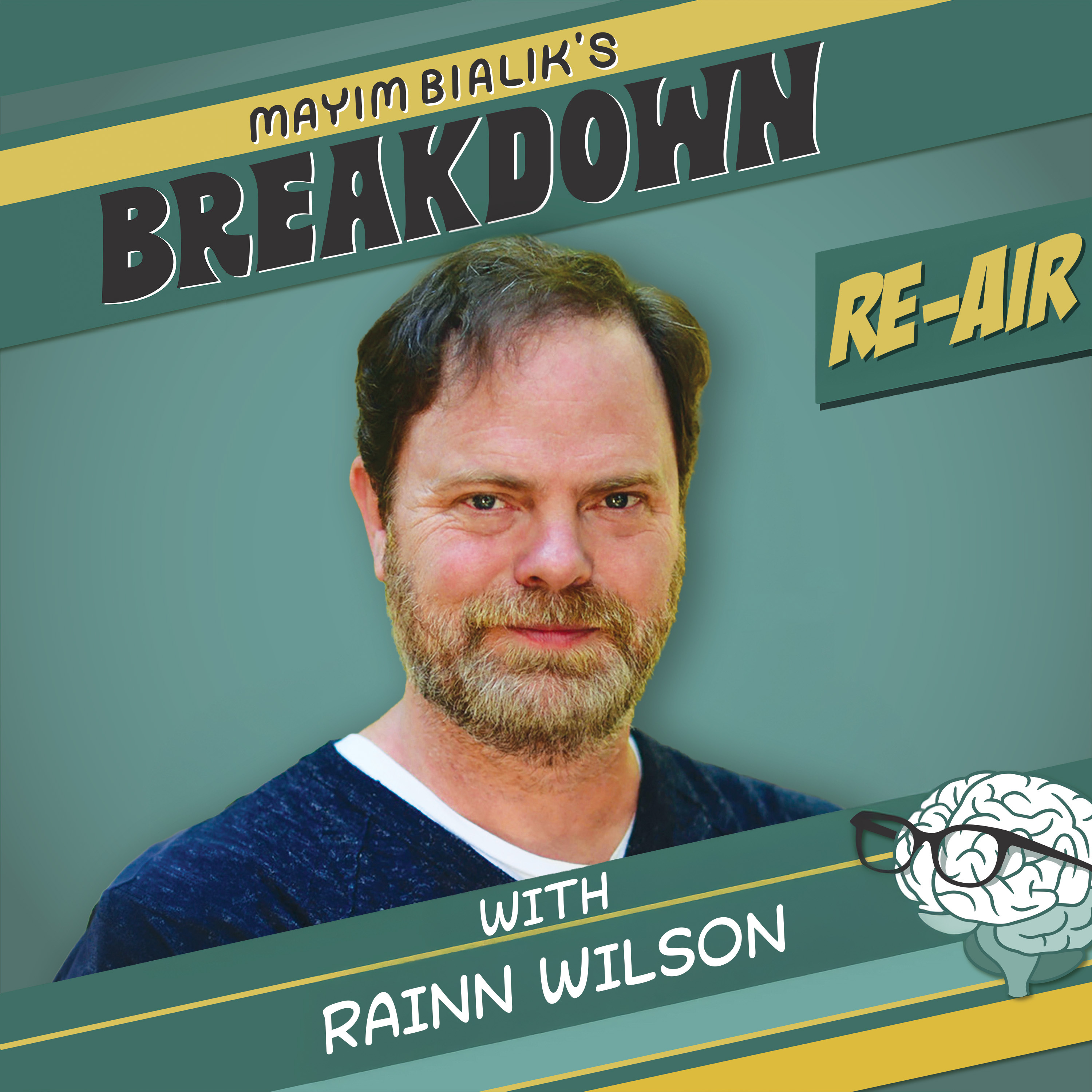 Re-Air: Embrace Your Eccentricities & A Petri Dish of Creativity | Rainn Wilson
Mayim Bialik's Breakdown · Sep 25, 2026 · 55 min
Rainn Wilson tells Mayim Bialik and Jonathan Cohen about his alienated nerdy childhood, anxiety and addiction, therapy, 12-step programs and the Baha'i faith.
 Druski: They're Lying To You About Overnight Success!
The Diary Of A CEO with Steven Bartlett · Sep 24, 2026 · 1 h 49 min
Comedian Druski tells Steven Bartlett how an abusive childhood, a college dropout and an armed robbery shaped his pursuit of comedy greatness.
More from The Daily
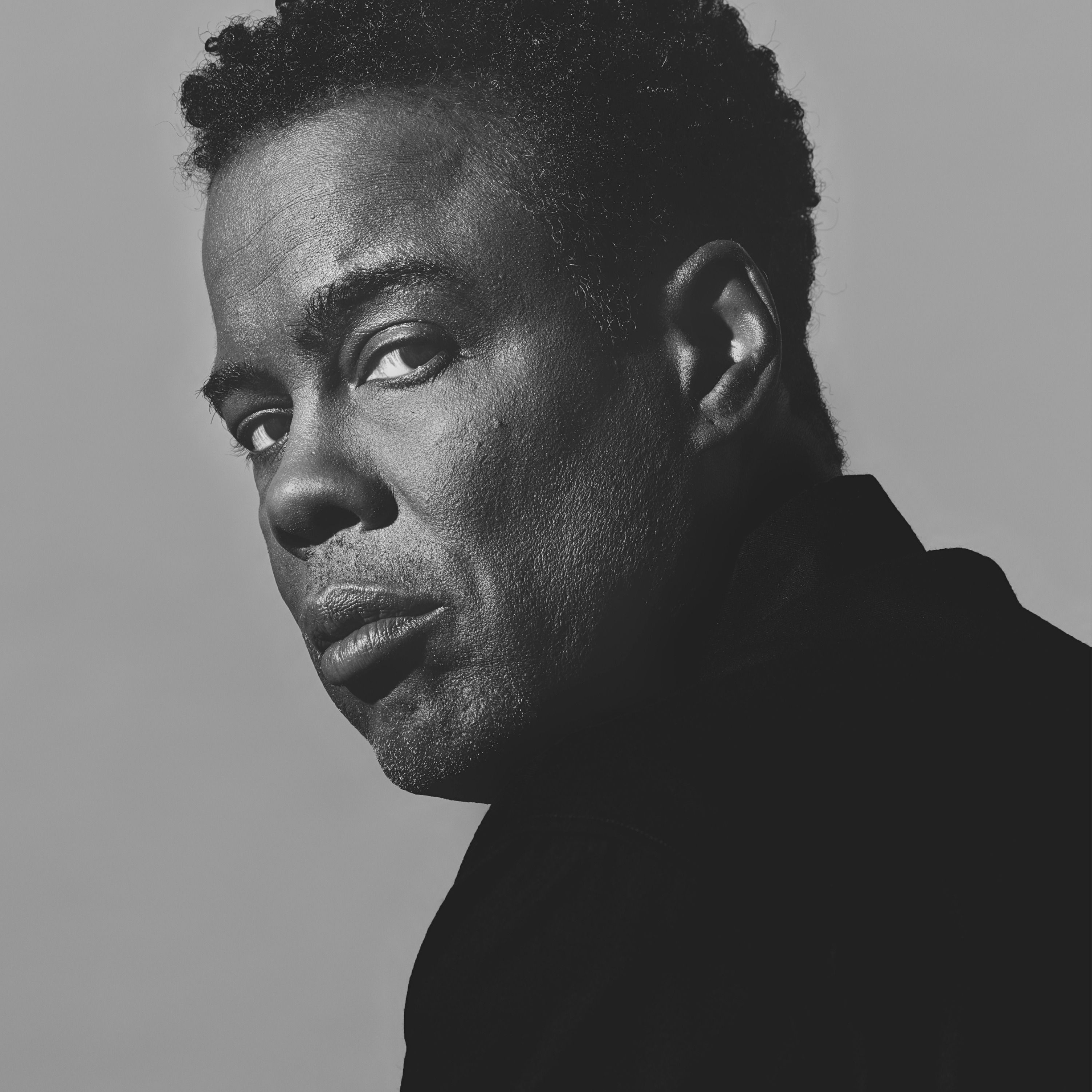 Chris Rock Has Been Thinking About Forgiveness
Oct 3, 2026 · 1 h 3 min
Chris Rock tells David Marchese about his film Misty Green, forgiveness, cancel culture, therapy and an NVLD diagnosis, Hollywood, and why comedy needs nuance.
 The Best TV Shows of the 21st Century
Sep 27, 2026 · 57 min
Natalie Kitroeff talks with Times colleagues Gilbert Cruz and James Poniewozik about the New York Times list of the 100 best TV shows of the 21st century.
 What’s Epic About the ‘Odyssey’? Everything.
Jul 12, 2026 · 51 min
Natalie Kitroeff talks with translator Emily Wilson and novelist Madeline Miller about the Odyssey ahead of Christopher Nolan's film adaptation.
 Can a Bad Man Be a Good Father?
Jun 21, 2026 · 47 min
Michael Barbaro talks with writer Tom Junod about his charismatic, philandering father Lou and the secret half-sister Junod uncovered after his father's death.
 Popcast: Olivia Rodrigo Tried Writing Love Songs. Then Life Got Messy.
May 31, 2026 · 1 h 30 min
Olivia Rodrigo talks with Popcast's Jon Caramanica and Joe Coscarelli about her third album, songwriting, fame, politics, Taylor Swift speculation and girlhood.
From the publisher
The legendary actor on his disturbing childhood, his Hollywood missteps and the pain he caused to his loved ones, his body and himself.
Summary, chapters and key points were generated from the episode transcript on September 26, 2026. Quotes are checked word for word against the transcript.