
Adah Sharma on The Kerala Story, Backlash, Threats & Handling Rejection | Shekhar Natarajan | Tomorrow Today
Episode of Tomorrow, Today · September 22, 2026 · 1 h 34 min
Actress Adah Sharma tells Shekhar Natarajan about her upbringing, film career, the backlash around The Kerala Story, handling rejection, and AI in filmmaking.
Summary
Shekhar Natarajan hosted actress Adah Sharma on Tomorrow, Today. Sharma described growing up in Mumbai with a Tamil Brahmin merchant-navy father and a mother of Malayali and Italian heritage, recalled deliberately pretending to be average as a child to make friends, and discussed her love of animals, her training in dance, and her solitary but content temperament. Natarajan shared his own childhood in a Hyderabad slum and the origins of his show, which he framed as part of a project on 'AI with a conscience.'
Sharma traced her career from her debut in Vikram Bhatt's horror film 1920 through Hasee Toh Phasee, the Telugu hit Heart Attack, the Commando series and work with Puneeth Rajkumar, whom she called her favourite co-star. She said she had rarely been a first choice for roles, described typecasting, and credited her sister's intuitive management.
On The Kerala Story (2023), Sharma said she saw the film as a human story about women's rights rather than a political one, while accepting others' right to disagree. She recounted the controversy over the '32,000' line, threats against theatres, uncertainty about its release, and her phone number being leaked on a prostitution website the day before release. She acknowledged that criticism affects her, though her recovery time from rejection had shrunk from 48 hours to minutes. Natarajan recounted leaving a company he built within American Eagle Outfitters amid criticism, and both endorsed not dwelling on setbacks by talking about them.
The conversation closed with Sharma's move to a sea-facing house formerly occupied by Sushant Singh Rajput, and a discussion of AI in cinema, which Sharma likened to fire and described as both a threat to jobs and an equalizer against nepotism; Natarajan argued its best uses lay in healthcare, education and finance.
Chapters
- 1:18
Introduction and the show's mission
Natarajan introduces Sharma and explains the show's origin in his son's birth and his goal of 'AI with a conscience.'
- 5:28
Family background and childhood
Sharma describes her parents, her multilingual grandfather, and pretending to be mediocre as a child to fit in.
- 12:57
Memory, trauma, loneliness and animals
Sharma discusses burying traumatic memories, using humor as defense, enjoying solitude, and her family's love of animals, while Natarajan recounts his slum childhood.
Linked moment · 23:28Skip to 23:28 using a listen link in the info box.
23:28Entering films and the 1920 debut
Sharma recalls her discovery at a school event, garish portfolio photos, and being cast by Vikram Bhatt in 1920.
- 33:25
Typecasting, industry outsiders and choosing roles
Sharma discusses typecasting, having no industry connections, set friendships, and her sister's intuitive management.
- 47:53
Hasee Toh Phasee, Heart Attack and Puneeth Rajkumar
Sharma describes a long audition process, her Telugu breakthrough, and admiration for Puneeth Rajkumar's conduct on set.
- 54:01
Making The Kerala Story
Sharma explains how Sudipto Sen cast her and how she views the film as a story about women's rights.
- 1:01:10
Release backlash and threats
Sharma recounts the leaked phone number, bans, theatre threats and the '32,000' controversy.
- 1:04:33
Handling criticism and rejection
Sharma admits criticism affects her briefly, and Natarajan shares his American Eagle experience and his wife's advice not to dwell on it.
- 1:13:15
The new house
Sharma explains moving her family to a sea-facing house once occupied by Sushant Singh Rajput.
- 1:18:03
Stress, technology and AI in filmmaking
Sharma describes stress reactions, likens AI to fire, and debates with Natarajan the right and wrong uses of AI.
Key points
What was said, by whom, with the exact words. Timestamps jump to the moment.
- Adah Sharma
Sharma says she learned to act as a child by pretending to be ordinary so that classmates would accept her.
“So I decided to pretend and be mediocre then for everybody so that I can make a lot of friends then”
- Adah Sharma
Sharma argues that while actors are quickly typecast, one different role can just as quickly break the type.
“people do say you get typecast soon, but you also can get anti-typecast as soon as you do something different”
- Adah Sharma
Sharma credits Vikram Bhatt for her performance in 1920, saying he wanted the possession played subtly and internally.
“He said the more internalized and the more subtle we keep it, the scarier it gets”
- Adah Sharma
Sharma contends that when filmmakers reject an actor over appearance details like curly hair, the real reason is simply that they do not want that actor.
“The reason is not the curly hair. The reason is not the blue kurta. The reason is they don't want you there”
- Adah Sharma
Sharma says actors, particularly powerful male stars, can single-handedly ruin or uplift the atmosphere on a film set.
“if you're an actor and you're going to be foul-mouthed and scream on set, you can ruin the atmosphere single-handedly. I've seen it happen”
- Adah Sharma
Sharma maintains that The Kerala Story is not political but a human story about women's rights being taken away.
“for me it's a story it's a human story it's about feminism it's about women not having their rights”
- Adah Sharma
Sharma argues that a film looks like propaganda to those unwilling to hear the other side of a story.
“something will always look like it's propaganda for you if you don't want to hear that side of the story and you only want to hear your side”
- Adah Sharma
Sharma recounts that her phone number was leaked on a prostitution website the day before The Kerala Story released.
“My number got leaked on a prostitution website with my pictures and a raid card also on all the things that I would do with my number”
- Adah Sharma
Sharma says she expected the film to be banned but strong advance bookings forced theatres to keep shows despite threats.
“the advance bookings were so strong, they couldn't cancel the shows. So I think the audience decided ki dekhna hai”
- Adah Sharma
Sharma objects to the public debate over the '32,000' figure, saying it reduced abused women to numbers.
“you're talking about women who are being raped and abused and this is how we talk counting them like uh Chickens, right?”
- Adah Sharma
Sharma admits criticism affects her internally, though her recovery from rejection has shortened from 48 hours to minutes.
“an audition rejection would be upset for like... 48 hours then it became like 4 hours then like 4 minutes”
- Shekhar Natarajan
Natarajan says his shared-resources initiative at American Eagle saved about $375 million in roughly a year and a half.
“We saved close to $375 million over the period of one and a half year”
- Adah Sharma
Sharma endorses not talking about problems, arguing that retelling them makes them worse.
“I just think talking about it just makes it just worse”
- Adah Sharma
Sharma likens AI to fire, capable of either destruction or great benefit.
“I think AI is like fire and it can either like burn the whole forest down or it can be used to cook food”
- Adah Sharma
Sharma argues AI acts as an equalizer, letting outsiders without money or connections make films that compete with industry insiders.
“Now one person in a village with just that AI tool and his knowledge about it can make a movie that looks better than your movie”
- Adah Sharma
Sharma calls job losses among artists from AI heartbreaking but believes AI will take over regardless.
“such talented writers, artists, everyone who's actually created things from scratch have lost their jobs. So it's heartbreaking. It's terrible”
- Shekhar Natarajan
Natarajan argues AI's best uses are in early disease detection, education access and democratized finance rather than replicating actors.
“the time it takes for you to deck things comes down and hence you're able to do early detection and hence you're able to save lives”
- Shekhar Natarajan
Natarajan, citing will.i.am, contends AI only remixes existing material like a DJ and cannot produce the full range of a human performer's expressions.
“it can copy but like it will not do the fourth one fifth one tenth one fifteenth one twentieth one which only you can do”
- Adah Sharma
Sharma disagrees, expressing faith that AI-generated performances are rapidly becoming more humanlike.
“It's not so robotic anymore. It's humanizing itself. I have my faith on it”
People
In the conversation
- Shekhar NatarajanIndian-born entrepreneur and supply-chain executive, host of Tomorrow, Today
- Adah SharmaIndian film actress known for 1920, Heart Attack, Commando and The Kerala Story
Discussed
- Vikram BhattIndian film director who cast Sharma in 1920
- Sudipto SenDirector of The Kerala Story
- Vipul Amrutlal ShahProducer of The Kerala Story
- Puri JagannadhTelugu director of Heart Attack
- Puneeth RajkumarKannada film star and Sharma's co-star in Rana Vikrama
- Sushant Singh RajputLate Indian actor who previously lived in Sharma's house
- Asha ParekhVeteran Bollywood actress, chief guest at Sharma's school event
- K.S. SanjayTalent manager who encouraged Sharma to pursue films
- Jay SchottensteinCEO of American Eagle Outfitters, mentor to Natarajan
- will.i.amBlack Eyed Peas musician interviewed by Natarajan about AI and creativity
Topics
More from Tomorrow, Today
 Andrea Fuentes: Olympic Medals, Failure, Leadership & Finding Purpose | Shekhar Natarajan
Oct 17, 2026 · 1 h 28 min
Shekhar Natarajan talks with Olympic artistic swimmer and coach Andrea Fuentes about failure, fear, grief, rebuilding the US team and her coaching philosophy.
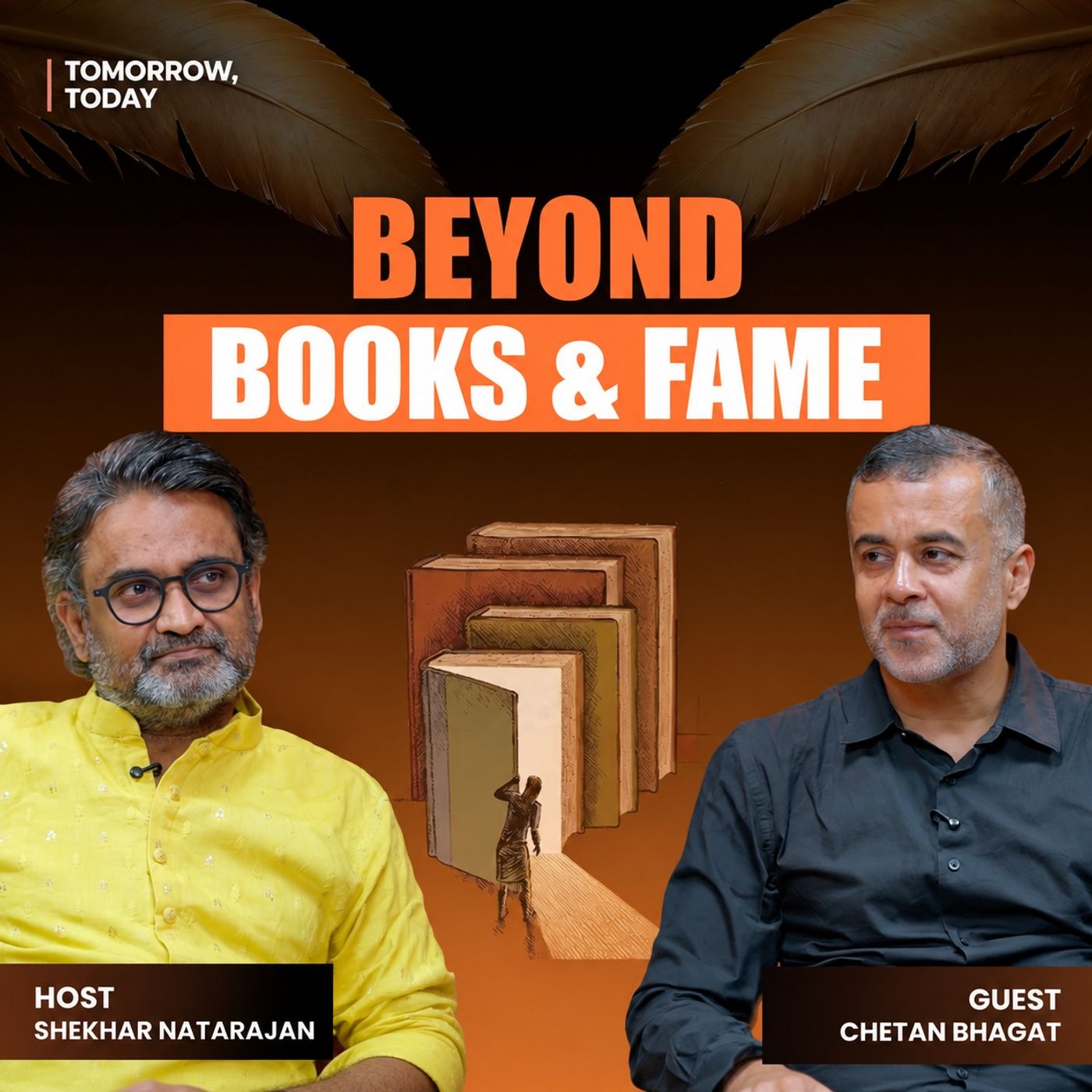 India's Gig Economy, Education & The Future of Work | Chetan Bhagat | Tomorrow Today
Sep 29, 2026 · 2 h 9 min
Shekhar Natarajan and novelist Chetan Bhagat discuss India's gig economy, education, inequality, AI governance and creativity, fame, and Bhagat's life story.
From the publisher
Adah Sharma opens up about the intense period surrounding the release of The Kerala Story from receiving widespread recognition for her performance to facing backlash, threats, and uncertainty around the film’s release. In conversation with Shekhar Natarajan, she reflects on what it felt like to have her personal life become part of the controversy and how she dealt with the pressure surrounding the film. She also speaks candidly about rejection and admits that criticism does affect her, despite how composed she may appear publicly. Adah shares how her ability to recover from rejection has changed over time from being affected for 48 hours after an audition rejection to eventually moving on within minutes.
Summary, chapters and key points were generated from the episode transcript on September 28, 2026. Quotes are checked word for word against the transcript.