
How This Female Founder Grew a $5K Startup Into a $3M Period Care Business With Amazon | Entrepreneurship | Katie Diasti | Presented by Amazon
Episode of Young and Profiting (YAP) with Hala Taha: Entrepreneurship and Self-Improvement Podcast · October 27, 2026 · 52 min
Hala Taha interviews Viv founder Katie Diasti about bootstrapping a sustainable period care brand from a college project to multimillion-dollar revenue using Amazon.
Summary
Recorded at Amazon Accelerate 2026 as part of a sponsored How We Profit miniseries, this episode featured Katie Diasti, founder and CEO of Viv, a period care brand selling bamboo-based pads, organic cotton tampons, menstrual cups and discs. Diasti described how the company began as a Boston College entrepreneurship class project informed by her volunteering at a women's shelter, and how she reneged on a corporate job offer after pre-selling hundreds of pads at Boston farmers' markets. She also discussed her Egyptian-American family's initial discomfort with the subject and their eventual support.
Diasti explained that Viv started in 2019 with $5,000 from an accelerator, negotiated a $3,500 first production run despite manufacturers' high minimum order quantities, and hand-packed orders in her apartment. She said Viv launched on Amazon first because of speed of delivery and fulfillment capacity, and described using A+ content, social media videos, Seller Assistant analytics, keyword analysis, Subscribe & Save promotions and affiliate links to drive sales and shape new products such as cup and disc starter kits.
She recounted a 2024 viral response to studies on heavy metals in tampons that exhausted six months of tampon inventory in three weeks and created a waitlist of over 3,000 people. Diasti said Viv expected $3–4 million in revenue for the year, had grown roughly threefold annually, and maintained margins above 70%. She described raising an initial $500,000 from mentors she had kept updated, then a $2 million seed round once profitable, and argued that a strong Amazon business is effectively a prerequisite for successful entry into retail, where Viv is now in about 2,000 doors.
Chapters
- 2:21
Introducing Viv
Taha introduces the Amazon Accelerate miniseries and Diasti describes Viv's period care products and mission.
- 5:31
From class project to company
Diasti recounts developing Viv in a Boston College entrepreneurship class and reneging on her corporate job offer.
- 8:06
Family and first-generation background
Diasti discusses her Egyptian family's views on the topic and their eventual support for her venture.
- 9:43
Launching with $5,000
Diasti explains negotiating with manufacturers, a $3,500 first run, hand-packing orders, and pre-selling at farmers' markets.
- 18:58
Distribution and launching on Amazon
Diasti outlines Viv's omnichannel distribution and why Amazon and FBA suited the brand's needs.
- 23:08
Education, social media and product development
Diasti describes using UGC and A+ content, building community on TikTok and YouTube, and creating starter kits from customer comments and Amazon data.
- 32:29
Going viral in 2024
Diasti recounts responding to heavy-metal studies, selling out tampon inventory, and turning a waitlist into a new press cycle.
- 38:29
Converting attention into Amazon sales
Diasti discusses keywords, the Cotton Lock tampon, affiliate links, search data, pack sizes and Subscribe & Save.
- 42:28
Revenue, costs and margins
Diasti shares Viv's revenue, growth rate, cost drivers, cup pricing and 70%-plus margins.
- 44:58
Raising money
Diasti explains proving traction before fundraising, raising $500,000 from mentors, and closing a $2 million seed round.
- 49:56
Amazon, fulfillment and retail expansion
Diasti argues that a strong Amazon business is essential before entering retail and describes Amazon seller support.
- 53:41
Conference takeaways and final advice
Diasti shares lessons from Amazon Accelerate and advises founders to know their margins and care deeply about their product.
Key points
What was said, by whom, with the exact words. Timestamps jump to the moment.
- Katie Diasti
Diasti says she learned traditional period care contains toxins comparable to those in Roundup weed killer and generates plastic waste.
“learning that like traditional period care has the same toxins you'd find in Roundup Weed Killer”
- Katie Diasti
Diasti recounts negotiating far below manufacturers' million-unit minimums as a recent graduate.
“okay, our minimum quantity is a million units per absorbency of tampon. And I was like, well, how about you give me a few hundred and I try it out”
- Hala Taha
Taha argues that founders who raise investment before having sales tend to overspend and negotiate less.
“people who get investment before they have sales, they have this like inflated sense and they end up spending a lot”
- Katie Diasti
Diasti says Viv's first production run cost $3,500 after creative workarounds to high minimum order quantities.
“And so we had to get really creative. And we were able to do so with our first run being $3,500”
- Katie Diasti
Diasti says she pre-sold hundreds of pads at farmers' markets before the product existed.
“I sold pre-orders of pads that hadn't even existed yet. And I was selling like hundreds of pre-orders”
- Katie Diasti
Diasti says Amazon suited period care because customers need products quickly and often don't plan ahead.
“in this category, like you need your products really fast and you want the product fast because people aren't always planning ahead for the period”
- Katie Diasti
Diasti says outsourcing fulfillment to Amazon lets Viv's lean team focus on content, brand and community.
“we can leave the fulfillment and packing of orders to Amazon's team. And that has been so great for a lean team like ours”
- Katie Diasti
Diasti says viral TikTok videos showed that off-Amazon content can drive Amazon sales.
“this is really interesting that like having off platform, off Amazon content can really help drive Amazon sales”
- Katie Diasti
Diasti recounts that after Viv responded to 2024 heavy-metal studies, it sold six months of tampon inventory in three weeks.
“We thought we had six months of inventory of our tampons, like ready to go in stock. We'd sold through it in three weeks”
- Katie Diasti
Diasti claims Viv's new Cotton Lock tampon is the first to prevent fibers from shedding inside the body.
“So it's the first tampon that prevents fibers from shedding inside the body. And all other tampons in the market can leave fibers stuck inside the body”
- Katie Diasti
Diasti says promoting the first month of Subscribe & Save sharply increased loyal, high-retention subscribers.
“as soon as we started increasing the promotion of that first month, we saw so many more subscribers”
- Katie DiastiPrediction · due Dec 2026
Diasti projects Viv will finish the year with roughly $3 to $4 million in revenue.
“So we've done over 3 million in revenue this year. We'll do about like three to 4 million”
- Katie Diasti
Diasti says Viv prices its cup at $20 on Amazon versus competitors' $40 to $50.
“our competitors are charging $40 to $50 for one cup. We're charging on Amazon $20 for a cup”
- Katie Diasti
Diasti argues that high margins are essential because brands can lower prices later but cannot raise them.
“And it's almost like a death wish to not have high enough margins because it's something where like, we know we can, as we scale”
- Katie Diasti
Diasti says that as a young female founder in period care she needed to prove traction before pitching investors.
“I knew I needed to prove that I could get traction in some way before pitching a single investor”
- Katie Diasti
Diasti believes raising millions before launch would have led her to spend much of it poorly.
“if I had raised, you know, millions of dollars pre-product, pre-launch, probably would have spent a lot of it in the wrong ways”
- Katie Diasti
Diasti argues that entering retail without a strong online and direct-to-consumer base is risky and bad practice.
“I think it's very risky and actually bad practice to try to launch in retail doors without having a strong enough direct-to-consumer business”
- Hala Taha
Taha cites the marketing principle that Amazon lets sellers channel existing demand rather than create it.
“I mean, that's like such a big marketing rule. Don't create demand, channel demand, right?”
Linked moment · 55:00Skip to 55:00 using a listen link in the info box.
Katie DiastiDiasti advises founders to know their margins and build something they genuinely care about.
“One, have your margins zipped up, know your numbers really well, but also like build something you actually care about”
People
In the conversation
- Hala TahaHost of Young and Profiting podcast and founder of YAP Media, a podcast network and social media agency
- Katie DiastiFounder and CEO of Viv, a sustainable period care brand
Topics
Related episodes
 1072. Q&AF: "Dead-End" Career, Safe Job Vs Dream Job & Reclaiming Your Fitness
REAL AF with Andy Frisella · Oct 26, 2026 · 47 min
Andy Frisella and co-hosts answer listener questions about being passed over for promotion, leaving a safe job for commission real estate, and regaining fitness after kids.
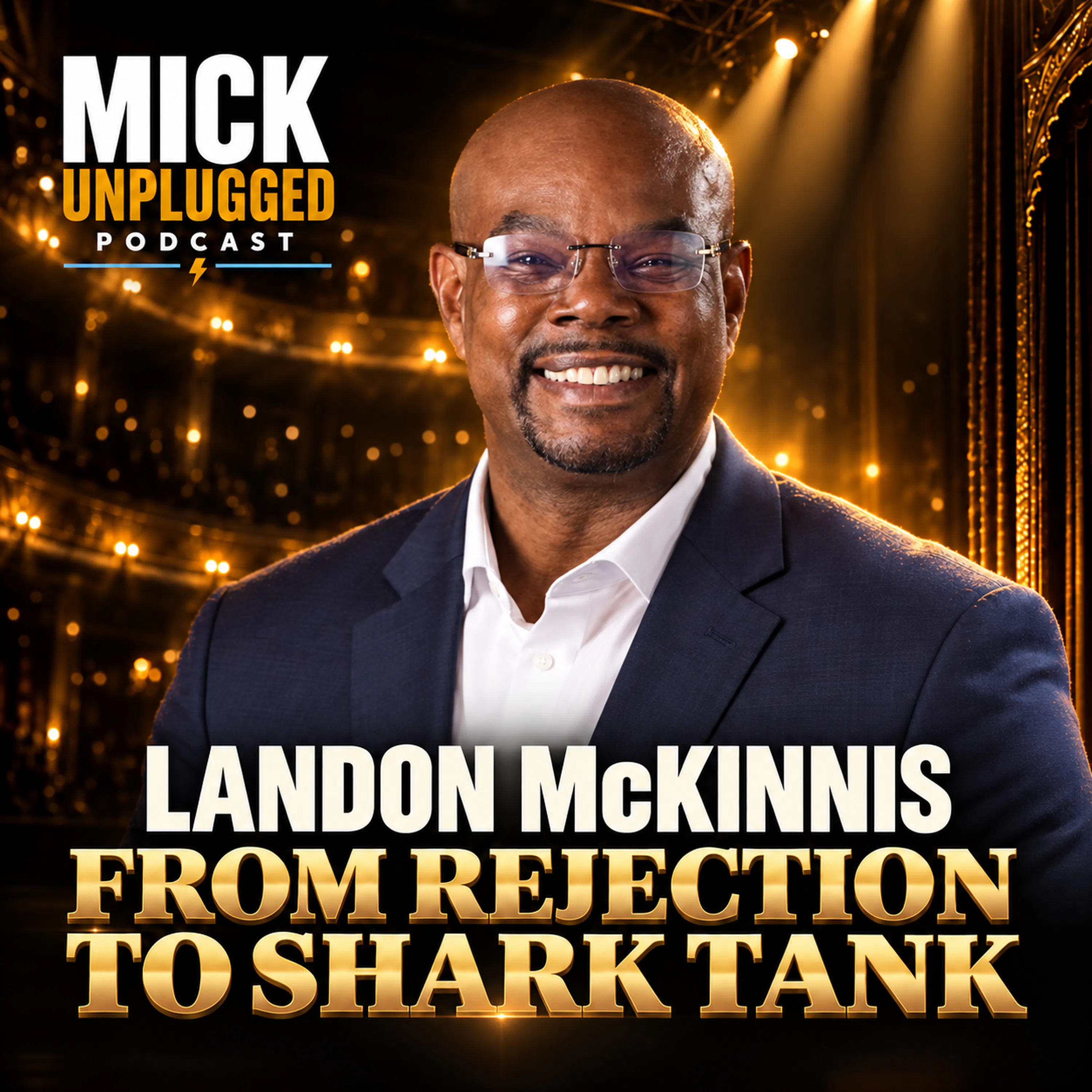 Landon McKinnis: From Rejection to Shark Tank, Why He Never Quit
Mick Unplugged · Oct 22, 2026 · 49 min
Mick Hunt talks with GoNutz founder Landon McKinnis about his family-driven purpose, racial identity, faith, grief, going viral, and pitching on Shark Tank.
 What If Success Isn’t Enough? Conscious Living Practices with Steve Farrell
Notes from the Edge · Oct 21, 2026 · 47 min
Lisa Lacy talks with entrepreneur Steve Farrell about leaving Silicon Valley success for conscious living, interconnectedness, his book The Inner Way, and Humanity's Team.
 $500M PORTFOLIO: REAL ESTATE MOGUL ON BUYING PROPERTIES & BUSINESSES || ABRAHAM GRAY || EPISODE 092
The Code To Winning · Oct 20, 2026 · 57 min
Entrepreneur Abraham Gray describes building a gold-buying chain and a 225-property portfolio, and shares his rules for buying businesses, real estate, partnerships and negotiation.
 Daniel Lubetzky: He Almost Quit After 10 Years, Then Built KIND Snacks Into a Multibillion-Dollar Business | Entrepreneurship | E421
Young and Profiting (YAP) with Hala Taha: Entrepreneurship and Self-Improvement Podcast · Oct 19, 2026 · 1 h 30 min
Hala Taha interviews KIND Snacks founder Daniel Lubetzky about a decade of PeaceWorks failures, building KIND, leadership, investors, Shark Tank, and peacebuilding in Gaza.
 From Supermodel to Stem Cell Skincare Empire | Ekin Ozlen | Coffeez with Joe Shalaby Ep. 321
Coffeez with Joe Shalaby · Oct 14, 2026 · 1 h 13 min
Joe Shalaby talks with KERACELL founder Ekin Ozlen about modeling, Miss Turkey, losing her first husband, IVF, and building a stem cell skincare brand.
More from Young and Profiting (YAP) with Hala Taha: Entrepreneurship and Self-Improvement Podcast
- Daniel Lubetzky: He Almost Quit After 10 Years, Then Built KIND Snacks Into a Multibillion-Dollar Business | Entrepreneurship | E421
Oct 19, 2026 · 1 h 30 min
Hala Taha interviews KIND Snacks founder Daniel Lubetzky about a decade of PeaceWorks failures, building KIND, leadership, investors, Shark Tank, and peacebuilding in Gaza.
 Haley Sacks: The American Dream Is Dead! The New Rules for Building Real Wealth | Finance | E419
Oct 5, 2026 · 1 h 11 min
Hala Taha talks with Haley Sacks (Mrs. Dow Jones) about the new American dream, freedom funds, outdated money rules, earning more, and entrepreneur tax strategy.
 Hala Taha: How to Turn Social Media Visibility Into a Revenue Engine | Marketing
Oct 2, 2026 · 51 min
In a crossover from Built in Public, Courtney Johnson interviews Hala Taha about growing her personal brand on LinkedIn and turning that visibility into YAP Media.
 Shelby Haas-Sapp: The Sales Psychology That Gets Buyers to Sell Themselves | Sales | YAPClassic
Sep 30, 2026 · 1 h 18 min
Hala Taha talks with She Sells Academy founder Shelby Haas-Sapp about sales psychology, objection handling, high-ticket closing, social media branding and webinar selling.
From the publisher
Katie Diasti turned her business school class project into Viv, a sustainable period care business, with just $5,000. When manufacturers demanded massive minimum orders, far beyond her budget, she negotiated a $3,500 production run and hand-packed orders from her apartment. As demand grew, she turned to Amazon to reach more customers and handle fulfillment. Today, Viv has generated over $3 million in revenue and expanded into 2,000 retail locations. In this episode, recorded at Amazon Accelerate 2026, Katie shares how she uses Amazon's seller tools to drive repeat sales and build a profitable business with product margins above 70%. In this episode, Hala and Katie will discuss: (00:00) Introduction (00:58) Introducing Viv: Clean, Sustainable Period Care (03:28) Turning a College Project Into a Business (07:39) Launching a Startup With Just $5,000 (13:42) How Amazon Drives Sales and Subscriptions (19:14) Using Social Media and Amazon Insights (24:12) Turning Viral Attention Into Product Sales (30:11) Using Amazon Data to Drive Repeat Sales (32:16) Viv's Revenue, Costs, and Product Margins (34:54) Raising $2 Million After Proving Profitability (39:54) How Amazon Supported Viv's Retail Expansion (44:49) Building a Profitable, Sustainable Product Brand Katie Diasti is the founder and CEO of Viv, a modern period care brand sold online and in 2,000 retail locations across the U.S., including Whole Foods and Sprouts. Named to Forbes' 2024 30 Under 30 list and recognized as one of Women in Retail's 25 Most Inspirational Female Leaders in 2024, Katie has led Viv to raise over $3 million in funding and achieve over 70 million in social media reach. Sponsored By: This episode is sponsored by Amazon and recorded at Amazon Accelerate 2026, Amazon's annual seller conference. More than 60% of sales in Amazon's store come from independent sellers, most of which are small and medium-sized businesses. Amazon provides tools and services to help these entrepreneurs grow their business…
Summary, chapters and key points were generated from the episode transcript on October 29, 2026. Quotes are checked word for word against the transcript.