
Jonathan Haidt
American social psychologist, professor at NYU Stern School of Business, and author of The Anxious Generation
Jonathan Haidt (American social psychologist, professor at NYU Stern School of Business, and author of The Anxious Generation) has appeared as a guest on 1 episode in TMT. Topics they speak about most include Screen time rules for families, Social media and adolescent mental health, Quick dopamine and attention.
In their words
Positions and remarks grouped by topic, each with the exact quote and where it was said.
Screen time rules for families
Haidt says the worst online harms, including porn addiction and sexual predation, happen overnight, so devices must leave the bedroom.
“the rule has to be all devices out of the bedroom by 10 o'clock or something or other, because that's where the worst stuff happens is overnight”
The Mel Robbins Podcast: NYU Professor: Do This for 2 Weeks to Get Your Focus, Motivation, & Life Back (Sep 14, 2026) · Listen from 49:16
Haidt's household rules are computers and TVs in common spaces with no screens ever in bedrooms, and long-form stories rather than short-form content.
“you can have a computer in a common space. You can have a TV in a common space. And then you just simply have a rule, no screens in the bedroom ever”
The Mel Robbins Podcast: NYU Professor: Do This for 2 Weeks to Get Your Focus, Motivation, & Life Back (Sep 14, 2026) · Listen from 46:29
Haidt says apps expand to fill every available moment, so parents can impose limits regardless of how addicted a child already is.
“these apps, they expand like a gas to fill every available moment. That's how we get to five hours a day of social media use for kids”
The Mel Robbins Podcast: NYU Professor: Do This for 2 Weeks to Get Your Focus, Motivation, & Life Back (Sep 14, 2026) · Listen from 45:45
Haidt recommends restricting devices in place and time rather than removing them outright, starting with sleep and a 10 p.m. shutoff.
“let's just get your sleep in order. How about, could we just do like everything gets shut off at 10 o'clock? Try to put some structures in space and time”
The Mel Robbins Podcast: NYU Professor: Do This for 2 Weeks to Get Your Focus, Motivation, & Life Back (Sep 14, 2026) · Listen from 43:32
Haidt advises approaching a struggling young man with no moral judgment and enlisting his own desire to change rather than imposing total abstinence.
“it's very important that you enlist the man in wanting to change. Is there a vision of yourself in the future that you'd like to see, or are you happy with the way things are now?”
The Mel Robbins Podcast: NYU Professor: Do This for 2 Weeks to Get Your Focus, Motivation, & Life Back (Sep 14, 2026) · Listen from 43:10
Haidt and his group recommend no social media until age 16.
“So that's why my group says, we say very clearly in the book, no social media till 16”
The Mel Robbins Podcast: NYU Professor: Do This for 2 Weeks to Get Your Focus, Motivation, & Life Back (Sep 14, 2026) · Listen from 18:34
Social media and adolescent mental health
Haidt says roughly 35 social media reduction experiments exist and that those lasting a week or more almost all find anxiety and depression decrease.
“Those that go on for at least a week, ideally two or three, and that focus on mental health, on anxiety and depression, almost all of them find that the levels of those things go down”
The Mel Robbins Podcast: NYU Professor: Do This for 2 Weeks to Get Your Focus, Motivation, & Life Back (Sep 14, 2026) · Listen from 52:46
Haidt cites Arturo Bejar's research finding that about 15% of teens reported an inappropriate approach from a stranger in the past week.
“15% of them get an inappropriate approach from a stranger every week”
The Mel Robbins Podcast: NYU Professor: Do This for 2 Weeks to Get Your Focus, Motivation, & Life Back (Sep 14, 2026) · Listen from 20:02
Haidt argues social media gave teens quantity of connection at the expense of quality, damaging rather than strengthening relationships.
“it severely damaged their relationships because it gave them quantity at the expense of quality. They now had hundreds of friends that they never saw”
The Mel Robbins Podcast: NYU Professor: Do This for 2 Weeks to Get Your Focus, Motivation, & Life Back (Sep 14, 2026) · Listen from 8:57
Haidt says the average American teen spends five hours a day on social media, mostly watching short videos, which displaces friends, sleep, sunshine, and reading.
“the average American teen now spends five hours a day on social media, mostly watching short videos. They're not even liking each other's posts”
The Mel Robbins Podcast: NYU Professor: Do This for 2 Weeks to Get Your Focus, Motivation, & Life Back (Sep 14, 2026) · Listen from 8:57
Haidt argues something fundamental changed between 2010 and 2015, which he calls the great rewiring of childhood.
“Something big changed between 2010 and 2015. I've called it the great rewiring of childhood”
The Mel Robbins Podcast: NYU Professor: Do This for 2 Weeks to Get Your Focus, Motivation, & Life Back (Sep 14, 2026) · Listen from 7:48
Quick dopamine and attention
Haidt advises turning off almost all notifications and treating attention as sacred and precious.
“Treat your attention as though it is sacred and precious. And if you can get larger pieces of it, your life will change”
The Mel Robbins Podcast: NYU Professor: Do This for 2 Weeks to Get Your Focus, Motivation, & Life Back (Sep 14, 2026) · Listen from 56:01
Haidt recounts an NYU student who spent ten hours a day on video games and social media and whose life transformed after changing his digital habits.
“One young man, he was spending 10 hours a day on video games and social media, 10 hours a day as a college student”
The Mel Robbins Podcast: NYU Professor: Do This for 2 Weeks to Get Your Focus, Motivation, & Life Back (Sep 14, 2026) · Listen from 35:58
Haidt says a child's extreme upset when a device is taken away signals dopamine adaptation, and that the brain takes a couple of weeks to restore itself.
“If when you take something away, the kid is very upset, that's a definite sign of dopamine adaptation”
The Mel Robbins Podcast: NYU Professor: Do This for 2 Weeks to Get Your Focus, Motivation, & Life Back (Sep 14, 2026) · Listen from 26:29
Haidt tells listeners that following his digital habit program will make them smarter, emotionally stronger, and more sociable, and thus more successful in love and work.
“if you make these changes to your habits, by the end of the course, you will become smarter, stronger emotionally, and more sociable”
The Mel Robbins Podcast: NYU Professor: Do This for 2 Weeks to Get Your Focus, Motivation, & Life Back (Sep 14, 2026) · Listen from 6:23
Crisis of boys and young men
Haidt, citing Richard Reeves, says the gap between boys and girls is largest in the bottom half of the income distribution.
“as we go down in social class, it's the boys that are really, really dropping off. So that in the bottom half, economically, we see a huge gap between boys and girls”
The Mel Robbins Podcast: NYU Professor: Do This for 2 Weeks to Get Your Focus, Motivation, & Life Back (Sep 14, 2026) · Listen from 33:36
Haidt claims many young men are effectively consigned to unmarriageability because their capacity to pursue long-term goals has been damaged.
“a lot of our boys are basically consigned to unmarriageability because they've been damaged by this and they don't have the ability to really pursue long-term goals”
The Mel Robbins Podcast: NYU Professor: Do This for 2 Weeks to Get Your Focus, Motivation, & Life Back (Sep 14, 2026) · Listen from 29:36
Haidt uses a metaphor of a thousand baited fishing hooks descending on a boy to describe the commercial competition for his attention.
“for boys, it's open season on their dopamine system. Open season, companies are sending out fishing fleets to try to suck out all the dopamine”
The Mel Robbins Podcast: NYU Professor: Do This for 2 Weeks to Get Your Focus, Motivation, & Life Back (Sep 14, 2026) · Listen from 28:01
Haidt says the thing to watch for boys is not social media specifically but quick dopamine from gambling, porn, and video games carried in their pocket.
“For boys, the thing to keep your eye on isn't necessarily social media. It's quick dopamine. Boys now have a slot machine, a porn theater, a video game parlor”
The Mel Robbins Podcast: NYU Professor: Do This for 2 Weeks to Get Your Focus, Motivation, & Life Back (Sep 14, 2026) · Listen from 12:50
Executive function
Haidt argues the biggest harm from these technologies is not mental illness but the destruction of attention, focus, and executive function.
“The biggest damage is the destruction of the human ability to pay attention, to focus, and to pursue goals”
The Mel Robbins Podcast: NYU Professor: Do This for 2 Weeks to Get Your Focus, Motivation, & Life Back (Sep 14, 2026) · Listen from 30:19
The Anxious Generation
Haidt summarizes his book as arguing that children have been overprotected in the real world and underprotected online.
“we have overprotected our children in the real world where they need a huge amount of experience unsupervised. and we have underprotected them online”
The Mel Robbins Podcast: NYU Professor: Do This for 2 Weeks to Get Your Focus, Motivation, & Life Back (Sep 14, 2026) · Listen from 23:58
Meta youth mental health litigation
Haidt reads an internal Instagram researcher's note stating that intermittent rewards are the most effective way to keep users returning, likening it to slot machines.
“How to keep someone returning over and over to the same behavior each day? Intermittent rewards are most effective. Think slot machines”
The Mel Robbins Podcast: NYU Professor: Do This for 2 Weeks to Get Your Focus, Motivation, & Life Back (Sep 14, 2026) · Listen from 16:55
Haidt identifies 2012 as the pivotal year for girls, when front-facing cameras and Facebook's purchase of Instagram brought girls onto the platform en masse.
“2012 is the pivotal year for girls, especially. For boys, the curve's a little more curvilinear. There's not such a sharp elbow for boys at 2012”
The Mel Robbins Podcast: NYU Professor: Do This for 2 Weeks to Get Your Focus, Motivation, & Life Back (Sep 14, 2026) · Listen from 11:37
Appearances
 NYU Professor: Do This for 2 Weeks to Get Your Focus, Motivation, & Life Back
The Mel Robbins Podcast · Sep 14, 2026 · 59 min
Social psychologist Jonathan Haidt tells Mel Robbins how quick dopamine from phones harms boys and girls differently and how to reclaim attention.
Discussed in
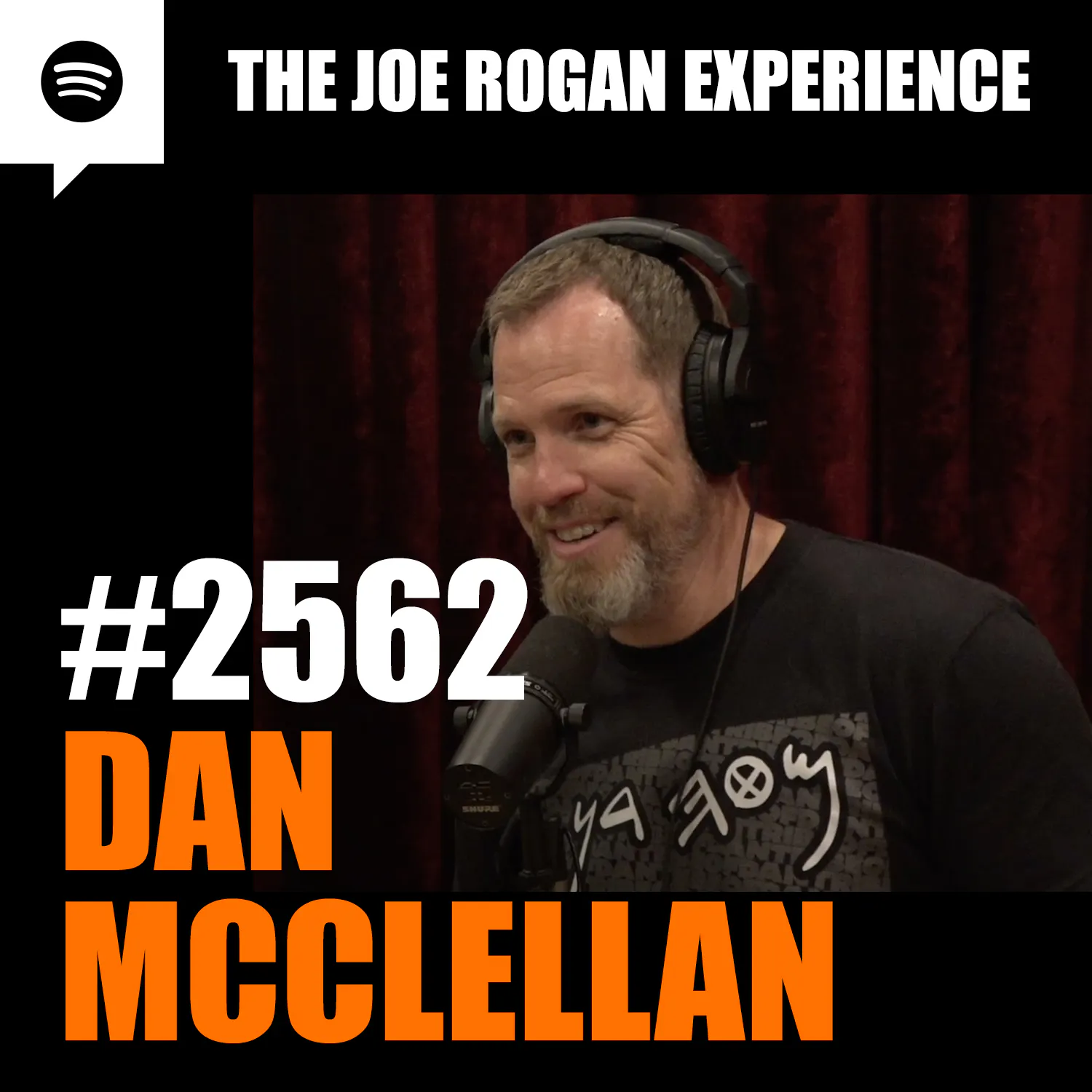 #2562 - Dan McClellan
The Joe Rogan Experience · Oct 7, 2026 · 2 h 42 min
Joe Rogan talks with biblical scholar Dan McClellan about how the Bible was written, ancient Near Eastern sources, hell, cognition and religion in public life.
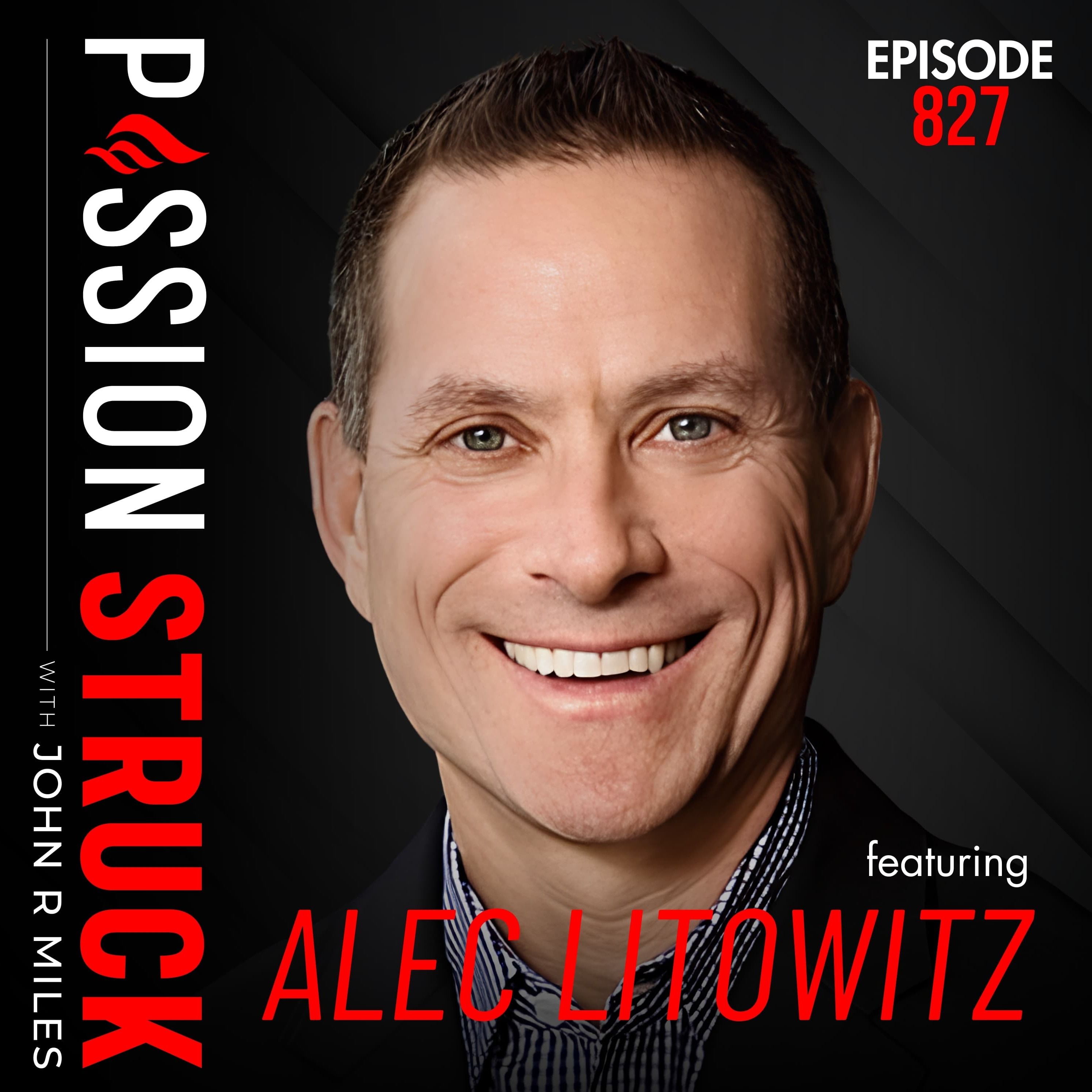 You’re Not Stuck. You’re Swimming in the Wrong Direction | Alec Litowitz - EP 827
Passion Struck with John R. Miles · Oct 1, 2026 · 1 h 12 min
Investor Alec Litowitz tells John R. Miles why adaptability, not IQ, EQ, or grit, is the defining skill of an AI-driven second cognitive revolution.
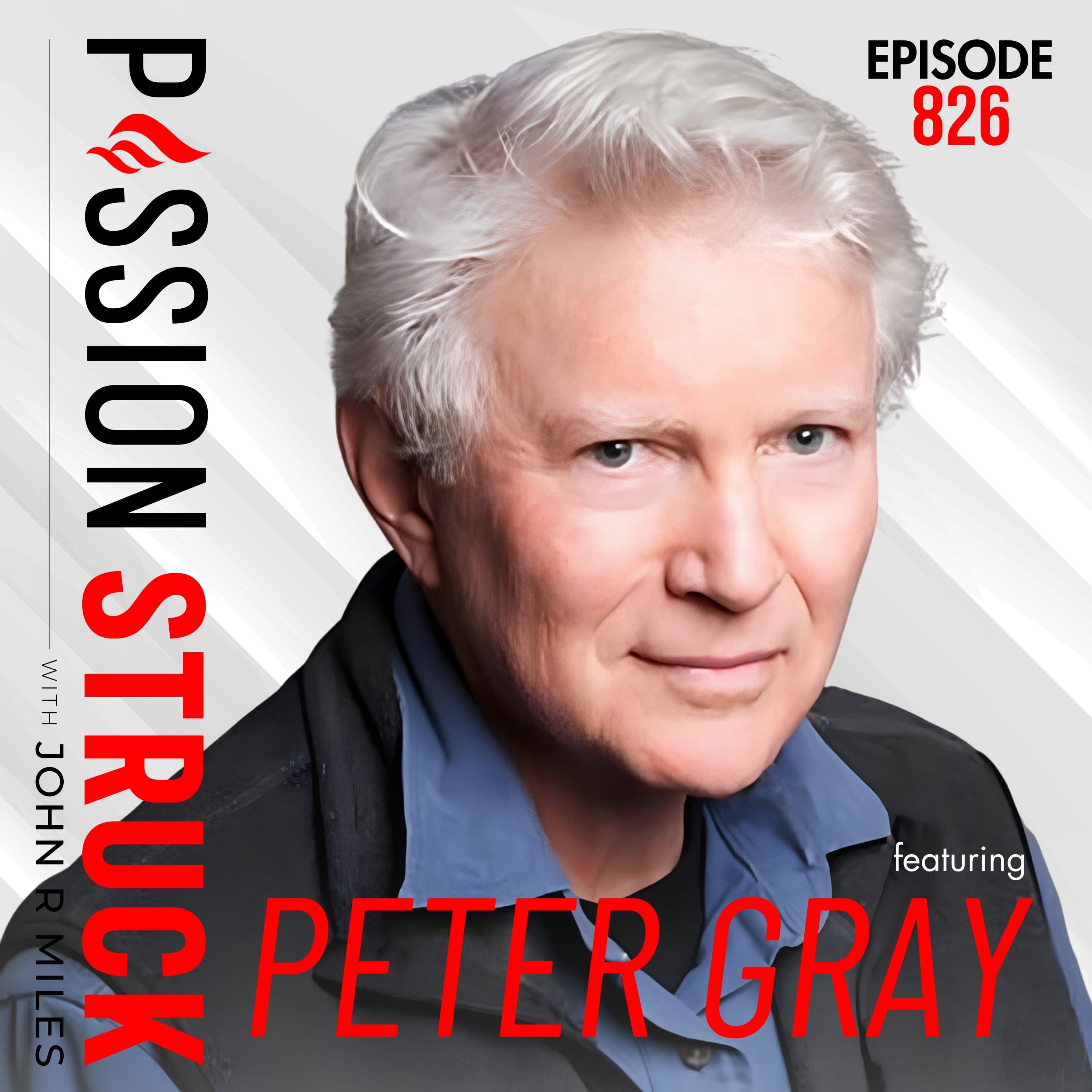 Your Kids Don’t Need More Achievement. They Need More Freedom | Dr. Peter Gray - EP 826
Passion Struck with John R. Miles · Sep 29, 2026 · 1 h 17 min
Evolutionary psychologist Peter Gray tells John R. Miles why children need free play and independence, blaming school pressure rather than smartphones for the youth mental health crisis.
 The Art of True Happiness | Dr. Arthur Brooks
Huberman Lab · Sep 14, 2026 · 2 h 50 min
Andrew Huberman and Arthur Brooks discuss the three macronutrients of happiness, the four worldly idols, leisure, addiction, faith, and questions for finding meaning.
- Using AI to Increase Your Intelligence & Enrich Humanity | Dr. Fei-Fei Li
Huberman Lab · Aug 10, 2026 · 2 h 8 min
Andrew Huberman and computer scientist Fei-Fei Li discuss vision, how modern AI learns, its limits versus human cognition, AI in medicine and robotics, and education.
Often appears with
- Mel Robbins · 1 shared episode