
What Humans, Animals and Plants Tell Us About Consciousness | Michael Pollan
Episode of Huberman Lab · September 28, 2026 · 2 h 3 min
Andrew Huberman and author Michael Pollan discuss consciousness, plant intelligence, the microbiome, psychedelics, food politics and Pollan's experiment quitting caffeine.
Summary
Neuroscientist Andrew Huberman interviewed author Michael Pollan about his book A World Appears: A Journey Into Consciousness. After remembering the late writer Wendell Berry, Pollan distinguished sentience, which he described as a basic awareness of environmental change possibly shared by plants and single-celled organisms, from the more elaborated human consciousness. He described research on plant intelligence, including corn roots navigating mazes and Venus flytraps losing responsiveness under anesthesia, and argued that plants such as corn, cannabis and coffee have co-evolved with humans by manipulating our desires.
The two discussed self versus other recognition, Michael Levin's xenobots, and the microbiome; Huberman voiced worry that humans may be vessels for microbes, while Pollan called the relationship a two-way street. Pollan favored the view, associated with Antonio Damasio and Mark Solms, that consciousness originates in feelings registered in the brainstem rather than in cortical thought, and cited a study in which ginger reduced moral disgust. He described ego dissolution on high-dose psilocybin, said he no longer dismisses filter theories of consciousness or panpsychism, and argued that silicon computers are unlikely to become conscious because the brain-as-computer metaphor is faulty.
Pollan recounted his childhood gardening and his father's alcoholism, and described the food system as still broken nearly two decades after The Omnivore's Dilemma. He criticized the Trump administration's food record despite Robert F. Kennedy Jr.'s rhetoric, while crediting the MAHA movement for creating left-right coalitions. Both praised bipartisan support for psychedelic medicine, including Ibogaine for veterans; Pollan attributed the fast-tracking of psychedelic approvals to Joe Rogan's influence on Donald Trump and predicted psilocybin approval might come soon. The conversation closed with Pollan's account of a three-month caffeine fast and his view that caffeine is broadly beneficial.
Chapters
- 0:55
Introduction and Wendell Berry
Huberman introduces Pollan and the two reminisce about the late poet and farmer Wendell Berry and his influence on Pollan's view of nature.
- 6:29
Defining consciousness and sentience
Pollan offers working definitions of consciousness, citing Thomas Nagel, and distinguishes sentience from human consciousness.
- 10:05
Plant intelligence and self-recognition
Pollan describes plant sensing, problem-solving and anesthesia responses, and both discuss self-versus-other rules in neurons and roots.
- 20:49
Plants, coevolution and manipulation
Pollan explains how plants like corn, cannabis and catnip shape animal behavior through chemistry and evolutionary trial and error.
- 28:58
Self-awareness, xenobots and the microbiome
They discuss why awareness evolved, Michael Levin's xenobots, and whether gut microbes manipulate human behavior.
- 40:19
Feelings, the brainstem and body-brain communication
Pollan presents the Damasio-Solms view that consciousness begins with homeostatic feelings and discusses the vagus nerve and a ginger and moral disgust study.
- 57:08
Collective consciousness and ego dissolution
Pollan describes his psilocybin ego dissolution, the value of awe and meditation, and Christof Koch's ayahuasca experience.
- 1:08:14
Filter theories, AI and quantum effects
They discuss filter theories of consciousness, why Pollan doubts computers can be conscious, puzzling memory experiments and speculative quantum explanations.
- 1:21:15
Childhood gardening and relating to nature
Pollan recounts growing a watermelon as a child and argues the garden is a valuable laboratory for learning how to behave in nature.
- 1:27:08
Food movement, advocacy and politics
Pollan discusses The Omnivore's Dilemma, his grass-fed beef reporting, the still-broken food system, MAHA and the administration's record.
- 1:44:49
Psychedelic medicine and its politics
They credit Rick Perry and Rick Doblin for bipartisan psychedelic advocacy and discuss FDA prospects for Ibogaine, MDMA and psilocybin along with risks.
- 1:52:13
The caffeine fast
Pollan describes quitting caffeine for three months, the health benefits of caffeine, and his view that drugs are about context.
Key points
What was said, by whom, with the exact words. Timestamps jump to the moment.
- Michael Pollan
Pollan argues that science has no real understanding of how brain matter generates consciousness, or whether it does.
“we have no idea about consciousness really, how brain matter generates consciousness, if indeed that's how it happens”
- Michael Pollan
Pollan defines sentience as a basic ground floor of consciousness involving awareness of and response to environmental changes.
“Sentience being a more basic kind of ground floor of consciousness that includes awareness of your environment and a recognition of changes”
Linked moment · 10:05Skip to 10:05 using a listen link in the info box.
Michael PollanPollan cites research showing corn roots can solve a maze to reach fertilizer, which he considers a form of problem-solving intelligence.
“You can give it a maze and put some fertilizer, some ammonium nitrate in one corner of it, and the roots will find the fastest path to that ammonium nitrate”
- Michael Pollan
Pollan argues that consciousness can exist without a self, as meditators and psychedelic users experience.
“It turns out you can have consciousness without a self”
- Michael Pollan
Pollan argues that domesticated plants like corn spread by evolving to satisfy human desires.
“So corn came to dominate the landscape in much of the world because it figured out what we wanted from it”
- Andrew Huberman
Huberman confesses worry that humans may simply be vessels serving the spread of their microbiota.
“I just worry that perhaps Sonnenberg's theory is right, which is we're literally just vessels”
- Michael Pollan
Pollan counters that humans also exploit gut bacteria to produce needed metabolites, making the relationship mutual.
“So we're manipulating them at the same time they're manipulating us. I think it's a two-way street”
- Michael Pollan
Pollan finds persuasive the view that consciousness originates in feelings registered in the brainstem rather than in cortical thought.
“consciousness doesn't begin with thought in the cortex, but with feeling in the brainstem or feelings registered in the brainstem”
- Michael Pollan
Pollan cites an experiment in which people given ginger were less morally judgmental, as evidence that body and mind are tightly integrated.
“the people who had taken the ginger were less judgmental because their stomachs were calmed”
- Michael Pollan
Pollan says his psilocybin ego-dissolution experience gave him lasting perspective on his ego and that such experiences have value.
“So I think there's a value in having an experience of ego dissolution”
- Michael Pollan
Pollan argues that conscious silicon computers are unlikely because the brain-as-computer metaphor is flawed.
“As long as we're dealing with silicon computers, the idea that you could have a conscious computer is based on a faulty metaphor of the brain as a computer”
- Andrew Huberman
Huberman says memory-replay experiments showing neurons can be fired in any order to evoke the same behavior undermine the idea that firing sequence matters for memory.
“So our whole notion of the temporal ordering of firing of neurons being important for memories is like, it's complete horseshit”
- Michael Pollan
Pollan argues that U.S. agriculture remains centered on corn and soy, the building blocks of harmful ultra-processed food.
“we still have a agriculture that is all about growing corn and soy, which are the building blocks of ultra processed food, which is making us sick and killing us”
- Michael Pollan
Pollan argues that bipartisan coalitions are the only way to achieve change in the current political climate.
“this is the only way in our current political moment anything gets done is you need support on the right as well as the left”
- Michael Pollan
Pollan argues that corn subsidies drive diabetes, so government supports both the cause and treatment of the disease.
“we subsidize corn, which gives us high fructose corn syrup, which gives us diabetes”
- Michael Pollan
Pollan says the administration's only food change has been voluntary removal of some cereal dyes, which he considers minor.
“the only change they've made on food after over two years has been getting food companies to voluntarily remove some dyes from cereal”
- Michael PollanPrediction · due Dec 2026
Pollan reports hearing that psilocybin from Compass Pathways could be approved before the end of the year.
“And then psilocybin coming from a company called Compass Pathways is also close. You know, I hear before the end of the year”
- Michael Pollan
Pollan attributes the fast-tracking of psychedelic approvals to Joe Rogan lobbying President Trump.
“The reason it's happening, we should be clear, is because Joe Rogan texted the president and said, this is really important”
- Michael Pollan
Pollan argues that psychedelics have great therapeutic potential because existing mental health treatments work poorly.
“the field of mental health needs new tools. The ones they have just don't work very well”
- Michael Pollan
Pollan says caffeine has many positive health effects up to about seven or eight cups a day.
“It has a lot of very positive health effects, up to seven or eight cups a day”
- Michael Pollan
Pollan recounts that his first coffee after a three-month caffeine fast was a more powerful drug experience than any psychedelic.
“The day I got back on caffeine, my first cup, it was just the best drug experience, better than any psychedelic experience I've had”
- Michael Pollan
Pollan argues that drugs are not inherently good or bad and that context determines their effects.
“Drugs are not good or bad. I mean, it's all about context”
People
In the conversation
- Andrew HubermanAmerican neuroscientist, professor at Stanford School of Medicine and host of the Huberman Lab podcast
- Michael PollanJournalist and author of How to Change Your Mind
Discussed
- Wendell BerryAmerican poet, farmer and essayist who influenced Pollan
- Thomas NagelAmerican philosopher, author of 'What Is It Like to Be a Bat?'
- Michael LevinTufts biologist who creates xenobots
- Justin SonnenbergStanford microbiologist whose study linked low-sugar fermented foods to reduced inflammation
- Antonio DamasioNeuroscientist who emphasized the role of feelings in consciousness
- Mark SolmsSouth African psychiatrist and neuroscientist who links consciousness to the brainstem
- Christof KochNeuroscientist and former head of the Allen Brain Institute
- Aldous HuxleyEnglish writer quoted at the episode's close
- Dacher KeltnerAmerican psychologist and ten Brinke's collaborator on psychopathy and success research
- Rick PerryFormer Texas governor involved in the Texas ibogaine initiative
- Rick DoblinFounder of MAPS and psychedelic advocate
- Robert F. Kennedy Jr.Health secretary whose appointment Jesse Kelly cited as coalition-building
- Joe RoganAmerican comedian and host of The Joe Rogan Experience
- Donald TrumpPresident of the United States whose conduct of the Iran war is the episode's main subject
- Roland GriffithsJohns Hopkins psychedelic researcher
- Joel SalatinVirginia farmer pioneering grass-based agriculture
- Chellie PingreeMaine congresswoman and organic farmer
- Tim FerrissAmerican author, podcaster and investor, host of The Tim Ferriss Show
Topics
Related episodes
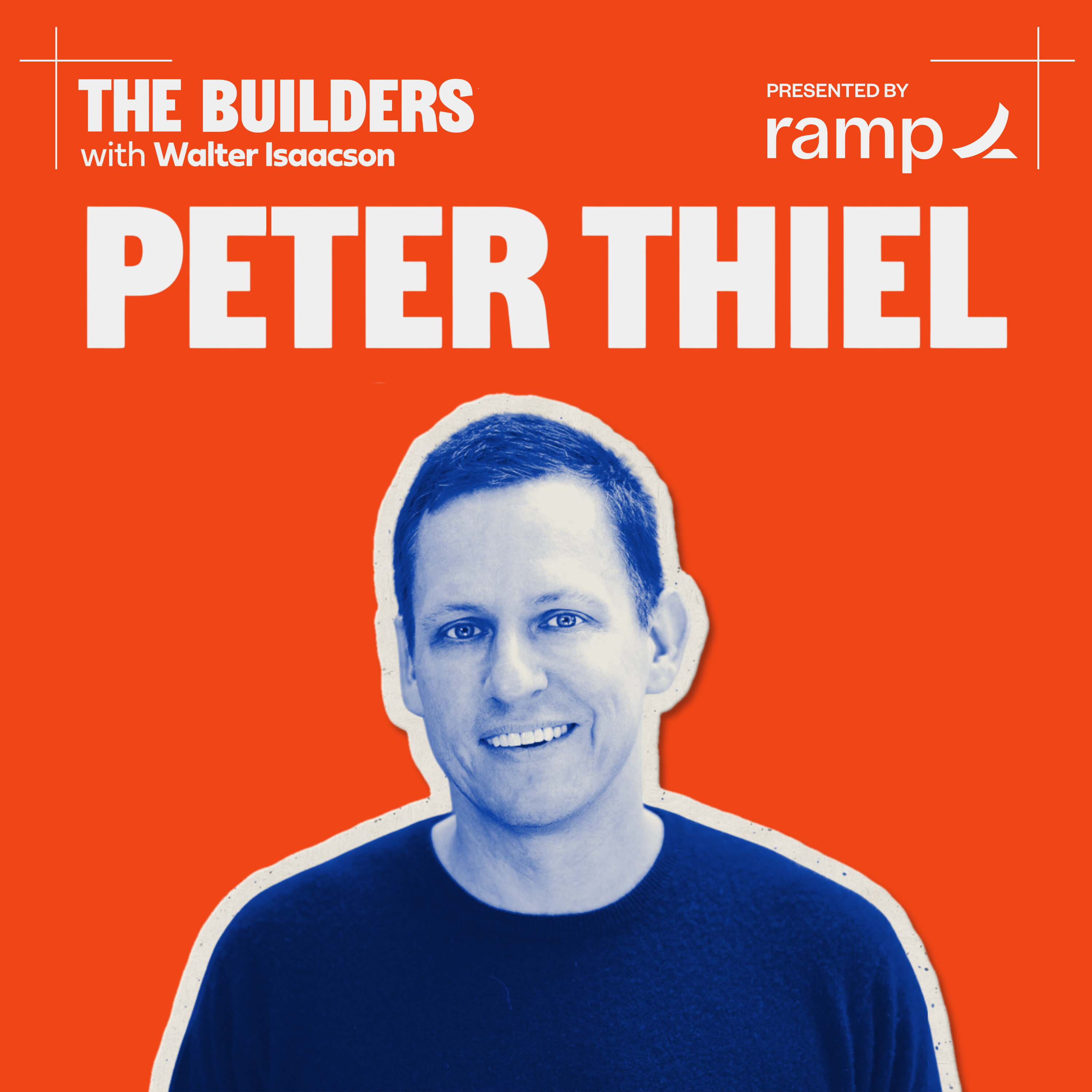 Peter Thiel: “We Need to Hit the Accelerator as Hard as Possible” on AI
The Builders · Oct 22, 2026 · 58 min
Walter Isaacson interviews Peter Thiel on the AI backlash, existential risk, his Antichrist lectures, founder-led companies, René Girard, and why he prefers evil to incompetence.
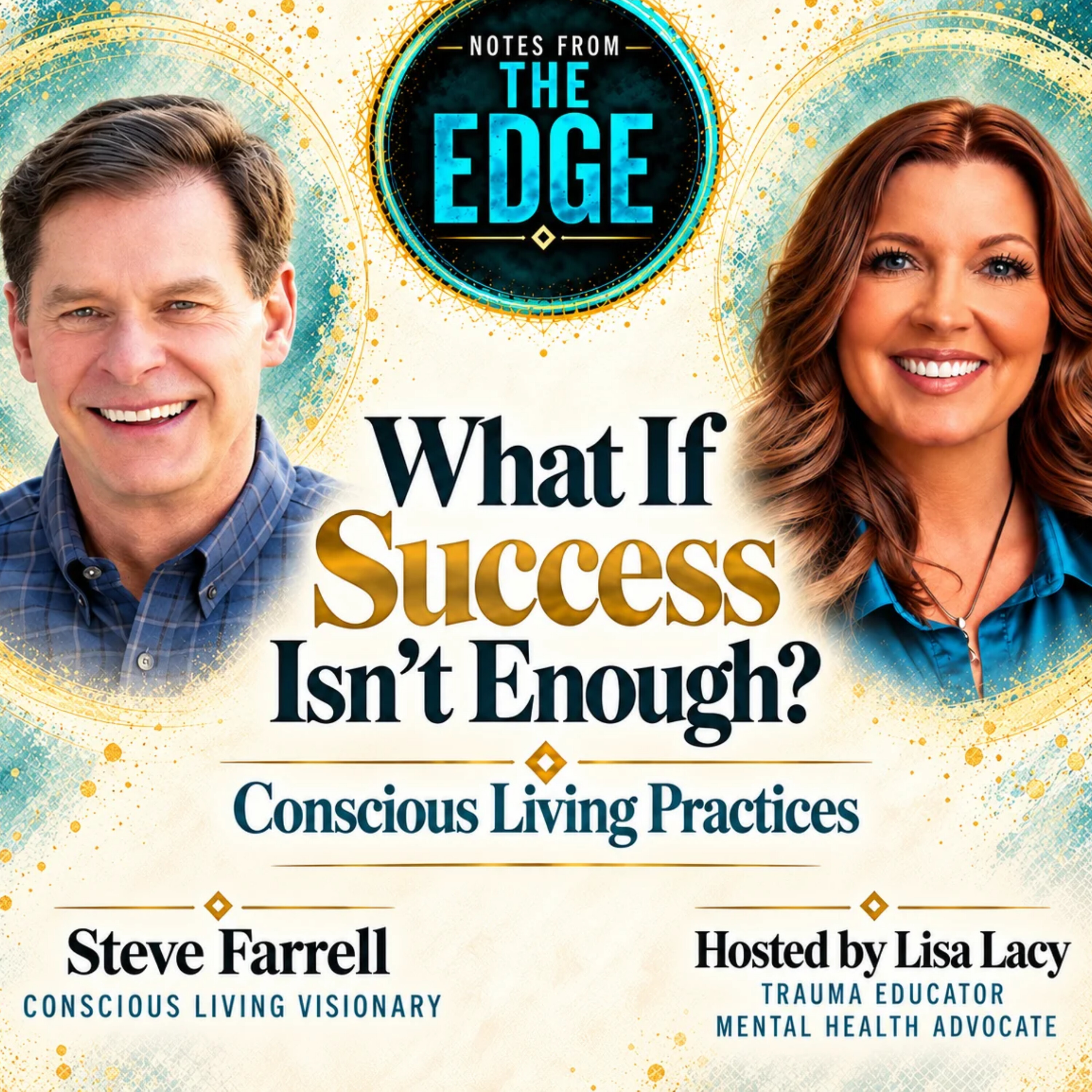 What If Success Isn’t Enough? Conscious Living Practices with Steve Farrell
Notes from the Edge · Oct 21, 2026 · 47 min
Lisa Lacy talks with entrepreneur Steve Farrell about leaving Silicon Valley success for conscious living, interconnectedness, his book The Inner Way, and Humanity's Team.
 Sometimes I Feel Afraid to Trust Myself Because My Life Is Beginning to Call Me in a Different Direction — The Emotional and Spiritual Growth That Helped Me Trust My Higher Power and Discover My True Purpose
We! · Oct 20, 2026 · 1 h 32 min
Joe Mittiga reflects on trusting one's higher power, stages of consciousness, his addiction recovery, and a painful breakup that redirected his emotional healing.
 OpenAI Bulk-Solves 722 Math Problems, Anthropic’s Cruelty Policy, and Elon’s Quadrillion-Dollar SpaceX | EP #302
Moonshots with Peter Diamandis · Oct 15, 2026 · 2 h 1 min
Peter Diamandis, Alex Wissner-Gross, Salim Ismail and Dave Blundin discuss OpenAI's bulk math solutions, Anthropic's AI cruelty ban, Meta's Muse Wonder, virtual cells, BCIs and Elon Musk's quadrillion-dollar SpaceX claim.
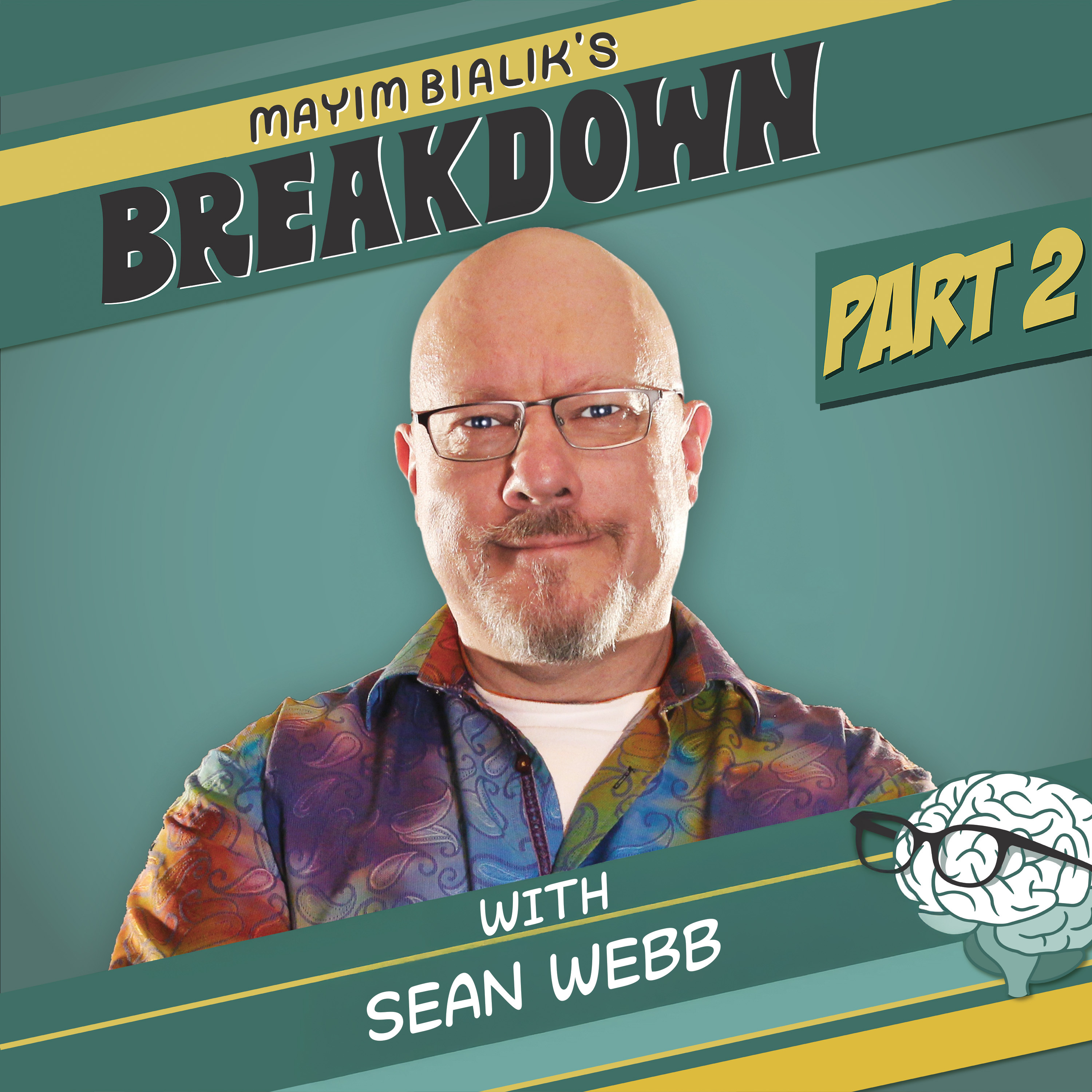 Part Two: He Called Out to Nonhuman Intelligence at Lake Hartwell. Three Minutes Later, Navy SEALs Watched Two Objects Perform a Maneuver No Terrestrial Craft Could Make | Sean Webb
Mayim Bialik's Breakdown · Oct 7, 2026 · 52 min
Sean Webb tells Mayim Bialik and Jonathan Cohen about receiving information from nonhuman intelligence, AI emotions and alignment, and Jesus and quantum mechanics.
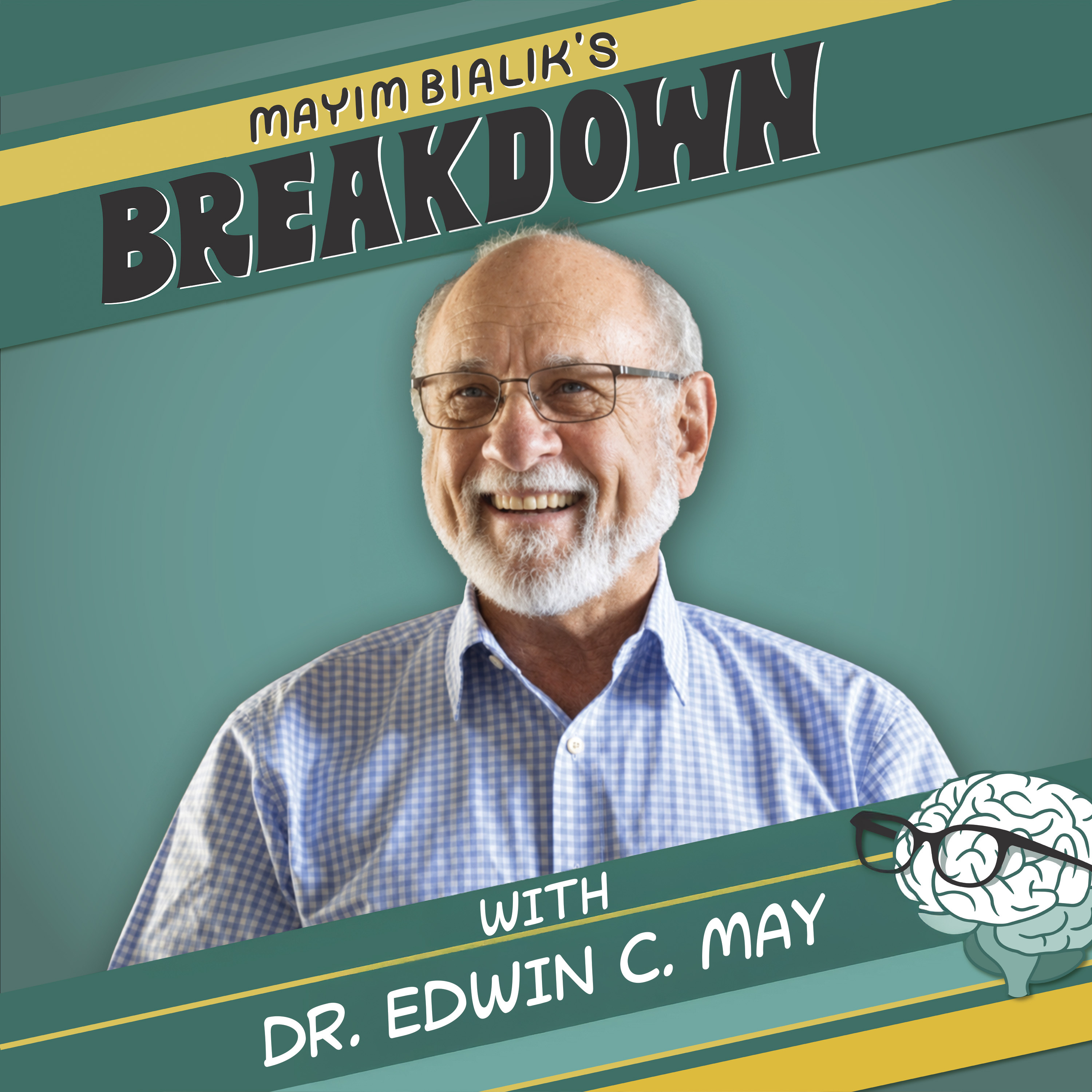 CIA Used Psychics To See The Future: The Secret Remote Viewing Program That Sent Psychic Spies on 500 Classified Missions, Plus Signs That You Might Have These Abilities | Dr. Edwin C. May
Mayim Bialik's Breakdown · Oct 2, 2026 · 1 h 4 min
Physicist Edwin C. May tells Mayim Bialik and Jonathan Cohen about the U.S. government's Star Gate remote viewing program, precognition research, and his materialist worldview.
More from Huberman Lab
 Best Tools for Gut Health & Weight Loss | Dr. Chris Thompson
Sep 21, 2026 · 2 h 28 min
Andrew Huberman and gastroenterologist Chris Thompson discuss gut anatomy, fiber and the microbiome, GLP-1 drugs, early metabolic testing, gut permeability, and endoscopic and gene-therapy obesity treatments.
- The Art of True Happiness | Dr. Arthur Brooks
Sep 14, 2026 · 2 h 50 min
Andrew Huberman and Arthur Brooks discuss the three macronutrients of happiness, the four worldly idols, leisure, addiction, faith, and questions for finding meaning.
- How Mitochondria Control Your Metabolism | Dr. Jared Rutter
Sep 7, 2026 · 2 h 4 min
Biochemist Jared Rutter explains to Andrew Huberman how mitochondria allocate cellular resources between energy and growth, shaping aging, heart failure, and cancer.
- How to Improve Motivation & Overcome Procrastination | Dr. Masud Husain
Aug 24, 2026 · 2 h 21 min
Andrew Huberman and Oxford neurologist Masud Husain discuss the neuroscience of motivation, apathy, dopamine, effort-reward decisions, attention, ADHD, and Alzheimer's resilience.
- Using AI to Increase Your Intelligence & Enrich Humanity | Dr. Fei-Fei Li
Aug 10, 2026 · 2 h 8 min
Andrew Huberman and computer scientist Fei-Fei Li discuss vision, how modern AI learns, its limits versus human cognition, AI in medicine and robotics, and education.
From the publisher
Michael Pollan is a renowned author, journalist and professor at UC Berkeley. He is best known for his influential works on how humans and plants have shaped each other at the level of food, medicine, health, and culture. In this episode we discuss consciousness—what it is and how the recognition between our self vs others contributes to-- but also can impair, certain aspects of conscious experience. We discuss psychedelics, the microbiome, caffeine, and how the unconscious dialogue between our body and brain impacts our thoughts and feelings. Pollan offers a hopeful perspective on how our relationship with plants and animals – including other humans, can lead us to a healthier, and far richer experience of life. Read the full episode show notes at hubermanlab.com. Thank you to our sponsors AG1: https://drinkag1.com/huberman Eight Sleep: https://eightsleep.com/huberman Function: https://functionhealth.com/huberman Mateina: https://drinkmateina.com Rorra: https://rorra.com/huberman Timestamps (00:00:00) Michael Pollan (00:02:50) Wendell Berry, Nature (00:06:30) Consciousness; Sentience (00:10:04) Environmental Response, Plant Intelligence; Self-Recognition (00:13:52) Sponsors: Eight Sleep & Rorra (00:20:49) Plants, Communication, Sentience, Symbiosis (00:27:37) Self-Awareness, Time; Xenobots, Instinct (00:34:32) Microbiome, Influence & Symbiosis (00:40:28) Meaning; Cortex vs Brain Stem, Homeostatic Feelings (00:47:17) Sponsor: AG1 (00:48:36) Body & Brain Communication, Vagus Nerve (00:57:21) Collective Consciousness, Psychedelics, Ego, Awe (01:08:14) Filter Theories of Consciousness (01:13:28) Sponsor: Function (01:15:06) AI, Consciousness, Feelings; Memory; Quantum Effects (01:21:27) Childhood, Gardening, Interacting with Nature (01:27:08) Hope, Nature & Agency, Food Industry (01:32:21) Advocacy, Psychedelics, Food Industry (01:39:50) Sponsor: Mateina (01:44:52) Psychedelics, Ibogaine, Veterans, Politics; MDMA, Psilocybin; Risk (01:52:18) Caffeine, Caffeine Fast, H…
Summary, chapters and key points were generated from the episode transcript on October 24, 2026. Quotes are checked word for word against the transcript.