
Positive Psychology Founder: How To Stop Your Negative Thoughts - Martin Seligman - #1167
Episode of Modern Wisdom · October 24, 2026 · 1 h 21 min
Chris Williamson talks with psychologist Martin Seligman about learned helplessness, optimism, his new book Agency, AI and creativity, and the Axial Age.
Summary
Martin Seligman, recently turned 84, described the unifying thread of his career as human mastery and agency. He recounted how psychology once ignored happiness, excluded thinking, and assumed determinism, and how his learned helplessness experiments revealed that roughly three in eight subjects resisted helplessness, which led him to study optimism. He described his election as president of the American Psychological Association and the garden conversation with his five-year-old daughter Nikki that inspired positive psychology.
Seligman argued that pessimism is an evolutionary default but optimism can be learned, describing techniques such as disputing catastrophic thoughts and 'putting it in perspective,' which he taught to drill sergeants in the US Army. He defined agency as efficacy, optimism, and imagination, and summarized his book Agency, which maps beliefs in agency against progress from Homer's Greece through Augustine, the Reformation, ancient China, and the Hebrews.
He described using Claude and ChatGPT to write stories for his grandsons and to test his hypothesis that agency vocabulary emerged during the Axial Age, discussed Julian Jaynes's bicameral mind theory, and offered his own view that social upheaval drove theory of mind. He also addressed the shadow sides of agency, his optimism-based prediction of Trump's 2024 win, his unread theory of dreaming, his book What You Can Change and What You Can't, and his resolution to stop complaining at restaurants.
Chapters
- 0:00
The common thread: mastery and agency
Seligman describes three blind spots of mid-century psychology that he helped overturn.
- 3:08
Learned helplessness
Seligman explains his helplessness experiments and the resilient minority that led him to study optimism.
- 9:42
The epiphany behind positive psychology
Seligman recounts his APA presidency and the conversation with his daughter that inspired positive psychology.
- 16:54
Learning optimism
Seligman outlines techniques for disputing catastrophic thoughts and putting events in perspective.
- 27:50
Defining agency
Seligman breaks agency into efficacy, optimism, and imagination and connects it to human history.
- 31:29
Agency through history and religion
Seligman traces agency from Homer through Augustine and the Reformation to modern Protestantism.
- 38:55
Building agency and AI as creative partner
Seligman discusses graded tasks for efficacy and how Claude and ChatGPT boost imagination.
- 49:50
The Axial Age and the words for agency
Seligman describes using AI to show agency vocabulary emerged between 1000 and 500 BCE.
- 57:09
Consciousness and the bicameral mind
Seligman discusses Julian Jaynes's theory and proposes social upheaval drove theory of mind.
- 1:02:05
The shadow side of agency
Seligman explains the dangers of each component of agency.
- 1:04:39
Optimism, elections, and attractiveness
Seligman describes predicting Trump's win from optimism coding and the social appeal of optimism.
- 1:13:44
The good life, dreams, and not being boring
Seligman reflects on flourishing, his dreaming paper, changeability, and his excitement about AI.
Key points
What was said, by whom, with the exact words. Timestamps jump to the moment.
- Martin Seligman
Seligman argues that psychology 60 years ago had three blind spots: happiness, thinking, and determinism, all of which proved wrong.
“psychology had that made asking questions about human happiness and human agency almost impossible. The first blind spot was happiness itself”
- Martin Seligman
Seligman says that traumatic events subjects could control actually left them better off than controls.
“the very first hint of efficacy, agency, and mastery was that traumatic events that you can do something about are actually energizing”
Linked moment · 6:42Skip to 6:42 using a listen link in the info box.
Martin SeligmanSeligman reports that only about five of eight subjects exposed to uncontrollable events became helpless, and the resistant ones were optimists.
“three out of every eight people, three out of every eight animals didn't become helpless. I tried to sweep that under the rug”
- Martin Seligman
Seligman argues psychology focused on misery because NIMH funding and insurance reimbursement paid for treating disorders, not increasing happiness.
“psychology followed the money, essentially, both in getting grants and in treating people at the expense of asking the question, hey, can people flourish?”
- Martin Seligman
Seligman contends that pessimism is an evolutionary inheritance while optimism must be learned.
“So being negative, being a pessimist comes naturally. What does not come naturally and needs learning is being an optimist”
- Martin Seligman
Seligman recommends realistically disputing catastrophic automatic thoughts, saying it makes people more optimistic and less depressed months later.
“When you learn to become a good disputer of automatic thoughts, pessimism changes to optimism, and it's fun”
- Martin Seligman
Seligman defines agency as comprising efficacy, optimism, and imagination.
“to be agentic, you have to be efficacious, believing you can accomplish your goals now, optimistic, I can do them into the future, and imaginative”
- Martin Seligman
Seligman argues that Augustine's doctrine of grace renounced human agency and was followed by nearly a thousand years of stagnation.
“This becomes church doctrine for the next almost thousand years. And what you get by all five criteria is stagnation and regression”
- Martin Seligman
Seligman claims Luther and Calvin were even more anti-agentic than Augustine, though later Protestantism became highly agentic.
“Luther and Calvin out-Augustinian Augustine. That is, they believe in utter depravity, predetermination, and the absence of freedom of the will”
- Martin Seligman
Seligman believes AI is the best companion and supplement to human agency in his lifetime, contrary to doomsayers.
“why I've come to believe AI is the best companion and supplementer of human agency of my lifetime”
- Martin Seligman
Seligman argues AI is creative in the dyadic sense of collaborative pairs like the Wright brothers, though not in a lone-genius sense.
“the second theory of creativity, which is one that I think is most plausible, is that the number is two. It's the Wright brothers going back and forth”
- Martin Seligman
Seligman says that, working with Claude and ChatGPT, he found agency words were absent in 1000 BCE but present in all five Axial cultures by 500 BCE.
“they basically demonstrate that the words don't exist. And that by 500 BCE, all five of these cultures have discovered words about human agency”
- Martin Seligman
Seligman rejects Jaynes's neurological mechanism and proposes that social upheaval drove the emergence of theory of mind and consciousness.
“from my point of view, what social upheaval does is it drives consciousness”
- Martin Seligman
Seligman warns each agency component has a shadow side, such as optimism leading to blaming the victim, so wisdom and morality are needed.
“Being optimistic about things doesn't mean they're going to turn out well. Uh, it leads to, uh, uh, foolish decisions, but it also leads to blaming the victim”
- Martin Seligman
Seligman says tracking optimistic attributions in press conferences led his team to predict a substantial Trump victory over Harris.
“by election day, Trump is considerably more optimistic than Harris. We put our data in a sealed envelope”
Listen from 1:04:46 · 2024 United States presidential election
- Martin Seligman
Seligman considers his rarely read theory that dreams consist of visual hallucinations, emotional tone, and plot-making to be his best paper.
“dreams have three and only three components. One, visual hallucinations. Secondly, an emotional tone underneath it”
- Martin Seligman
Seligman argues it is crucial to know which human problems are malleable so as not to waste effort on unchangeable ones.
“psychotherapy and drugs work decently well on some things and don't work at all on others. And it's very important for people to realize what is malleable”
Listen from 1:18:12 · What You Can Change and What You Can't
People
In the conversation
- Chris WilliamsonBritish podcaster and host of Modern Wisdom
- Martin SeligmanPsychologist known for learned helplessness research, author of a forthcoming book on agency
Discussed
- Julian JaynesAmerican psychologist, author of The Origin of Consciousness in the Breakdown of the Bicameral Mind
- Augustine of HippoEarly Christian theologian and bishop
- Martin LutherGerman theologian who initiated the Protestant Reformation
- John CalvinFrench Protestant reformer
- Desiderius ErasmusDutch Catholic humanist, author of On the Freedom of the Will
- Donald TrumpPresident of the United States whose conduct of the Iran war is the episode's main subject
- Kamala HarrisFormer Vice President mentioned as a potential California endorser
- Nicole SeligmanSeligman's daughter whose childhood remark inspired positive psychology
- Peter MadisonSeligman's former professor who advised him not to be boring
Topics
- Positive psychology
- Learned helplessness
- Agency (Martin Seligman book)
- Optimism
- Artificial intelligence
- Axial Age
- The Origin of Consciousness in the Breakdown of the Bicameral Mind
- Consciousness
- Protestant Reformation
- Comprehensive Soldier Fitness
- 2024 United States presidential election
- What You Can Change and What You Can't
- Dreaming
- American Psychological Association
Related episodes
 Stop Wasting Your Time: How to Deal With People Who Won’t Change & What to Do Instead
The Mel Robbins Podcast · Aug 27, 2026 · 1 h 10 min
Mel Robbins and social psychologist Dolly Chugh discuss why people resist change and research-backed tools for influencing others without nagging.
More from Modern Wisdom
 “This Is The Most Important Subject I’ve Ever Covered” - Robert Greene - #1162
Oct 12, 2026 · 2 h 21 min
Robert Greene tells Chris Williamson about his book on the sublime, covering the daemon, ego, scale, history, paganism and rekindling childhood wonder.
 CIA Whistleblower: Who Actually Runs The US Government? - John Kiriakou - #1160
Oct 8, 2026 · 2 h 36 min
Former CIA officer John Kiriakou tells Chris Williamson about the deep state, surveillance, China and Israeli espionage, famous intelligence operations, interrogation and CIA torture.
 How To Go Hard, Even When You Don’t Want To - Sam Sulek - #1157
Oct 1, 2026 · 1 h 41 min
Chris Williamson and bodybuilder Sam Sulek discuss training hard over optimising, married life, winter discipline, bodybuilding culture, self-coaching, and peptides.
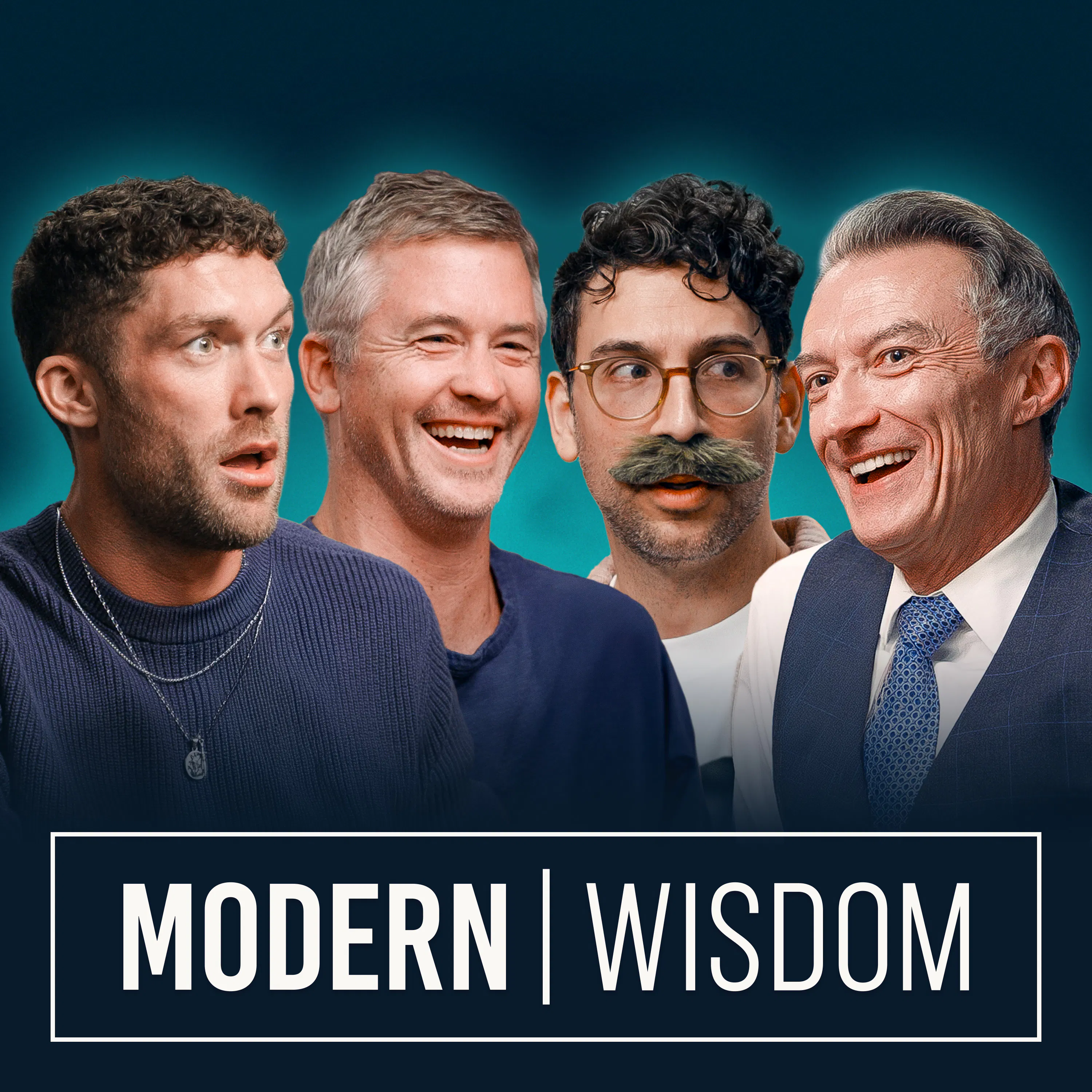 James Sexton, Matt McCusker & Rick Glassman - Mostly Wise #4 - #1156
Sep 28, 2026 · 3 h 2 min
Chris Williamson, divorce lawyer James Sexton and comedians Matt McCusker and Rick Glassman riff on marriage, prenups, sex, dating standards, politics in relationships, sitcoms and masturbation.
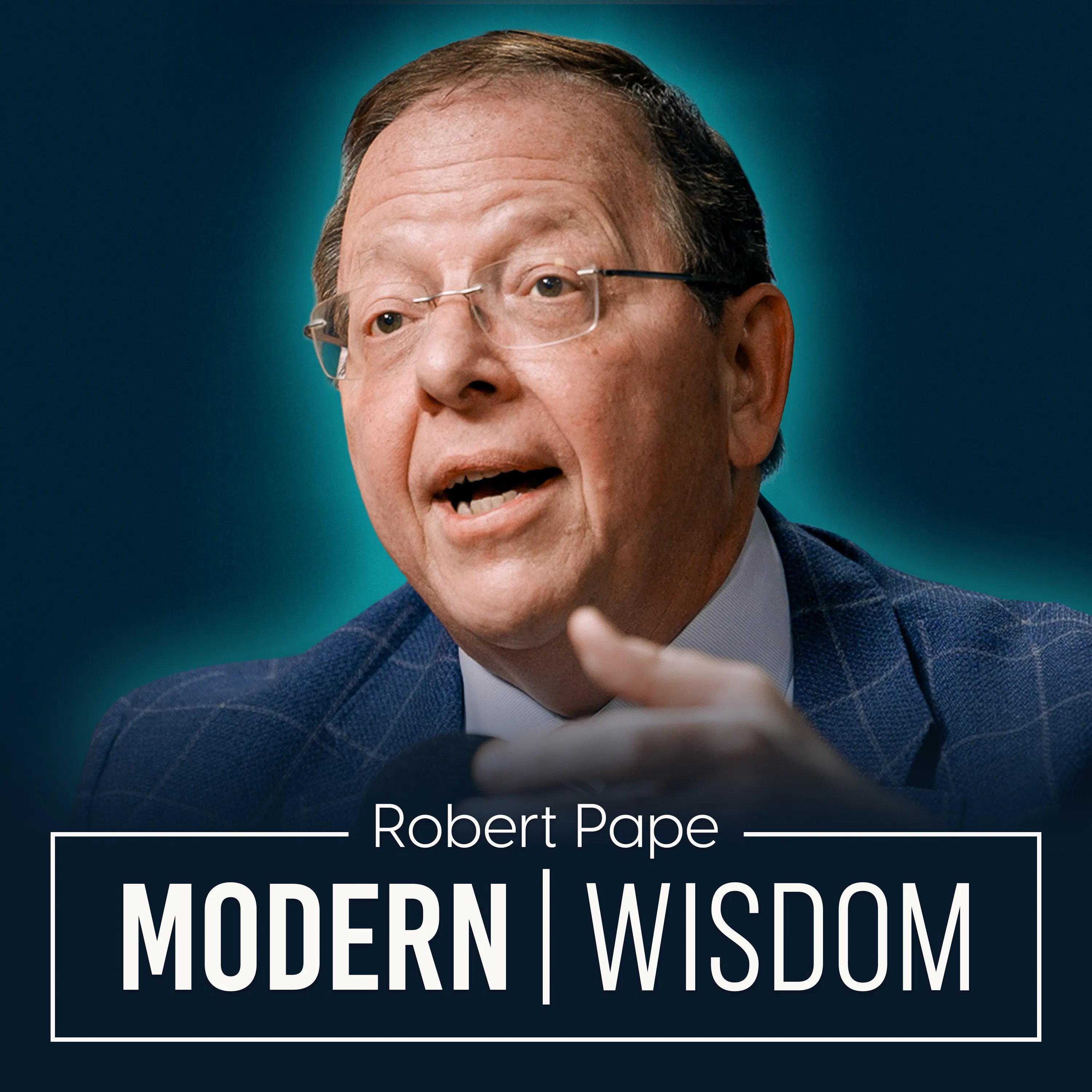 “This Will Be The Most Violent Election Of Our Lifetime” - Robert Pape #1154
Sep 24, 2026 · 1 h 43 min
Political scientist Robert Pape tells Chris Williamson that mass public support for political violence makes the coming US midterms the most dangerous election in living memory.
From the publisher
Dr. Martin Seligman is a psychologist, professor at the University of Pennsylvania, pioneer of positive psychology, and author. Expect to learn why some people experience exactly the same adversity and come out more resilient; which traits matter the most in life: efficacy, optimism, or imagination; what people 2,000 years from now possess psychologically that we don’t possess today; if you can be highly competent but still have very little agency, what actually makes life worth living and much more… Sponsors: Sign up for a free trial from Shopify at https://shopify.com/modernwisdom Get up to $50 off the RP Hypertrophy App at https://rpstrength.com/modernwisdom Get a Free Sample Pack of LMNT’s most popular flavours with your first purchase at https://drinklmnt.com/modernwisdom Get 35% off your first subscription to the best supplements from Momentous at https://livemomentous.com/modernwisdom See discounts for all the products I use and recommend: https://chriswillx.com/deals Get ChatGPT to explore ideas, solve problems, and learn faster at https://chatgpt.com Timestamps: (00:00) Has Martin Always Been a Scientific Rebel? (03:07) Why Martin Chose Mastery and Agency (09:24) The Epiphany That Changed Martin’s Career (17:50) Can You Train Your Brain to Be Optimistic? (27:50) Optimism vs Agency: What’s the Difference? (29:16) Is Agency the Biggest Predictor of Success? (32:04) How Our Understanding of Agency Has Evolved (38:55) How to Inject Agency Into Your Life (42:22) Is AI the Key to Unlocking Human Creativity? (54:41) Does Our Environment Shape Our Understanding of Agency? (57:08) Were Humans Conscious 3000 Years Ago? (01:02:04) Why Agency Is Double-Edged (01:04:39) Are Optimists More Successful? (01:13:48) What Actually Makes a Good Life? (01:15:04) Martin’s Most Underrated Work (01:18:48) Why Being Boring Is a Choice (01:19:34) Where to Find Martin Extra Stuff: Get my free reading list of 100 books to read before you die: https://chriswillx.com/books Try my…
Summary, chapters and key points were generated from the episode transcript on October 31, 2026. Quotes are checked word for word against the transcript.