
Your Kids Don’t Need More Achievement. They Need More Freedom | Dr. Peter Gray - EP 826
Episode of Passion Struck with John R. Miles · September 29, 2026 · 1 h 17 min
Evolutionary psychologist Peter Gray tells John R. Miles why children need free play and independence, blaming school pressure rather than smartphones for the youth mental health crisis.
Summary
In this episode of Passion Struck, part of the series The Adaptive Human, host John R. Miles interviewed evolutionary psychologist Peter Gray about his book Restoring Childhood: How to Set Kids Free in the Age of Anxiety. Gray argued from a biological perspective that the purpose of childhood is to gradually become independent, and that unsupervised play with other children teaches negotiation, rule-making and self-direction. Drawing on a survey of anthropologists who studied hunter-gatherer groups, he said children in those cultures were free to play and explore and were trusted to educate themselves.
Gray contended that since about 1955 adults have progressively restricted children's freedom, and that this tracked rising rates of teen anxiety, depression and suicide, along with a shift toward external locus of control. He singled out Common Core, adopted around 2010 under federal testing requirements, as a primary cause of a further decline in mental health, and described intensive parenting and high-achievement schools, citing Suniya Luthar's research, as sources of harmful pressure. He called the belief that elite colleges ensure success largely a myth.
Asked about Jonathan Haidt's argument that smartphones and social media drive the crisis, Gray disagreed, saying teen mental health improved between 1990 and 2010 as computers and video games gave teenagers new autonomy, that meta-analyses find no meaningful correlation between screen time and mental health, and that the post-2010 rise was largely American, paralleled only in countries such as England and Sweden that adopted similar schooling reforms. He also linked passion and mattering to self-directed play, citing his studies of unschoolers and Sudbury Valley School graduates.
Gray closed with signs of hope, including Let Grow's Play Club, free play at libraries and child-friendly town planning, and advised parents to discuss with their children what they would like to do independently. Miles previewed the next episode with Alec Litowitz on adaptability.
Chapters
- 0:02
Introduction and series context
Miles introduces The Adaptive Human series, his book The Mattering Effect, and guest Peter Gray.
- 5:23
What childhood is for
Gray explains from an evolutionary perspective that childhood's purpose is gradually becoming independent.
- 10:27
Lessons from hunter-gatherers
Gray describes his survey of anthropologists showing hunter-gatherer children were free to play and educate themselves.
- 13:55
The decline of free play
Gray describes the golden age of play, its erosion since 1955, and the parallel decline in youth mental health.
- 20:55
Common Core and school pressure
Gray argues that Common Core disempowered teachers and drove a steep rise in child anxiety, depression and suicide.
- 25:34
Agency and locus of control
Gray says agency is innate but suppressed, and cites evidence that young people's locus of control has become more external.
- 30:28
Responding to the college-student data
Miles raises Alexis Redding's findings and Gray argues survey data still show rising anxiety and depression.
- 33:42
Intensive parenting and elite college myths
Gray links intensive parenting to inequality, calls elite-college advantages largely a myth, and discusses Luthar's research on high-achievement schools.
Linked moment · 47:24Skip to 47:24 using a listen link in the info box.
47:24Mattering, passion and self-directed education
Gray connects mattering to self-determination and describes how unschoolers and Sudbury Valley graduates find careers they love.
- 53:28
Challenging the social media explanation
Gray disputes Jonathan Haidt's thesis, citing pre-internet trends, meta-analyses, and international comparisons tied to schooling reforms.
- 1:04:56
Modern societies and psychological suffering
Miles proposes a broader institutional erosion and Gray adds observations from immigrants and hunter-gatherer research.
- 1:09:50
Hope and advice for parents
Gray outlines promising movements and suggests parents plan independent activities with their children.
- 1:15:05
Closing and next episode preview
Miles reflects on play and passion and previews his conversation with Alec Litowitz on adaptability.
Key points
What was said, by whom, with the exact words. Timestamps jump to the moment.
- Peter Gray
Gray argues that the purpose of childhood, as with the juvenile period in all mammals, is to gradually become independent.
“The whole purpose of what with mammals is called the juvenile period is to become independent”
- Peter Gray
Gray reports that his survey of anthropologists found children in all studied hunter-gatherer cultures were free to play and explore and educated themselves.
“children were free to play and explore all day long. Nothing like school. Children were trusted to essentially educate themselves”
- Peter Gray
Gray argues that adult-organized activities like Little League deprive children of the problem-solving skills they learn in self-organized play.
“When that pickup game of baseball becomes Little League, you're not learning any of that stuff. You're being a puppet”
- Peter Gray
Gray states that teen suicide rates quadrupled between 1950 and 1990 while anxiety and depression rose five- or six-fold.
“Almost linearly, the rate of suicide quadrupled during that period for teenagers, rates of anxiety, depression”
- Peter Gray
Gray claims the evidence is overwhelming that Common Core was the main cause of increased suffering among children after 2010.
“the data, the evidence is overwhelming that Common Core was the main cause of that increase in suffering among children”
- Peter Gray
Gray says every study asking children what stresses them finds school pressure at the top.
“Every single study, school comes way out on top. School pressure, nothing else comes close to school pressure”
- Peter Gray
Gray argues that agency is innate rather than learned but is suppressed by schooling and parenting.
“So agency doesn't have to be learned. Agency is innate, but we can suppress it. And we do suppress it”
- Peter Gray
Gray reports that standardized questionnaires show young people's external locus of control has greatly increased since the 1960s.
“research on those scores over years has shown that external locus of control has greatly increased”
- Peter Gray
Gray links the spread of intensive parenting to growing wealth inequality that parents believe requires resume-building childhoods.
“parents begin to think of childhood not as a time of free play and creativity, but as a time of resume building”
- Peter Gray
Gray claims controlled studies show matched students who attend Harvard versus a state college earn the same by age 40.
“By age 40, the research shows they're earning the same amount of money. Even by that measure, they're earning the same amount of money”
- Peter Gray
Gray characterizes the pressure on children to achieve in grades and extracurriculars as a form of child abuse.
“This is really, in my mind, this is child abuse, what we're doing. This kind of pressure on young people to perform in these kind of superficial things”
- Peter Gray
Gray says his studies of about 150 unschoolers and self-directed school graduates found most pursue careers extending their passionate interests.
“I've studied about 150 such people, and a very high percentage of them, they are going on into careers that are direct extensions of their passionate interests”
- Peter Gray
Gray argues teen mental health improved between 1990 and 2010 because computers, early social media and video games gave teenagers new power and real play.
“They could play video games, which are real play. There's a lot of research showing this is real play”
Listen from 56:34 · Social media and adolescent mental health
- Peter Gray
Gray contends that Haidt's smartphone thesis is plausible but unsupported by the data.
“It's a logical argument. It's plausible. The problem is the data do not support it. The data clearly do not support it”
- Peter Gray
Gray states that large studies and meta-analyses find no meaningful correlation between screen or social media time and youth mental health.
“There's no meaningful correlation between that and measures of their mental health”
Listen from 1:00:00 · Social media and adolescent mental health
- Peter Gray
Gray argues the 2010–2018 rise in youth distress was largely American and appeared elsewhere only in England and Sweden, which adopted similar schooling reforms.
“In other words, changes in young people's mental health tracks changes in how we do schooling”
- John R. Miles
Miles hypothesizes that the crisis stems from a long erosion of childhood freedom and agency extending into institutions that treat people as utilities.
“they're all eroding more and more of our individuality and treating us less as a human and more as a utility”
- Peter Gray
Gray recommends parents ask their children what they would like to do independently and compromise on allowing it.
“Sit down with your kid and say, are there things that you would like to do independently that you're not doing right now?”
- Peter Gray
Gray points to Let Grow's Play Club, an hour of supervised but non-intervening mixed-age free play, as a promising development in schools.
“what we at the Let Grow organization call Play Club, which is an hour of free age mixed play before school or after school”
People
In the conversation
- John R. MilesHost of the Passion Struck podcast and author of The Mattering Effect
- Peter GrayAmerican evolutionary psychologist and author of Free to Learn and Restoring Childhood
Discussed
- Jonathan HaidtAmerican social psychologist, professor at NYU Stern School of Business, and author of The Anxious Generation
- Martin SeligmanPsychologist known for learned helplessness research, author of a forthcoming book on agency
- Suniya LutharPsychologist who researched mental health problems among adolescents in affluent, high-achievement schools
- Richard RyanPsychologist and co-founder of self-determination theory
- Alexis ReddingHarvard professor studying college students' mental health
- Howard ChudacoffHistorian of American childhood who described a golden age of children's play
- Candice OdgersPsychologist who reviewed Haidt's book critically in Nature
- Robin DunbarAnthropologist known for the concept of group sizes of about 150
Topics
- Free play in childhood
- Restoring Childhood
- Youth mental health crisis
- Common Core State Standards Initiative
- Social media and adolescent mental health
- The Anxious Generation
- Locus of control
- Intensive parenting
- Hunter-gatherer childhood
- Unschooling
- Elite college admissions
- Sudbury Valley School
- Self-determination theory
- Let Grow
- The Mattering Effect
More from Passion Struck with John R. Miles
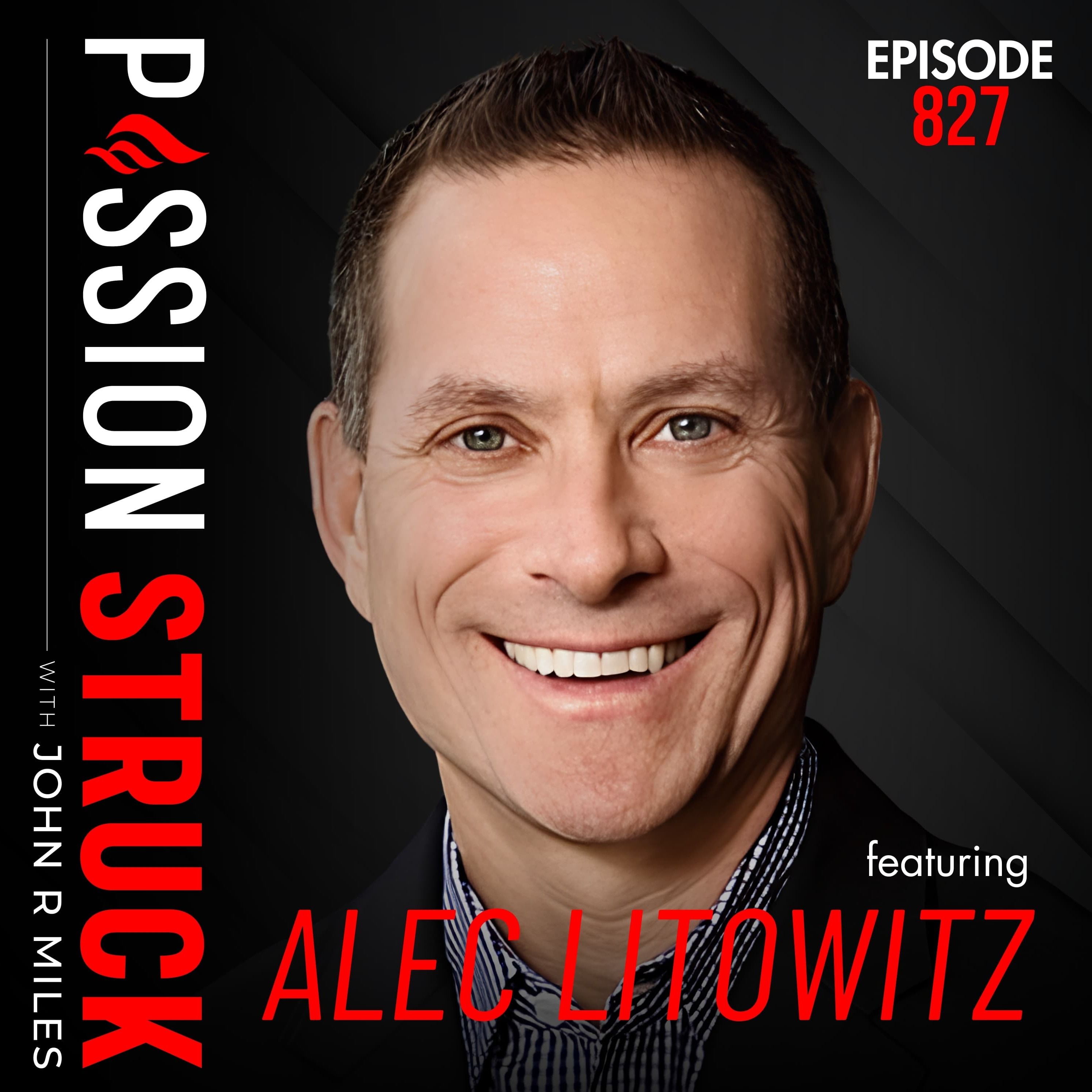 You’re Not Stuck. You’re Swimming in the Wrong Direction | Alec Litowitz - EP 827
Oct 1, 2026 · 1 h 12 min
Investor Alec Litowitz tells John R. Miles why adaptability, not IQ, EQ, or grit, is the defining skill of an AI-driven second cognitive revolution.
From the publisher
Dr. Peter Gray, evolutionary psychologist and author of Restoring Childhood, explains why children need freedom, play, and independence to develop agency—and how modern parenting and schooling may be undermining their ability to thrive.
Summary, chapters and key points were generated from the episode transcript on September 30, 2026. Quotes are checked word for word against the transcript.