
What makes a relationship last?
Episode of TED Radio Hour · November 27, 2026 · 51 min
Manoush Zomorodi talks with Eli Finkel, Stephanie Yates-Anyabwile, Bella DePaulo and Rhaina Cohen about love motifs, unconventional partnerships, single life and friendship.
Summary
This TED Radio Hour episode, hosted by Manoush Zomorodi, examined what makes relationships last across romance, singlehood and friendship. Social psychologist Eli Finkel described speed-dating research showing that dyadic chemistry matters more than attractiveness, and argued that compatibility is not about matching attributes but about co-creating a unique shared culture, which he called a "love motif." He described his own motif with his wife Alison, the Beatles-derived phrase "belly full of wine," and research with Lydia Emery finding that couples who leaned into their motifs were happier.
Marriage and family therapist Stephanie Yates-Anyabwile argued that couples should reject societal norms that do not fit them, citing clients who lived apart, could not travel together, or chose not to pursue children, and her own parents who drove separately for years. She framed changes as experiments and said it is okay if others are confused by a relationship.
Social psychologist Bella DePaulo, who described herself as lifelong single by choice, presented her "single at heart" quiz and argued that single people often maintain wider networks of friends, siblings and neighbors, that marriage-health research is skewed by excluding divorced people, and that comfort with solitude is an underappreciated skill.
Journalist Rhaina Cohen closed the episode arguing that friendship can be a central, committed relationship, citing platonic co-parents, caregiving friends and historical practices such as sworn brotherhood, and criticizing policies that leave friends ineligible for family or bereavement leave. She described living with her husband and two close friends.
Chapters
- 0:24
Introduction
Manoush Zomorodi introduces an episode on how relationships begin and how they last.
- 1:14
Speed dating and chemistry
Eli Finkel explains speed-dating research showing that unique two-person chemistry outweighs attractiveness.
- 3:10
Rethinking compatibility
Finkel argues that matching personalities explains little and that couples instead co-create a shared culture.
- 5:53
The love motif
Finkel describes love motifs, his own "belly full of wine" ritual, and his advice to find, feed and fight for them.
- 14:57
Rejecting relationship norms
Stephanie Yates-Anyabwile describes couples who thrived by abandoning conventions such as living together or traveling together.
- 19:53
Communication and lifestyle factors
Yates-Anyabwile explains how issues like bed-sharing and punctuality can be addressed as experiments, citing her parents' separate minivans.
- 24:48
Children and outside expectations
Yates-Anyabwile recounts a couple who chose not to pursue children and argues that relationships need not make sense to outsiders.
- 28:44
Single at heart
Bella DePaulo describes her lifelong single life and research on people who thrive while single.
- 34:33
The single-at-heart quiz
DePaulo walks through quiz questions on decisions, mishaps and compromise.
- 37:13
Loneliness, health data and solitude
DePaulo challenges assumptions about loneliness and marriage health benefits and argues for valuing solitude.
- 45:07
Friendship at the center
Rhaina Cohen argues that friendships can be central committed relationships and should be recognized in policy.
Key points
What was said, by whom, with the exact words. Timestamps jump to the moment.
- Eli Finkel
Finkel says speed-dating research shows the unique compatibility between two people matters more than general attractiveness.
“But you know what matters more, even in those four minutes? The unique compatibility between the two of us”
- Eli Finkel
Finkel says that within an established relationship, a partner's physical attractiveness is unrelated to relationship happiness.
“once you're in a meaningful relationship with someone, that person's physical attractiveness is unrelated to how happy you are in the relationship”
- Eli Finkel
Finkel argues that compatibility is about co-creating a unique shared culture rather than matching attributes.
“compatibility isn't about finding someone with the right attributes. It's about building and co-creating your own unique culture together”
- Eli Finkel
Finkel reports that in a daily study, couples who leaned more into their love motif were happier, including on a day-to-day basis.
“Couples who leaned more strongly into their love motif were happier. And in fact, those who leaned more strongly into their love motif on a given day were happier”
- Eli Finkel
Finkel advises couples to find, feed and fight for their love motif.
“First, find it. Pay attention to those moments when something uniquely us is starting to emerge. Next, feed it”
- Bella DePaulo
DePaulo says she and others who are single by choice flourish because of single life, not despite it.
“We are happy and flourishing because we are single, not in spite of it”
- Bella DePaulo
DePaulo argues research shows single people have more friends and are more engaged with family and community than married people.
“When psychologists actually started studying the real lives of single people, they found it's the single people who have more friends”
- Bella DePaulo
DePaulo says couples become more insular when they move in together or marry, even without children.
“when couples move in together or when they get married, they tend to be more insular”
- Bella DePaulo
DePaulo says women adapt to single life better than men, with previously married older men often struggling most.
“What you find is that women take to single life better than men do”
- Bella DePaulo
DePaulo argues that studies touting health benefits of marriage are biased because they exclude people who married and divorced.
“they only look at the people who are currently married, compare them to the people who are single, and say, oh, look, married people win”
- Bella DePaulo
DePaulo argues people who cannot be alone warrant more concern than those who enjoy solitude.
“being comfortable in solitude is a wonderful and underappreciated skill”
- Rhaina Cohen
Cohen argues everyone, partnered or not, needs more than one relationship to sustain them through life.
“Regardless of whether we are partnered now, we need to rely on more than one relationship to sustain us”
- Rhaina Cohen
Cohen notes that historically, such as in ancient Rome, friends used language now reserved for romantic partners.
“In ancient Rome, friends would talk about each other as half of my soul or the greater part of my soul”
- Rhaina Cohen
Cohen criticizes government and workplace policies for not recognizing friendship, citing a caregiver denied bereavement leave.
“When Hannah died, Joy was not entitled to bereavement leave, because the two of them were considered unrelated. In our government and workplace policies, friendship is invisible”
- Rhaina Cohen
Cohen describes living with her husband and two close friends and planning to buy property with other friends.
“I live not only with my husband, but also two of my closest friends”
People
In the conversation
- Manoush ZomorodiHost of NPR's TED Radio Hour
- Eli FinkelSocial psychology professor at Northwestern University who studies romantic love; host of the podcast Love Factually
- Stephanie Yates-AnyabwileMarriage and family therapist and YouTube creator
- Bella DePauloSocial psychologist and author who studies single life; author of Single at Heart
- Rhaina CohenJournalist and author of The Other Significant Others
Discussed
- Lydia EmeryPsychologist and Eli Finkel's research collaborator on love motifs
Topics
Related episodes
 Tish and Brandi Cyrus: Disney, Daughters & Dating (FBF)
Call Her Daddy · Nov 25, 2026 · 1 h 1 min
Alex Cooper interviews Tish and Brandi Cyrus about their mother-daughter dynamic, the Hannah Montana era, family fame, dating, and Tish's marriage to Dominic Purcell.
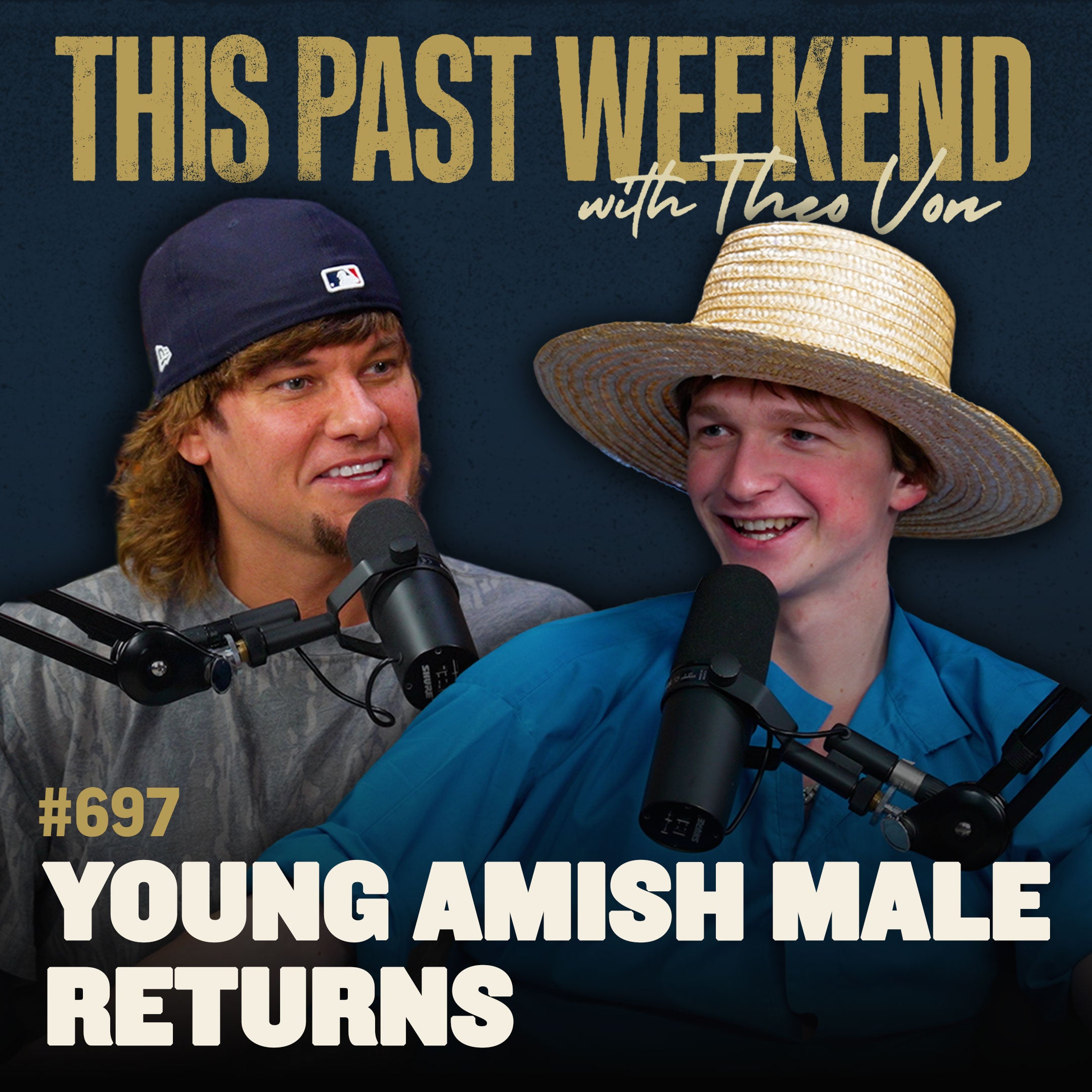 #697 - Young Amish Male Returns
This Past Weekend w/ Theo Von · Nov 24, 2026 · 2 h 6 min
Theo Von welcomes back Timothy, the 'Amish Dude,' to discuss Amish holiday traditions, his ongoing Rumspringa, newfound fame, dating, and balancing two worlds.
 #696 - Katt Williams
This Past Weekend w/ Theo Von · Nov 17, 2026 · 1 h 39 min
Katt Williams tells Theo Von about his memoir, leaving home at 13, homelessness in Miami, carnival and pimping, comedy origins, and faith.
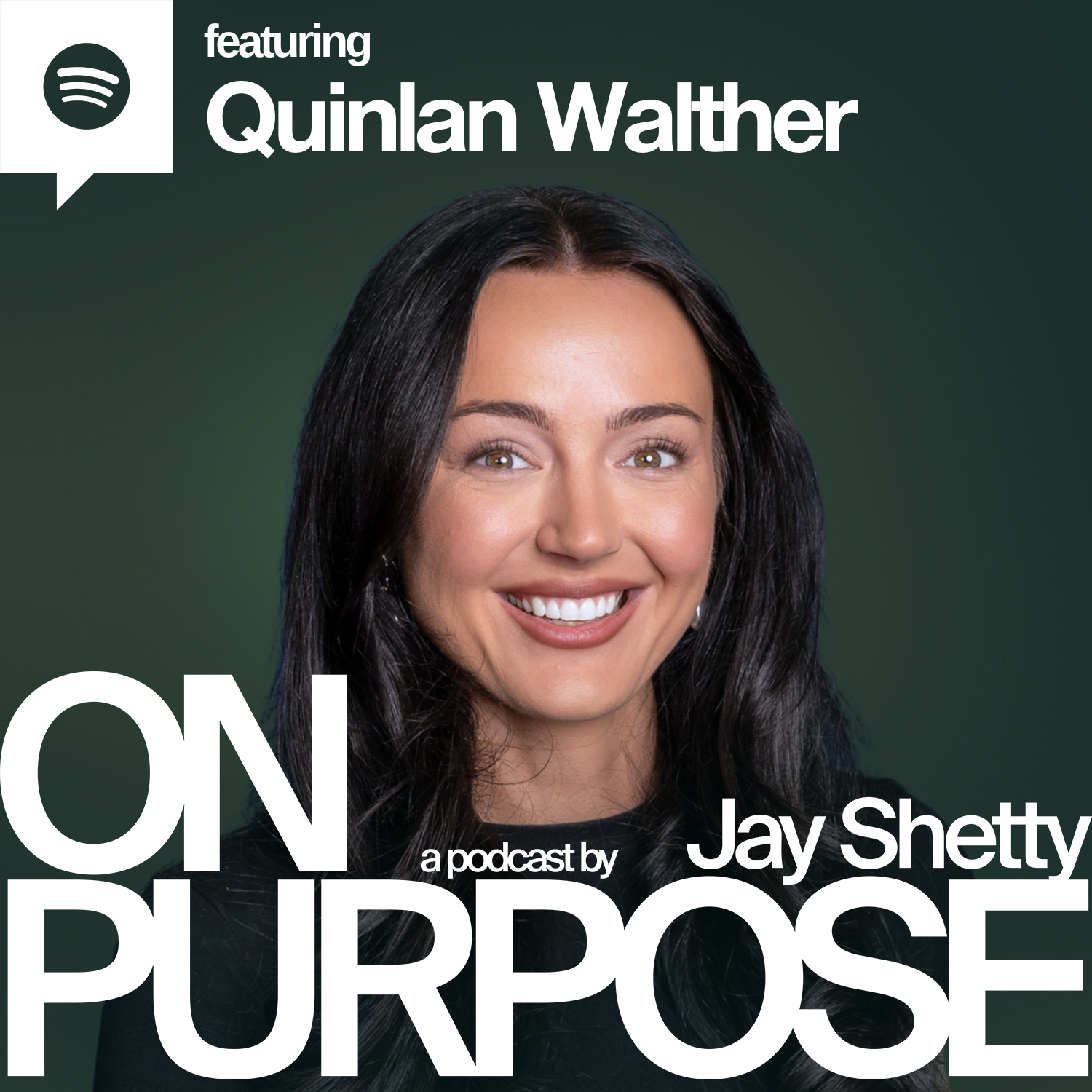 Quinlan Walther: How to Know If You're Settling in Love
On Purpose with Jay Shetty · Nov 16, 2026 · 1 h 15 min
Jay Shetty and relationship creator Quinlan Walther discuss how to tell whether you are settling in love, emphasizing character, emotional maturity, and clear communication.
 Why Boys and Men Are Quietly Struggling & What They Need To Hear
The Mel Robbins Podcast · Nov 16, 2026 · 1 h 2 min
Mel Robbins interviews her husband Chris Robbins, who leads Soul Degree men's retreats, about five hidden struggles men face and how to support them.
- Malin Akerman: The Hunting Wives, Hustling & Healing
Call Her Daddy · Nov 11, 2026 · 58 min
Alex Cooper interviews actress Malin Akerman about The Hunting Wives, her childhood, abuse in the modeling industry, divorce, therapy and finding love again.
More from TED Radio Hour
 Uncovering the mysteries of the animal kingdom
Nov 20, 2026 · 50 min
Manoush Zomorodi talks with Dean Lomax, Saad Bhamla, Gowri Shankar and Patrícia Medici about ichthyosaurs, insect urination, king cobras and tapirs.
 An epidemiologist's guide to good health advice
Nov 13, 2026 · 50 min
Manoush Zomorodi talks with epidemiologist Jessica Malaty Rivera about health misinformation, measles, vaccine trust, wellness grifts, AI medical advice, and trending health questions.
 Escaping the modern world and your noisy mind
Nov 6, 2026 · 50 min
Manoush Zomorodi talks with Pico Iyer, Sarah Edmondson and Lehua Kamalu, and airs Shonda Rhimes's talk, about escape, silence, cults, voyaging and burnout.
 Can curiosity save the wild?
Oct 30, 2026 · 50 min
Manoush Zomorodi talks with conservationist Maya Higa about livestreamed wildlife sanctuaries and computational linguist Jeffrey Reed about using AI to study Yellowstone wolf howls.
 How we experience time
Oct 23, 2026 · 50 min
Manoush Zomorodi explores how humans experience time with artist Katie Paterson, neuroscientist Irena Arslanova, conductor Robert Franz, and psychologist Philip Zimbardo.
From the publisher
What makes some relationships thrive while others fizzle? And how do we decide which relationships are worth prioritizing? This hour, TED speakers explain what's behind lasting connections. See pcm.adswizz.com for information about our collection and use of personal data for sponsorship and to manage your podcast sponsorship preferences. NPR Privacy Policy
Summary, chapters and key points were generated from the episode transcript on November 28, 2026. Quotes are checked word for word against the transcript.