
Bad Bunny Takes Over America
Episode of The Daily · February 1, 2026 · 49 min
Natalie Kitroeff talks with Popcast hosts Jon Caramanica and Joe Coscarelli about Bad Bunny's rise, his politics, and his contentious Super Bowl halftime show.
Summary
On the day of the 2026 Grammy Awards, where Bad Bunny was the first Spanish-language artist nominated for album, record and song of the year simultaneously, Natalie Kitroeff hosted New York Times Popcast hosts Jon Caramanica and Joe Coscarelli to discuss the Puerto Rican star ahead of his Super Bowl halftime performance. The episode opened with conservative criticism of the NFL's choice and President Trump calling it "absolutely ridiculous."
Coscarelli traced Bad Bunny's emergence from small-town Puerto Rico and reggaeton tradition, describing his gender-bending aesthetic and melodic style, while Caramanica argued that streaming platforms removed gatekeepers and let him bypass radio and major labels. They discussed the 2017 success of Despacito, Bad Bunny's refusal to record in English, his albums through Debí Tirar Más Fotos, and his political awakening after Hurricane Maria and the 2019 protests that helped force Puerto Rico's governor to resign. They also covered his decision to hold a Puerto Rico residency rather than tour the US, citing fears that ICE could target his fans.
Coscarelli explained the NFL's halftime history after the Colin Kaepernick protests, including Rihanna reportedly declining in 2019, the Maroon 5 show, and the league's partnership with Jay-Z's Roc Nation. He argued that Bad Bunny was not a strange choice but the only choice, as the most relevant figure in music. In the final segment, Caramanica said he did not expect explicit protest within the show itself but suggested the real opportunity lay before or after it, and argued Bad Bunny should risk alienating the government, his sponsors, and his progressive fans alike.
Chapters
- 0:30
Setting the stage
Kitroeff introduces Bad Bunny's Grammy nominations, his upcoming Super Bowl halftime show, and the conservative backlash to his booking.
- 3:44
Who is Bad Bunny
Coscarelli and Caramanica trace Bad Bunny's roots in reggaeton, his gender-bending image, and his rise through streaming platforms.
- 11:57
Despacito and the streaming era
The hosts explain how Despacito's 2017 success and global streaming opened the door for Spanish-language pop.
- 14:39
Refusing to sing in English
They discuss Bad Bunny's choice never to record in English, including an interview clip in which he says listeners miss nuance.
- 17:36
From Un Verano Sin Ti to Debí Tirar Más Fotos
Coscarelli describes Bad Bunny's run of albums and his 2025 album as a homecoming to Puerto Rico and traditional music.
- 21:41
Political awakening in Puerto Rico
The hosts recount Hurricane Maria, the 2019 protests against the governor, and Bad Bunny's politically tinged music.
- 25:30
The Puerto Rico residency and ICE
Caramanica explains Bad Bunny's decision to perform only in Puerto Rico, partly over fears that ICE would target his fans.
- 28:56
The NFL, Kaepernick and Roc Nation
Coscarelli recounts how the Kaepernick controversy hurt halftime bookings and how Roc Nation was brought in to repair them.
- 38:18
Why Bad Bunny was the pick
The hosts argue ratings and relevance made Bad Bunny the obvious choice, and discuss Taylor Swift's soft approach.
- 40:24
What he might do on stage
Caramanica and Coscarelli weigh possible provocations, the risks from left and right, and opportunities around the Grammys and after the show.
Key points
What was said, by whom, with the exact words. Timestamps jump to the moment.
- Jon Caramanica
Caramanica argues that streaming platforms let Bad Bunny reach listeners directly without navigating radio or major-label infrastructure.
“You have Spotify and Apple Music in order to get songs directly out to your listeners without having to navigate a radio infrastructure or even a major label infrastructure”
- Jon Caramanica
Caramanica contends that Bad Bunny knows more about reggaeton history than most current practitioners, even as he breaks its rules.
“I would venture to say that Bad Bunny knows more about reggaeton history than most people currently making the music”
- Jon Caramanica
Caramanica recalls reviewing Bad Bunny's 2018 debut album and considering it one of the most creative albums from that musical space.
“And it was, I thought, one of the most creative albums that had come out of that space, period”
- Joe Coscarelli
Coscarelli argues that Despacito's 2017 success proved there was a large enough audience to sustain pop music in languages other than English.
“This was a toothpaste out of the tube moment for Latin music or pop music in any language besides English, in which it became clear that there was a big enough audience to sustain it”
- Bad Bunny
Bad Bunny said in a Popcast interview that listeners miss a lot of nuance, including Spanish speakers, because he sings in Puerto Rican slang.
“Actually, even there's a lot of Latinos who speak Spanish that they're missing a lot, I think, because I'm singing in Puerto Rican slang”
Linked moment · 17:36Skip to 17:36 using a listen link in the info box.
Joe CoscarelliCoscarelli describes Debí Tirar Más Fotos as an album of memory, a breakup record, and a reflection on being away from Puerto Rico.
“This is an album of memory. It's called I Should Have Taken More Photos. It's a breakup album, but it's also an album about being away from Puerto Rico”
- Joe Coscarelli
Coscarelli recounts that Bad Bunny canceled European tour dates to join the 2019 protests, which contributed to the governor's resignation.
“Bad Bunny says, my people need me. I'm going to be beside them. And in part because of these protests, the governor ends up resigning”
- Joe Coscarelli
Coscarelli argues that Bad Bunny's political statements come across as authentic because he speaks only on issues personally meaningful to him.
“he's speaking about issues that are meaningful to him personally. And I think that comes across any time he decides he's going to stand up and say something”
- Jon Caramanica
Caramanica reports that Bad Bunny said he avoided US tour dates partly so his concerts would not give ICE an obvious target.
“saying explicitly, I don't want to give ICE and Trump an obvious target to come and gather folks up”
Listen from 26:53 · U.S. Immigration and Customs Enforcement
- Joe Coscarelli
Coscarelli says the NFL's handling of Kaepernick hurt its ability to book relevant Black artists for the halftime show.
“that was reflected in part by its inability to book black and relevant acts for its halftime show”
Listen from 30:09 · Colin Kaepernick national anthem protests
- Joe Coscarelli
Coscarelli explains that the NFL brought in Jay-Z's Roc Nation as a partner to select halftime performers, and that Jay-Z faced backlash but framed it as change from the inside.
“Jay-Z immediately faces a ton of backlash for this. He had previously been a supporter of Colin Kaepernick's and people say he sold out”
- Jon Caramanica
Caramanica argues that ratings and ad value outweigh political risk for the NFL, and few performers can draw a big enough audience.
“In the modern music era, there's a vanishingly small number of performers in any genre who Who can achieve that?”
- Joe Coscarelli
Coscarelli argues that Bad Bunny is not a crazy choice but the only choice, as the most relevant figure in music.
“he is the most relevant man in music so why wouldn't you put him on the stage that is all about maintaining and amplifying relevance”
- Jon CaramanicaCame true
Caramanica predicts Bad Bunny will not make a highly direct political statement within the halftime show itself, and sees the real opportunity in what he does afterward.
“I will say that I don't personally expect that level of directness within the confines of the show”
- Jon Caramanica
Caramanica expects Bad Bunny to face a rough reception from his supporters if he makes no forceful statement about the Trump administration's treatment of Latinos.
“probably likely to be a rough ride for him if the morning after the Super Bowl we wake up and nothing of that sort has happened”
- Jon Caramanica
Caramanica contends that Bad Bunny should alienate the government, his corporate backers, and his progressive fans all at once, because doing so would increase his fame.
“my contention is he should do all three because that will only make him more famous and more successful”
- Joe Coscarelli
Coscarelli characterizes Bad Bunny as nimble, savvy and hard to pin down, speaking out when he feels he must rather than on demand.
“He may not speak out when you want him to, but he speaks out when he feels like he needs to”
People
In the conversation
- Natalie KitroeffNew York Times journalist and host of The Daily
- Jon CaramanicaNew York Times pop music critic and co-host of Popcast
- Joe CoscarelliNew York Times culture reporter and co-host of Popcast
- Bad BunnyPuerto Rican musician whose Super Bowl halftime show Hamm praised
Discussed
- Donald TrumpPresident of the United States whose conduct of the Iran war is the episode's main subject
- Colin KaepernickNFL quarterback who knelt during the anthem in 2016
- Jay-ZRapper and businessman
- RihannaSinger who reportedly declined the 2019 Super Bowl halftime show
- Taylor SwiftAmerican singer-songwriter cited as an example of public love-and-hate cycles
- Travis KelceNFL tight end and New Heights co-host engaged to Taylor Swift
- Daddy YankeePuerto Rican reggaeton pioneer behind Gasolina and Despacito
- Luis FonsiPuerto Rican singer of Despacito
- Kendrick LamarRapper who headlined the previous year's Super Bowl halftime show
- EminemRapper cited in an anecdote about the moment fame hits
- BeyoncéSinger, mother of Blue Ivy Carter
- Kendall JennerModel and reality TV personality
- Ricardo RossellóFormer Puerto Rico governor who resigned after the 2019 protests
Topics
More from The Daily
 Chris Rock Has Been Thinking About Forgiveness
Oct 3, 2026 · 1 h 3 min
Chris Rock tells David Marchese about his film Misty Green, forgiveness, cancel culture, therapy and an NVLD diagnosis, Hollywood, and why comedy needs nuance.
 The Best TV Shows of the 21st Century
Sep 27, 2026 · 57 min
Natalie Kitroeff talks with Times colleagues Gilbert Cruz and James Poniewozik about the New York Times list of the 100 best TV shows of the 21st century.
 Sylvester Stallone Hid His Struggles for Decades. Now He’s Coming Clean.
Sep 26, 2026 · 1 h 17 min
Sylvester Stallone tells Lulu Garcia-Navarro about his abusive childhood, anxiety, bulimia and steroid use, his rivalry with Schwarzenegger, and career collapses and comebacks.
 What’s Epic About the ‘Odyssey’? Everything.
Jul 12, 2026 · 51 min
Natalie Kitroeff talks with translator Emily Wilson and novelist Madeline Miller about the Odyssey ahead of Christopher Nolan's film adaptation.
 Can a Bad Man Be a Good Father?
Jun 21, 2026 · 47 min
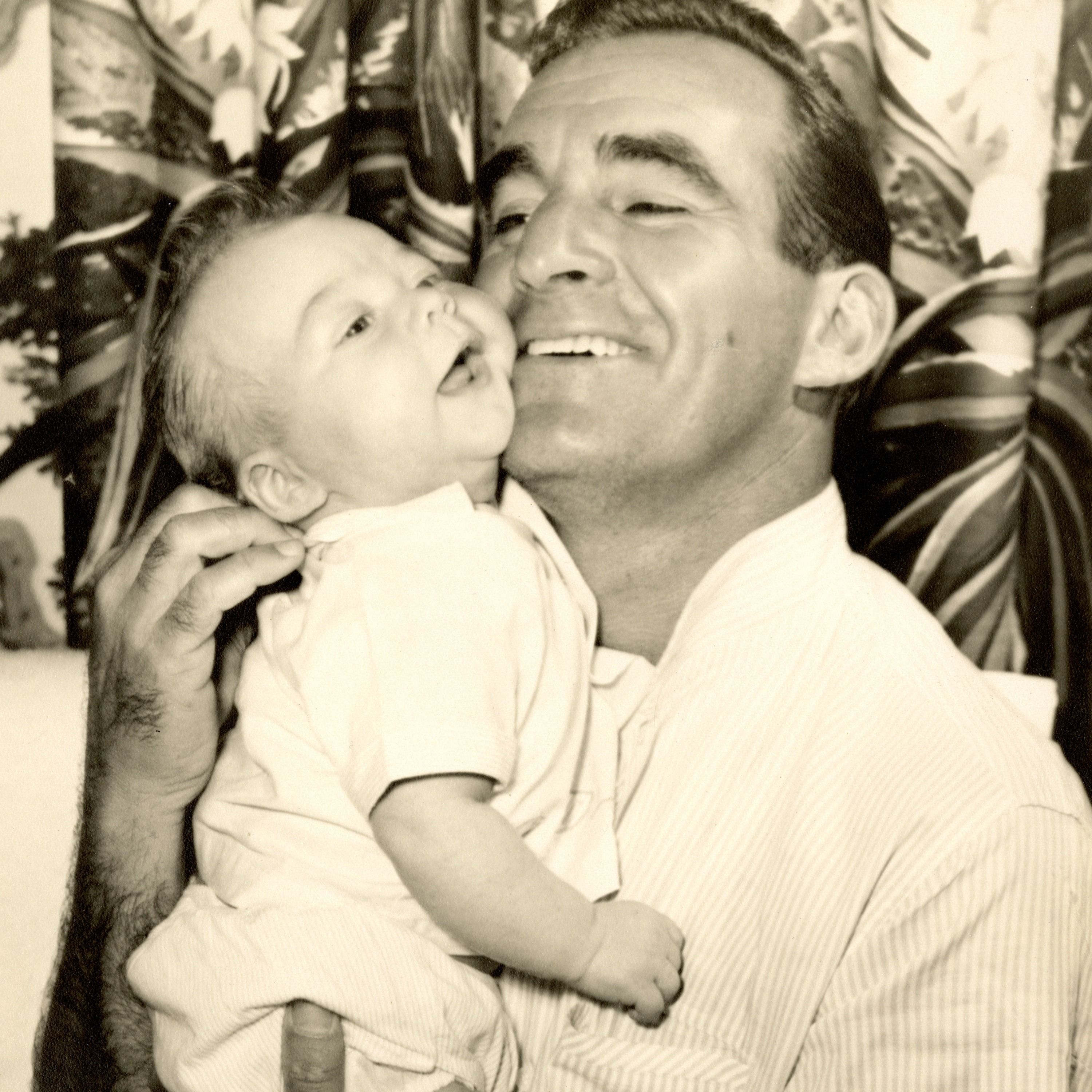
Michael Barbaro talks with writer Tom Junod about his charismatic, philandering father Lou and the secret half-sister Junod uncovered after his father's death.
From the publisher
At the Grammy Awards tonight, the Puerto Rican pop sensation Bad Bunny is the first Spanish-language artist to be nominated for album, record and song of the year simultaneously. For most artists, this would be the high point of their year, if not their career. For Bad Bunny, this is just an appetizer for what’s in store for him next week. Next Sunday, he will headline the Super Bowl halftime show. His performance comes in the middle of a nationwide crackdown on immigration — an issue he’s been vocal about — and follows a backlash against the N.F.L. for booking him in the first place. Jon Caramanica and Joe Coscarelli, the hosts of The Times’s pop music show “Popcast,” discuss Bad Bunny’s rise to the heights of pop stardom, and explore what it means for a Puerto Rican artist to headline the world’s biggest stage.
Summary, chapters and key points were generated from the episode transcript on October 3, 2026. Quotes are checked word for word against the transcript.