
Olivia Wilde Hit Bottom. Here's How She Bounced Back.
Episode of The Daily · November 14, 2026 · 51 min
David Marchese interviews Olivia Wilde about The Invite, turning 40, divorce and co-parenting, the Don't Worry Darling tabloid storm, regret, and directing.
Summary
David Marchese spoke with actor-director Olivia Wilde in London about her third directorial feature, The Invite, a comedy about a strained marriage, along with her acting roles in Gregg Araki's I Want Your Sex and the upcoming Behemoth. Wilde said directing freed her to choose less likable, high-strung characters, and that turning 40 left her more comfortable in her body and sexuality, a theme she wanted to explore through comedy.
Wilde discussed the shame of a relationship failing, describing the decision that her children were better off not living with misaligned parents as the most painful of her life, and said she takes pride in co-parenting. She credited Nora Ephron's line about changing your mind and argued that change should be acknowledged rather than resisted.
On the media storm around Don't Worry Darling, Wilde attributed it less to sexism than to public distrust and an information vacuum that people filled with narrative, saying she was cast as the villain. She said the experience "broke" her but left her less concerned with perception, and that a cameo on Seth Rogen's The Studio drew her back to acting. She also discussed being objectified early in her career, advice from casting director Mali Finn to create her own roles, and Esther Perel's counsel about taking responsibility for one's happiness.
Wilde said she now embraces having regrets and framed life as a series of failures to learn from. She defended Don't Worry Darling as a commercial success for a female director, discussed Hitchcock and the Hitchcock–Truffaut interviews, criticized the auteur hero narrative as discouraging would-be directors, and described her next film, a Christmas comedy called Naughty about a custody fight.
Chapters
- 0:39
Introduction and The Invite's ending
Marchese introduces Wilde and they debate whether the couple in The Invite stayed together.
- 3:25
Directing, acting and turning 40
Wilde explains how directing changed her role choices and why she is exploring sex and identity after 40.
- 7:41
Booksmart, sacrifice and pivoting careers
Wilde compares Booksmart's heroines to Angela in The Invite and discusses her pivot to directing and the freedom to change.
- 13:02
Relationships, shame and co-parenting
Wilde talks about the difficulty of relationships, her separation, and co-parenting her children.
- 18:29
I Want Your Sex and body confidence
Wilde describes drawing on Madonna's Truth or Dare and growing more comfortable in her body after having children.
- 22:47
The Don't Worry Darling media storm
Wilde reflects on the tabloid frenzy, being cast as a villain, and how it changed her.
- 32:03
Returning to acting and appearance-based fame
Wilde credits Seth Rogen's The Studio with bringing her back and discusses Maxim rankings and acting's devaluation of experience.
- 35:54
Making your own roles and advice
Wilde discusses giving herself a role, Mali Finn's advice, and Esther Perel's counsel on responsibility.
- 40:26
Regret and failure
Wilde rejects the 'no regrets' stance and frames life as a series of failures to learn from.
- 42:15
Hitchcock, auteurs and directing
Wilde discusses Don't Worry Darling, Hitchcock, Truffaut, and the collective nature of directing.
- 46:53
Naughty and closing reflections
Wilde previews her Christmas comedy Naughty and reflects on authenticity and ongoing change.
Key points
What was said, by whom, with the exact words. Timestamps jump to the moment.
- Olivia Wilde
Wilde said that directing freed her from pressure to play idealized female characters and lets her choose roles from a more curious, playful place.
“I think that being a director freed me up to not feel this kind of pressure to be... the ideal ingenue growing into the idealized female character in any film”
- Olivia Wilde
Wilde said that on turning 40 she felt more present in her body and more confident in her sexuality than ever.
“when I turned 40, I suddenly was – I felt more kind of present in my body and more connected to my sense of confidence and sexuality than ever”
- Olivia Wilde
Wilde argued that indifference, not rage, signals that a relationship may be beyond repair.
“It is not the aggressive rage. It is the indifference that is truly terrifying. That is the sign that you may be beyond repair”
- Olivia Wilde
Wilde described concluding that her children were not better off with misaligned parents as the most painful decision of her life.
“it is by far the most... difficult, painful decision I've ever made in my life to understand that it was not better for my kids to live in a house where their parents were not aligned”
- Olivia Wilde
Wilde said co-parenting is very hard despite claims otherwise, but that her family has reached a healthy equilibrium.
“I really take pride in... how good We are at co-parenting our kids in my family because we have reached this really healthy equilibrium. It's so hard”
- Olivia Wilde
Wilde argued that children sense when parents hide relationship problems, and that performance confuses them.
“when you're trying to hide it from your kids, obviously they sense it. They're the most intuitive people in the house”
- Olivia Wilde
Wilde attributed the Don't Worry Darling media storm largely to public distrust and information overload rather than primarily to sexism.
“I don't begrudge a populace who is inherently distrustful of public figures because of the way that our country has run itself into this very dangerous rut of”
- Olivia Wilde
Wilde argued that people filled an information vacuum with an untrue narrative in which she was cast as the villain.
“they created a narrative that was... so far from the truth and I think that every story needs a villain and I was cast as said villain”
Linked moment · 27:07Skip to 27:07 using a listen link in the info box.
Olivia WildeWilde said the experience made her far less concerned with how she is perceived, likening it to no longer needing an umbrella once soaked.
“I think that I'm way less concerned with how I am perceived. It's sort of like the saturation point”
- Olivia Wilde
Wilde said the real heartbreak of that period was her separation, not public scrutiny, and that she launched into a film during COVID to avoid the pain.
“for me the the real heartbreak has nothing to do with public scrutiny or anything in the media i i went through a a rupture in my own life”
- Olivia Wilde
Wilde said she thought she was done acting forever after the controversy until Seth Rogen invited her onto The Studio.
“I thought I was done acting forever. I was like, well, that's it. I will never put myself in front of a camera”
- Olivia Wilde
Wilde argued that acting is unusual among professions in valuing people less as they gain experience.
“There aren't many professions where like the more experience you have the less valuable you are. But acting is one of them”
- Olivia Wilde
Wilde advises young actresses to make their own films and cast themselves in good roles, as men have long done.
“you're going to have to make your own film and you're going to cast yourself and you're going to give yourself that role”
- Olivia Wilde
Wilde said Esther Perel's advice centered on taking responsibility for one's own unhappiness rather than blaming partners, parents or careers.
“taking responsibility for your own happiness is a worthwhile endeavor”
- Olivia Wilde
Wilde argued that life should be framed as an inevitable series of failures and that success means learning rather than avoiding regrets.
“I think we have to start framing life as an inevitable series of failures like acknowledging that the definition of success is not avoiding regrets”
- Olivia Wilde
Wilde said she is proud of Don't Worry Darling, noting it made a lot of money when films directed by women rarely do.
“I'm very proud of the fact that it made a lot of money because movies directed by women don't tend to hit those numbers”
- Olivia Wilde
Wilde argued that the heroic auteur narrative discourages people from directing, since filmmaking is entirely collective.
“I think there's a problem with the hero narrative around directing when it comes to auteurs. Because I think it stops a lot of people from trying to direct”
People
In the conversation
- David MarcheseNew York Times journalist and host of The Interview
- Olivia WildeDirector of Don't Worry Darling, in which Kroll acted
Discussed
- Jason SudeikisActor and Boom Chicago and SNL alumnus
- Harry StylesBritish singer whom Kelley said made eye contact with her at a concert
- Seth RogenActor who voiced the alien in the film Paul, referenced in an anecdote about healing
- MadonnaAmerican pop singer
- Esther PerelBelgian-American psychotherapist and author of Mating in Captivity and The State of Affairs
- Alfred HitchcockEnglish film director
- François TruffautFrench New Wave film director
- Mali FinnAmerican casting director for whom Wilde worked
- Nora EphronAmerican writer and filmmaker who mentored Dunham
- Greta GerwigActor-turned-director of Barbie whom Kaling cited as an inspiration
- Alex CooperAmerican podcaster and media entrepreneur, host of Call Her Daddy
- Gregg ArakiAmerican filmmaker who directed I Want Your Sex
Topics
Related episodes
 "Olivia Wilde"
SmartLess · Jul 13, 2026 · 1 h 3 min
Olivia Wilde tells the SmartLess hosts about changing her name, working in a casting office, her acting career, and directing Booksmart and The Invite.
- "Nick Kroll"
SmartLess · Apr 27, 2026 · 1 h
Comedian Nick Kroll joins the SmartLess hosts to discuss Big Mouth, his Georgetown comedy start, UCB, his family, new projects and career strategy.
 Malin Akerman: The Hunting Wives, Hustling & Healing
Call Her Daddy · Nov 11, 2026 · 58 min
Alex Cooper interviews actress Malin Akerman about The Hunting Wives, her childhood, abuse in the modeling industry, divorce, therapy and finding love again.
- La La Anthony: Life After Professional Athletes (FBF)
Call Her Daddy · Oct 30, 2026 · 52 min
La La Anthony tells Alex Cooper about her rise from radio intern to MTV host, friendship, her NBA marriage and divorce, and dating today.
 What if Staying Safe is Keeping You Stuck? Overcoming Self-Doubt with Carlene Marie
Notes from the Edge · Oct 23, 2026 · 52 min
Lisa Lacy talks with coach Carlene Marie about self-doubt, perfectionism, people-pleasing, boundaries and rebuilding self-worth after major life transitions.
 Why I Spent So Much of My Life Chasing Success When What I Really Wanted Was Meaning — The Spiritual Awakening That Helped Me Discover My True Purpose and Live a Life of Inner Abundance
We! · Oct 22, 2026 · 1 h 13 min
Joe Mittiga reflects on trading the pursuit of external success for meaning and purpose, drawing on 32 years of sobriety and promoting the Dads in Recovery podcast.
More from The Daily
 Public Schools Have a New Crisis: Not Enough Students
Nov 11, 2026 · 48 min
Natalie Kitroeff and education reporter Sarah Mervosh examine shrinking U.S. public school enrollment and Pittsburgh's controversial plan to close schools and end most magnet programs.
 A Political Rebellion in the Rio Grande Valley
Nov 2, 2026 · 1 h 17 min
Daily producer Lindsay Garrison reports on Rio Grande Valley builders, many Trump voters, turning against Republicans after ICE raids gutted their immigrant workforce.
 Martin McDonagh Has a Vision for Hope. It's Not for the Faint of Heart.
Oct 31, 2026 · 50 min
David Marchese interviews filmmaker Martin McDonagh about his CIA film Wild Horse Nine, provocation versus offense, violence, punk rock, faith, legacy, and whether art changes the world.
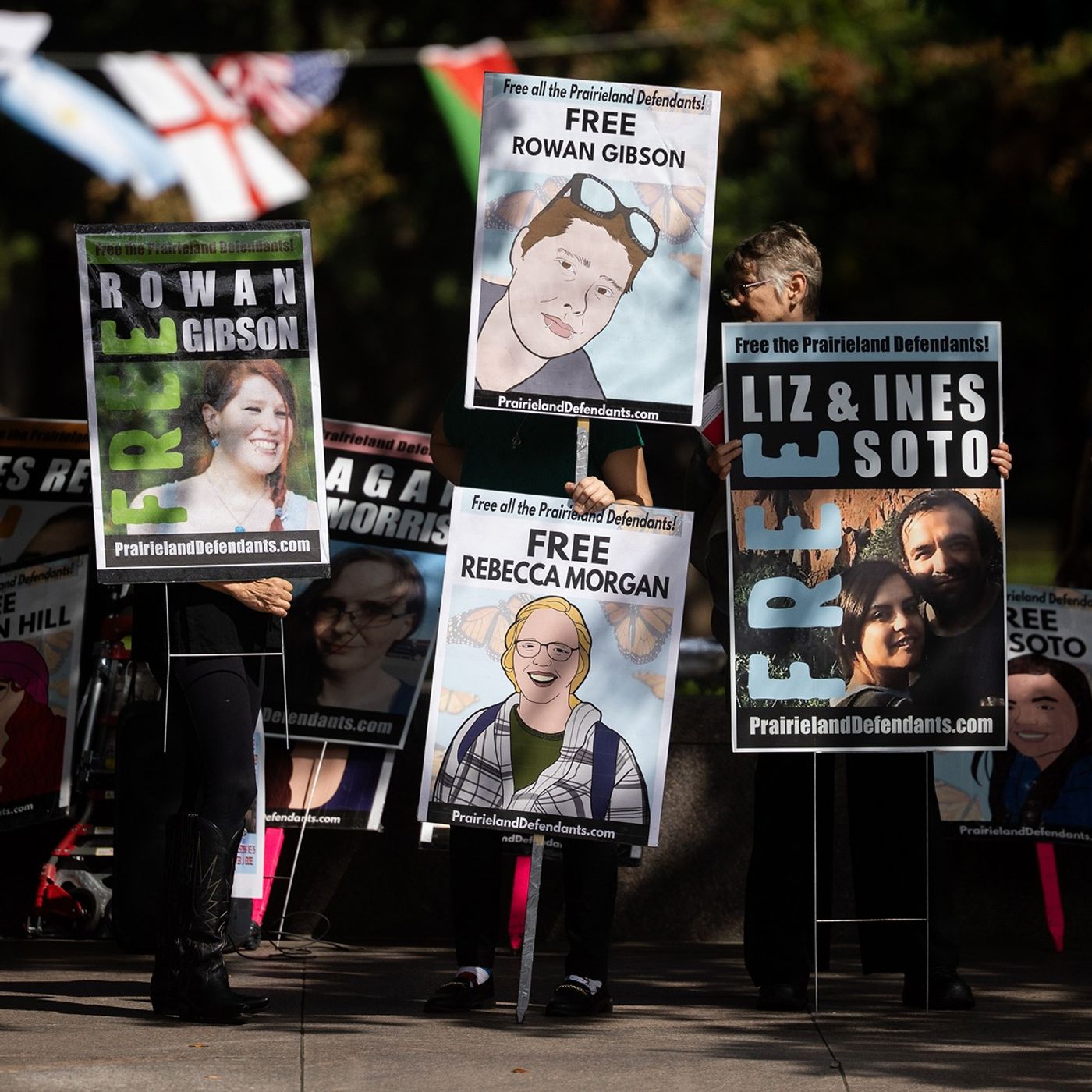 They Protested ICE. Now They’ve Been Convicted of Terrorism.
Oct 27, 2026 · 47 min
Michael Barbaro and Janet Reitman examine the Prairieland case, the first federal terrorism prosecution of American protesters, labeled an Antifa cell after an ICE protest shooting.
 Chris Rock Has Been Thinking About Forgiveness
Oct 3, 2026 · 1 h 3 min
Chris Rock tells David Marchese about his film Misty Green, forgiveness, cancel culture, therapy and an NVLD diagnosis, Hollywood, and why comedy needs nuance.
From the publisher
The actor-director learned a lot about shame, regret and failure — and then made a hit movie.
Summary, chapters and key points were generated from the episode transcript on November 15, 2026. Quotes are checked word for word against the transcript.