
What Does Abdul El-Sayed Believe?
Episode of The Ezra Klein Show · September 25, 2026 · 1 h 34 min
Ezra Klein interviews Michigan Senate nominee Abdul El-Sayed about his immigrant upbringing, Medicare for All, Islamophobic attacks, and U.S. policy toward Israel and Palestinians.
Summary
Ezra Klein spoke with Abdul El-Sayed, the Democratic nominee in Michigan's 2026 U.S. Senate race against Republican Mike Rogers. El-Sayed described his Egyptian father's flight from political repression, his upbringing with an American stepmother descended from Abigail Adams, a formative adolescent trip to Egypt, and the hostility he and his brother Osama faced after the September 11 attacks. He reflected on meritocracy and institutions, and recounted a patient whose relapse after hospital care led him to leave clinical medicine for public health.
Much of the conversation concerned health care. El-Sayed argued that private insurers add no value and that deductibles undermine the purpose of insurance, advocating Medicare for All as a high public floor that would still allow supplemental private coverage. Klein pressed him on innovation, price negotiation, and the failures of single-payer efforts in Vermont and California; El-Sayed proposed incremental steps such as filling gaps in traditional Medicare, covering children, and lowering the eligibility age, and argued industry opposition, not Republicans, was the main obstacle.
Klein raised the shift in right-wing attacks from El-Sayed's ideology to his Muslim faith; El-Sayed said he expected it and called it a last gasp of the MAGA movement, and criticized JD Vance. On Israel, El-Sayed called for applying international law evenly, described Israel's occupation as apartheid and its conduct in Gaza as genocide, criticized AIPAC's $32 million spending in his primary, and said he was agnostic about one- or two-state outcomes so long as both peoples achieve peace, dignity and self-determination. Klein, while critical of AIPAC, argued money explains less than El-Sayed suggests and pressed him on concrete policy. El-Sayed closed by recommending four books.
Chapters
- 0:54
Introduction and family origins
Klein frames the Michigan race and El-Sayed describes his Egyptian father, his mother, and his stepmother Jackie.
- 7:08
What it means to be American
El-Sayed contrasts American civic identity with his experiences in the UK and recalls his father's naturalization.
- 9:23
A summer in Egypt
El-Sayed recounts visiting relatives at 13 and his grandmother's lesson about the luck of being born in America.
- 17:04
Growing up Muslim after 9/11
El-Sayed discusses his name, his brother Osama, and the hostility he faced in high school after the attacks.
- 21:06
Institutions and the limits of meritocracy
El-Sayed reflects on sports, Bill Clinton's praise, the Rhodes Scholarship and how institutions decide who succeeds.
Linked moment · 25:47Skip to 25:47 using a listen link in the info box.
25:47From medicine to public health
El-Sayed tells the story of a patient denied a CT scan who relapsed, prompting him to leave clinical medicine.
- 38:17
The case for Medicare for All
El-Sayed and Klein debate insurer incentives, deductibles, drug innovation, and Medicare for All as a floor rather than a ceiling.
- 54:58
Steps and politics of health reform
They discuss incremental Medicare expansion, past reform failures, and industry-funded opposition.
- 1:07:04
Islamophobic attacks in the campaign
El-Sayed responds to the right's shift toward attacking his faith and criticizes JD Vance.
- 1:14:23
U.S. policy toward Israel and Palestinians
El-Sayed argues for even enforcement of international law, criticizes AIPAC, and outlines principles for a Democratic position.
- 1:30:33
Book recommendations
El-Sayed recommends four books and explains his idea of speaking truth to pain.
Key points
What was said, by whom, with the exact words. Timestamps jump to the moment.
- Abdul El-Sayed
El-Sayed argues that American identity is purely national rather than ethnic or religious.
“This is a country where... There is no ethnic identity. There's no religious identity. There is just a national identity”
- Abdul El-Sayed
El-Sayed says his patient's relapse showed that the U.S. health system is not built to care for socially complex patients.
“And the thing that I hate most about that experience is that that resident was right. And our system is not built to take care of those kinds of patients”
- Abdul El-Sayed
El-Sayed argues that deductibles made private health insurance useless as protection against financial catastrophe.
“The moment somebody created a deductible, the idea of private health insurance became useless”
- Abdul El-Sayed
El-Sayed suggests drug companies could still innovate if capped at a 15% margin over research and development costs, citing Costco's model.
“imagine prescription drug companies just said, listen, we are going to charge 15% above and beyond the rate of what it costs us”
- Abdul El-Sayed
El-Sayed envisions Medicare for All as a guaranteed public floor, with private supplemental insurance permitted but largely unnecessary.
“But our goal is to build a floor so high that most folks would be like, why would I?”
- Abdul El-Sayed
El-Sayed says he would vote for any incremental reform that expands publicly funded coverage and weakens corporate insurers.
“The rubric is simple. It gives more people healthcare through public dollars and disempowers corporate health insurers”
- Ezra Klein
Klein argues that failed single-payer efforts taught reformers that public distrust of government is a major obstacle.
“a lesson a lot of people who have been scarred in these wars have learned is that people don't trust the government that much”
- Abdul El-Sayed
El-Sayed argues the main obstacle to health reform is industry spending rather than Republican opposition.
“It's not the Republican opposition I'm worried about. It's the industry opposition”
- Abdul El-Sayed
El-Sayed says he anticipated attacks on his name and faith after winning the primary and believes they will backfire.
“I saw it coming a mile away. In fact, I'm betting on it”
- Abdul El-Sayed
El-Sayed attributes intensifying Islamophobic rhetoric to a fading MAGA movement pushing harder as its tactics lose effect.
“i think that this is the last gasp of a whole mega movement and you have an aging wannabe monarch”
- Abdul El-Sayed
El-Sayed characterizes Israel's decades-long occupation of Gaza and the West Bank as apartheid.
“They've been able to sustain a apartheid system, which is the only thing you can call sustained nearly six decade long occupation”
- Abdul El-Sayed
El-Sayed says U.S. foreign policy should be to enforce international law evenly as first among equals.
“I just think we should be the first among equals to enforce international law”
- Abdul El-Sayed
El-Sayed says AIPAC spent a record $32 million in his Senate primary.
“AIPAC spent $32 million in my primary. $32 million for one U.S. Senate seat”
Listen from 1:16:00 · American Israel Public Affairs Committee
- Ezra Klein
Klein predicts the next Democratic administration is unlikely to sell arms to Israel.
“I think that it is unlikely the next Democratic administration is going to be selling arms to Israel”
- Abdul El-Sayed
El-Sayed says he is agnostic between one-state and two-state outcomes as long as the process ensures rights for both peoples.
“Me as a US policymaker, I would be fine with any of those. It's about the process, not the outcome”
- Ezra Klein
Klein states he believes AIPAC has harmed both American Jews and Israel, while arguing money explains less of U.S. policy than El-Sayed suggests.
“I think AIPAC has done terrible damage to both Jews in America and Israel”
Listen from 1:22:10 · American Israel Public Affairs Committee
- Abdul El-Sayed
El-Sayed proposes that Democrats separate protecting the Jewish community from criticism of Israel's government as a first principle.
“Number one, that the well-being of the Jewish community is different than good faith criticism of a foreign government”
- Abdul El-Sayed
El-Sayed recommends Neil Postman's book as prescient about attention-driven media like TikTok.
“I shudder to think what Postman would make of TikTok”
People
In the conversation
- Ezra KleinNew York Times Opinion columnist and host of The Ezra Klein Show (diarization also merged one PopCast promo line into this label)
- Abdul El-SayedDemocratic Senate nominee in Michigan
Discussed
- Mike RogersRepublican chairman of the House Armed Services Committee
- Bill ClintonU.S. president Jiang associates with the Washington Consensus and Oslo peace process
- Donald TrumpPresident of the United States whose conduct of the Iran war is the episode's main subject
- JD VanceVice President of the United States
- Benjamin NetanyahuPrime Minister of Israel
- Bernie SandersU.S. Senator from Vermont who discussed mail-in ballots before the 2020 election
- Mitt RomneyFormer U.S. senator from Utah, 2012 Republican presidential nominee and Bain Capital co-founder
- Nancy MaceRepublican U.S. Representative from South Carolina running for governor
- Chip RoyRepublican congressman quoted on Islam
- Andy OglesRepublican congressman quoted on Muslims in American society
- Joe BidenFormer president whose economic approval is compared to Trump's
- Neil PostmanMedia critic, author of Amusing Ourselves to Death
- David HalberstamJournalist, author of The Best and the Brightest
- Heather McGheeAuthor of The Sum of Us, cited by Wagner on zero-sum racial politics
- Malcolm XCivil rights leader whose autobiography El-Sayed recommended
Topics
- 2026 United States Senate election in Michigan
- Single-payer healthcare
- Israeli–Palestinian conflict
- Islamophobia in the United States
- American Israel Public Affairs Committee
- Gaza war
- September 11 attacks
- Social determinants of health
- Medicare Advantage
- Medicaid
- Affordable Care Act
- Harry and Louise
- Amusing Ourselves to Death
- The Best and the Brightest
Related episodes
 Have Republicans Already Blown the Midterms?
Pod Save America · Oct 18, 2026 · 1 h 11 min
Dan Pfeiffer and Cook Political Report's Amy Walter assess the 2026 midterm landscape two weeks out, covering Senate and House races, polling, Trump, and redistricting.
 Trump Plans to Shove What Where?
Pod Save America · Oct 6, 2026 · 1 h 21 min
Jon Favreau, Jon Lovett and Tommy Vietor assess Democrats' red-state polling surge before the 2026 midterms, and Vietor interviews Texas gubernatorial nominee Gina Hinojosa.
 The Search for an Exciting Moderate
Pod Save America · Jul 26, 2026 · 1 h 15 min
Jon Favreau and Matt Yglesias debate how a moderate, center-left Democrat could gain attention, win the 2028 presidential primary, and appeal to swing voters.
 The Primaries Will Continue Until Morale Improves
Pod Save America · Jul 21, 2026 · 1 h 11 min
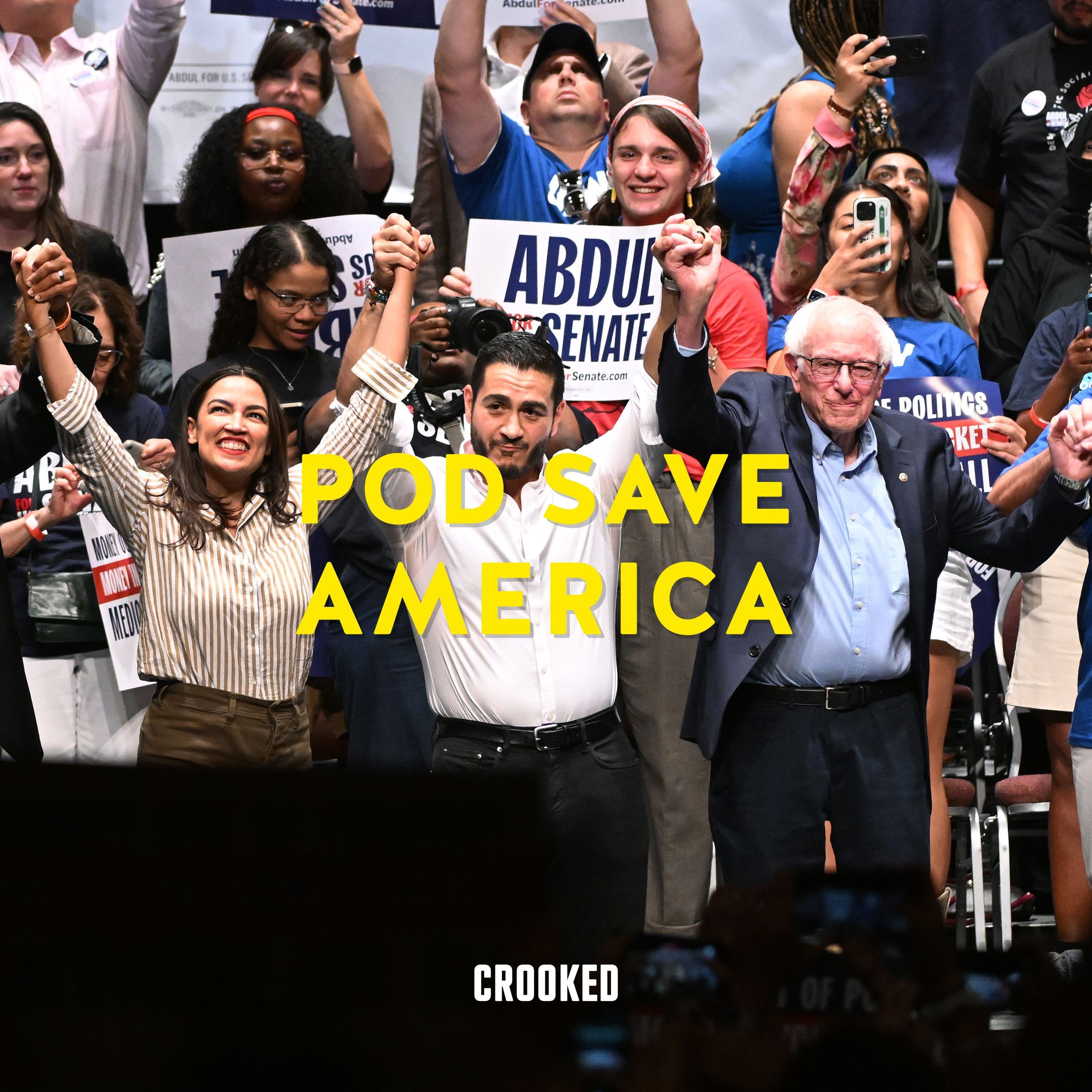
Jon Favreau, Jon Lovett and Tommy Vietor discuss Trump at the World Cup final, the renewed Iran war, ICE killings, and Democratic primaries in Maine, Wisconsin and Michigan.
 The Democratic Party's Civil War
Pod Save America · Jul 19, 2026 · 1 h 6 min
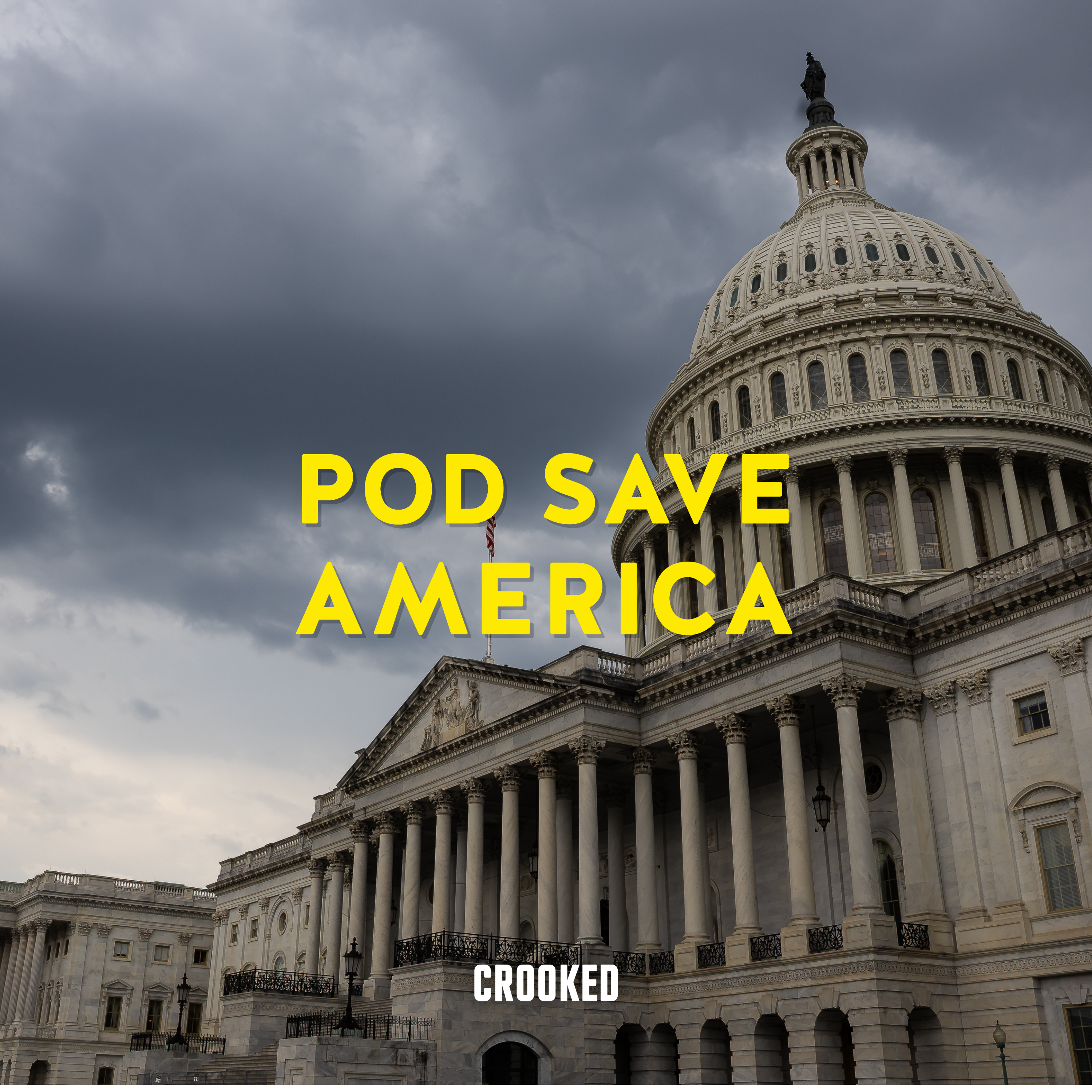
Dan Pfeiffer and Run for Something's Amanda Litman discuss Graham Platner's Maine collapse, DSA's rise, the Michigan Senate primary, AIPAC spending, and down-ballot recruitment.
 Trump's Explosive Diarrhea of the Mouth
Pod Save America · Jul 17, 2026 · 1 h 26 min
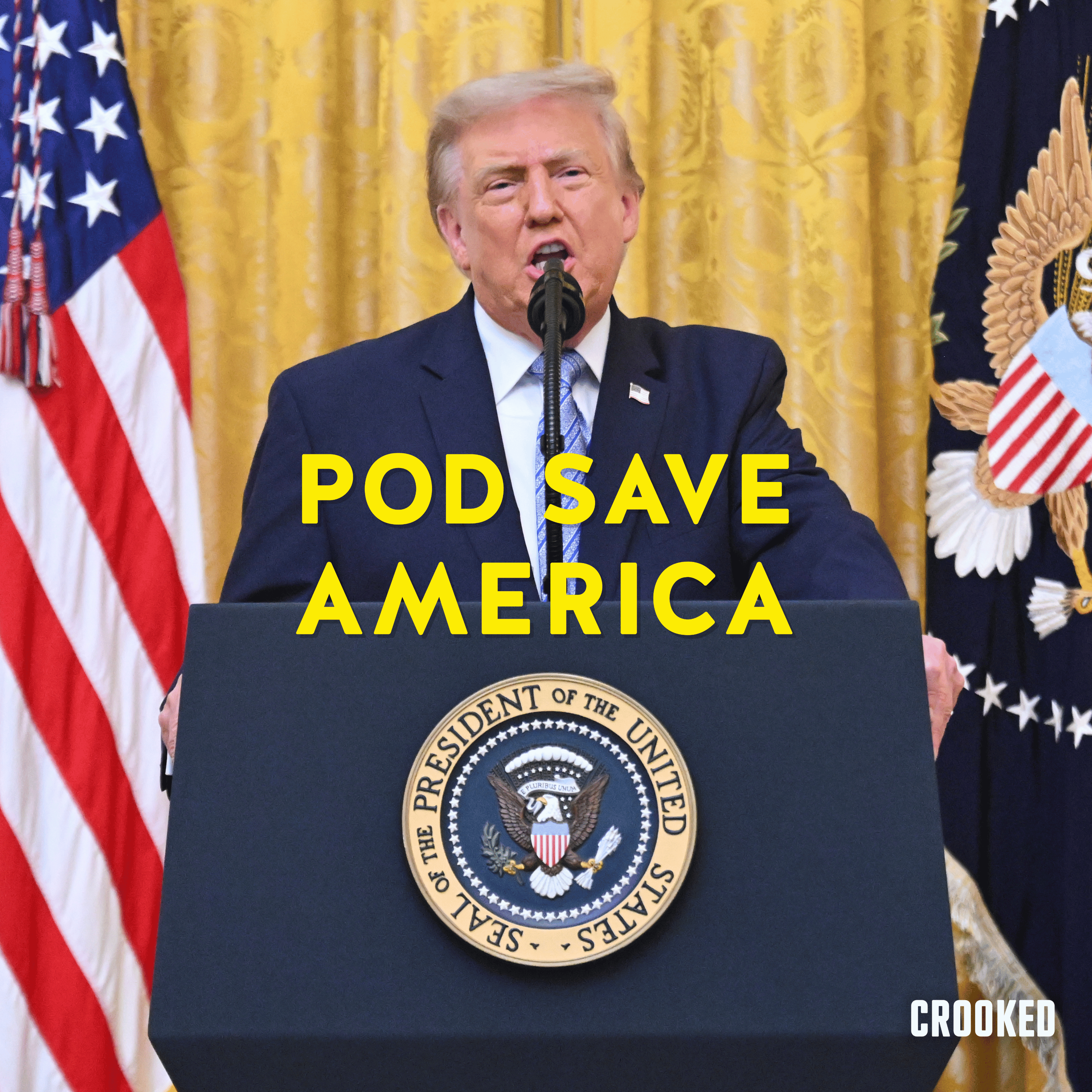
Jon Favreau and Dan Pfeiffer dissect Trump's election-conspiracy prime-time address and administration scandals, then Alex Wagner interviews Michigan Senate candidate Abdul El-Sayed.
More from The Ezra Klein Show
 ‘This Is Nuts.’ An OpenAI Insider Explains Why He Quit.
Oct 7, 2026 · 1 h 11 min
Ezra Klein interviews former OpenAI safety writer David Robinson about why he quit, arguing the AI industry lacks the safety culture its increasingly dangerous models demand.
From the publisher
Dr. Abdul El-Sayed, the Democratic nominee for Senate in Michigan, has been one of the most argued-over candidates this election cycle. If he wins, he’d be the first-ever Muslim senator, and he’s faced a torrent of attacks about his faith. The race has also become a proving ground for a lot of questions about the Democratic Party and its future: What should U.S. policy toward Israel and the Palestinians be? Is the future of health care reform Medicare for all? Can a left-wing populist win in a state that twice voted for Donald Trump? There’s been so much more heat than light in this race, so I wanted to invite El-Sayed on the show for a longer conversation. We talked about his upbringing, his views on U.S. foreign policy, his work on health care reform and what he would actually do if elected in November.
Summary, chapters and key points were generated from the episode transcript on September 28, 2026. Quotes are checked word for word against the transcript.