
Re-Air: Embrace Your Eccentricities & A Petri Dish of Creativity | Rainn Wilson
Episode of Mayim Bialik's Breakdown · September 25, 2026 · 55 min
Rainn Wilson tells Mayim Bialik and Jonathan Cohen about his alienated nerdy childhood, anxiety and addiction, therapy, 12-step programs and the Baha'i faith.
Summary
In a re-aired 2021 conversation, Rainn Wilson joined Mayim Bialik and Jonathan Cohen as the show's first in-person guest. Wilson described growing up an only child in suburban Seattle with parents he called social misfits, a mother who left when he was two, and a father who had survived a severely abusive childhood. He said he studied other kids' social interactions like an anthropologist and described the household as "a petri dish for total dysfunction."
Wilson and Bialik compared adolescent experiences as band and chess-club members, with Wilson recounting being steered from saxophone to bassoon and being mocked publicly when his chess team won a state title. Both objected to celebrities retroactively claiming "nerd cred," and Wilson argued that beneath the jokes about nerd-dom was a child who felt unloved, which he linked to later panic attacks, depression and addiction. He said he learned early in his acting career to embrace playing alienated misfits.
On recovery, Wilson said he had been in therapy for two decades with two long-term therapists, starting when he was depressed and using drugs in his early twenties under an NYU student plan. He urged listeners to attend 12-step meetings even if they are not addicted, and argued that resistance to therapy stems from fear, denial and defensiveness. Bialik recommended Al-Anon and CODA meetings; Cohen said people are conditioned from an early age to avoid examining their feelings.
The conversation closed on spirituality. Wilson described returning to the Baha'i faith of his youth, a daily 15-minute meditation practice focused on quieting the mind, and a belief that a recovery journey, a spiritual journey and a human journey are the same. Bialik recounted a transcendent experience at the Baha'i shrine and gardens in Haifa, and Cohen described discovering somatic energy work at 17.
Chapters
- 0:04
Introduction to the re-air
Bialik and Cohen introduce the 2021 Rainn Wilson episode and plug his podcast Soul Boom.
- 2:19
Meeting in person and desk tour
Bialik admits she has never watched The Office, and the hosts walk Wilson through the cue cards and objects on Jonathan's desk.
- 6:53
Character actors and early alienation
Bialik and Wilson discuss the limits of being labeled a character actor and Wilson begins describing his unusual family.
- 9:09
A petri dish of dysfunction
Wilson recounts his parents' separation, his father's abusive childhood, and learning social cues by observing classmates.
- 14:51
Bassoon, band and nerd credentials
Wilson and Bialik trade stories about school music programs, Dungeons & Dragons, chess club and being ostracized.
- 23:04
Moving to Illinois and discovering acting
Wilson describes the move to Wilmette for the Baha'i National Center and the acting class that redirected his life.
- 27:46
Nerd chic and the cost of not fitting in
Both criticize celebrities claiming nerd credentials and Wilson links childhood loneliness to later anxiety, depression and addiction.
- 32:08
Therapy, 12 steps and resistance
Wilson and Bialik describe long-term therapy, recommend 12-step and Al-Anon meetings, and examine why people avoid therapy.
- 37:45
Faith, work and evolution
Wilson describes returning to the Baha'i faith and argues that recovery, spiritual and human journeys require sustained work.
- 47:32
Meditation and being typecast as Dwight
Wilson describes his simple daily meditation and the public's expectation that he behave like Dwight Schrute.
- 50:26
Transcendent experience and consciousness
Bialik recounts a profound experience at the Baha'i site in Haifa, Cohen describes energy work, and Wilson lays out his view of the soul.
Key points
What was said, by whom, with the exact words. Timestamps jump to the moment.
- Rainn Wilson
Wilson argued that the label 'character actor' has become limiting in contemporary Hollywood compared with earlier eras.
“back in the day, you could be a character actor that was playing incredible lead, juicy, amazing roles. And now character actor, you're relegated to like the sixth lead”
- Mayim Bialik
Bialik said that as a child actor in 1986 she was cast in 'submit all ethnicities' roles and never felt she belonged to the mainstream leading-actor type.
“I went out for roles, I kid you not, that said submit all ethnicities because there was one kind of actor that could have a lead and it was not this face, not this voice, not this body type”
- Rainn Wilson
Wilson described consciously observing other children's social interactions because he had not learned ordinary social cues at home.
“So I felt a little bit like an alien in suburban Seattle that was like observing humans to see like, what do homo sapiens do and how do I fit in?”
- Rainn Wilson
Wilson said his upbringing as an only child of unhappily married Baha'i parents created conditions for dysfunction.
“So Baha'i, only child, and they didn't love each other. So that was also, you know, weird. So it was this weird, it's a petri dish for total dysfunction”
- Rainn Wilson
Wilson said he decided early in his career to embrace playing alienated misfits rather than pretend to be something else.
“I'm not gonna pretend to be something that I'm not. And I'm just, I'm gonna play misfits. That's who I am. I'm gonna play alienated misfits and I'm gonna be damn good at it”
- Rainn Wilson
Wilson criticized celebrities who claim to have been nerds in high school, citing a humiliating prank banner after his chess team won a state tournament.
“The Glee Club, Pep Club made it as a joke. So fuck you, Charlize Theron. And Jennifer Aniston and everyone is like, oh, give me a fucking break. You have no idea”
- Rainn Wilson
Wilson said his childhood sense of being unloved produced anxiety and depression, and that his reading of science fiction was rooted in loneliness.
“in reality, it was because I was lonely and depressed and sitting in my room and not socializing and just reading science fiction books”
- Rainn Wilson
Wilson said his childhood dysfunction led to acute anxiety disorder, panic attacks, depression and addiction in his twenties.
“I was suffering from acute anxiety disorder. I would have Panic attacks all the time and, you know, suffered from depression and addiction issues”
- Mayim Bialik
Bialik said she began therapy at about 17, has been with the same therapist for 20 years, and cannot function without it.
“For me, I cannot function without therapy. I can't. I can't and I don't”
- Rainn Wilson
Wilson said he started therapy at 23 or 24 while depressed and using drugs, paying $5 a session under an NYU student plan.
“I was doing a lot of drugs and I couldn't get out of bed in the morning and I fortunately I was still under the covered under the NYU plan so I paid like $5 to go to a therapist”
Linked moment · 35:34Skip to 35:34 using a listen link in the info box.
Rainn WilsonWilson argued that people's resistance to devoting fifty minutes a week to therapy is irrational given the potential benefits.
“Why would you not take 50 of these 60-second minutes, 50 of them, that's all, to therapy? To deepen yourself, to learn how to break patterns, to process trauma”
- Rainn Wilson
Wilson recommended that non-addicts attend 12-step meetings as a way to form deep friendships in a society where connection is hard.
“in fact, folks listening at home, maybe you're not even addicted, hit a 12 Step meeting just to get to know people and to share your heart and share on a deeper level”
- Mayim Bialik
Bialik recommended Al-Anon to anyone bothered by another person's drinking or drug use, or accused of being controlling.
“If there's anyone in your life who's ever accused you of trying to manage or control them or you're too bossy or mind your own business, you probably need an Al-Anon meeting”
- Rainn Wilson
Wilson said he had rejected the Baha'i faith of his youth and later returned to it, finding tools in prayer, meditation and service to others.
“I had rejected the Baha'i faith of my youth. And I write about this in my book, The Bassoon King, about my journey kind of coming back to faith”
- Rainn Wilson
Wilson attributed resistance to therapy to fear and denial, and to a dislike of being confronted about one's patterns.
“Fear and denial. I think that they're afraid to face challenges that they might be having. And I think they're in denial about challenges”
- Jonathan Cohen
Cohen argued that people are conditioned from a young age not to address their emotions in order to fit in, which makes therapy feel unnatural.
“I believe that we are taught from a very young age not to address problems. whatever emotion or issue that is going on with us so that we fit in”
- Rainn Wilson
Wilson said a recovery journey, a spiritual journey and a human journey are the same process of becoming one's best self through work.
“A recovery journey is the same as a spiritual journey. And frankly, it's a human journey. And that is to make ourselves the best possible version of ourselves over the course of our lives”
- Rainn Wilson
Wilson framed the cost of therapy as a long-term investment that can yield confidence and well-being after several years.
“if you look at it as a long-term investment, if three to five years later, all of a sudden you have renewed confidence and belief in yourself and well-being and an open mind”
- Mayim Bialik
Bialik argued that inner work differs from weight loss because progress is cumulative and you never return to exactly the same place.
“if you arrive in the same place, you have spiraled up. You're never in the same place again”
- Rainn Wilson
Wilson said he meditates about fifteen minutes daily and that meditation need not involve apps or mantras.
“I do. I meditate every day. I keep it very simple. It's about 15 minutes and it's just about quieting the mind”
- Rainn Wilson
Wilson said audiences expect him to behave like Dwight Schrute and unfollow him when he tweets about vaccines or climate change.
“People want me to be Dwight. That's what I mean. They want me to act like Dwight”
- Mayim Bialik
Bialik described an unquantifiable transcendent experience of safety and calm in the prayer room at the Baha'i site in Haifa.
“one of the most profound religious experiences I have ever had was at the Baha'i Temple in Haifa, which is in the north of Israel”
- Jonathan Cohen
Cohen recounted discovering somatic body work at 17 and experiencing an unexplainable sensation in his hands after a four-day workshop.
“I began to have a sensation in my hands that someone could call energy, but I didn't understand what that would even mean. But it was fundamentally unexplainable and profound”
- Rainn Wilson
Wilson described a spiritual perspective in which humans are eternal souls temporarily inhabiting bodies.
“There's an eternal aspect to us, and we're riding around in flesh suits for a limited amount of time”
People
In the conversation
- Mayim BialikActress, neuroscientist and host of Mayim Bialik's Breakdown
- Jonathan CohenExecutive producer and co-host of Mayim Bialik's Breakdown, writer and energy worker
- Rainn WilsonAmerican actor known for playing Dwight Schrute on The Office and founder of SoulPancake
Discussed
- Reza AslanReligious scholar and Wilson's co-host on Metaphysical Milkshake
- Charlize TheronSouth African-American actress cited by Wilson as claiming nerd credentials
- Jennifer AnistonAmerican actress cited by Wilson as claiming nerd credentials
- Rock HudsonAmerican actor who attended the same Illinois high school theater program
- Ann-MargretAmerican actress who attended the same Illinois high school
- Sam HarrisAuthor and neuroscientist whose audio piece 'The Last Time' Ferriss cited
- Leo TolstoyRussian novelist whose quote about happy and unhappy families Wilson paraphrased
- Elvis CostelloBritish musician whose song Wilson used in a formative acting class exercise
Topics
Related episodes
 Chef André Rush: Strength Through Service
Mick Unplugged · Oct 19, 2026 · 49 min
Mick Hunt talks with Army veteran and former White House chef André Rush about grief, PTSD, asking for help, his culinary path, and his memoir.
 Chris Rock Has Been Thinking About Forgiveness
The Daily · Oct 3, 2026 · 1 h 3 min
Chris Rock tells David Marchese about his film Misty Green, forgiveness, cancel culture, therapy and an NVLD diagnosis, Hollywood, and why comedy needs nuance.
 #685 - Joey Diaz
This Past Weekend w/ Theo Von · Sep 25, 2026 · 2 h 1 min
Theo Von and Joey Diaz talk in Asbury Park about Diaz's mother's death, raising his daughter, his move to New Jersey, Austin comedy plans, and sobriety.
 The Ultimate Guide to Divorce (For You & The People You Love)
The Mel Robbins Podcast · Sep 24, 2026 · 1 h 27 min
Divorce attorney James Sexton walks Mel Robbins through his six stages of divorce, from early unhappiness to rebuilding life afterward and supporting loved ones.
- This One Episode Will Motivate You to Change Your Entire Life
The Mel Robbins Podcast · Sep 7, 2026 · 1 h 16 min
Mel Robbins talks with entrepreneur Gary Vaynerchuk about accountability, fear, regret, envy, peace of mind, and taking action on careers, business, and social media.
 Fearful/Disorganized Attachment 101
Call Her Daddy · Aug 30, 2026 · 47 min
Alex Cooper concludes her attachment style series with a solo explainer on fearful (disorganized) attachment, trauma bonds, and healing.
More from Mayim Bialik's Breakdown
 Part Two: He Called Out to Nonhuman Intelligence at Lake Hartwell. Three Minutes Later, Navy SEALs Watched Two Objects Perform a Maneuver No Terrestrial Craft Could Make | Sean Webb
Oct 7, 2026 · 52 min
Sean Webb tells Mayim Bialik and Jonathan Cohen about receiving information from nonhuman intelligence, AI emotions and alignment, and Jesus and quantum mechanics.
 CIA Used Psychics To See The Future: The Secret Remote Viewing Program That Sent Psychic Spies on 500 Classified Missions, Plus Signs That You Might Have These Abilities | Dr. Edwin C. May
Oct 2, 2026 · 1 h 4 min
Physicist Edwin C. May tells Mayim Bialik and Jonathan Cohen about the U.S. government's Star Gate remote viewing program, precognition research, and his materialist worldview.
 Part Two: You Have Never Seen Reality: Discover Who You Actually Are in Only Two Minutes | Rupert Spira
Sep 30, 2026 · 51 min
Mayim Bialik and Jonathan Cohen continue their conversation with nonduality teacher Rupert Spira on enlightenment, consciousness, synchronicity, relationships, death, and the soul.
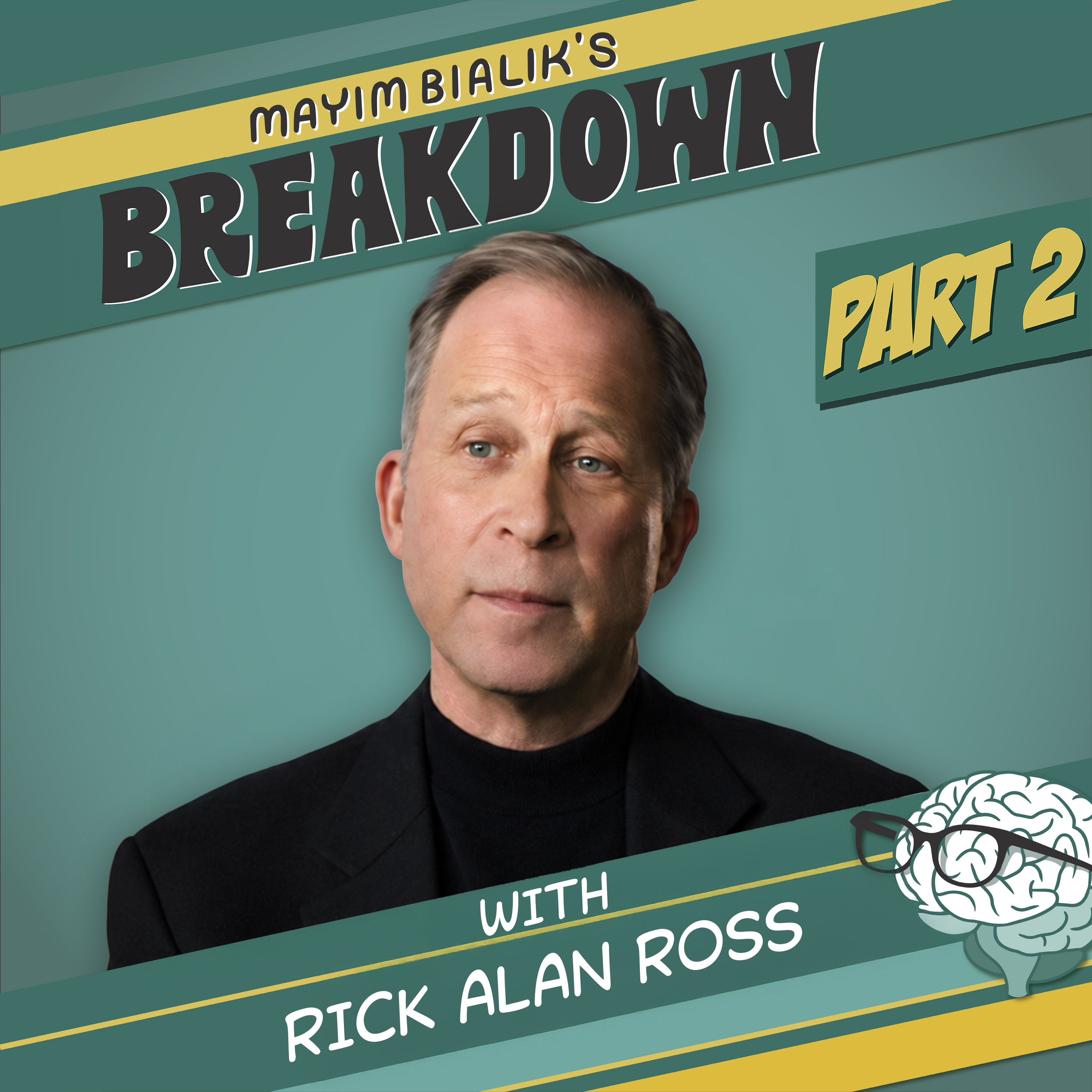 Part Two: Cult Leaders Target You At Your Weakest. Never Confess This To Them | Rick Alan Ross
Sep 23, 2026 · 59 min
Mayim Bialik and cult expert Rick Alan Ross discuss coercive control in relationships, workplaces and UFO groups, Tulsi Gabbard's ties to Chris Butler, and whether MAGA is a cult.
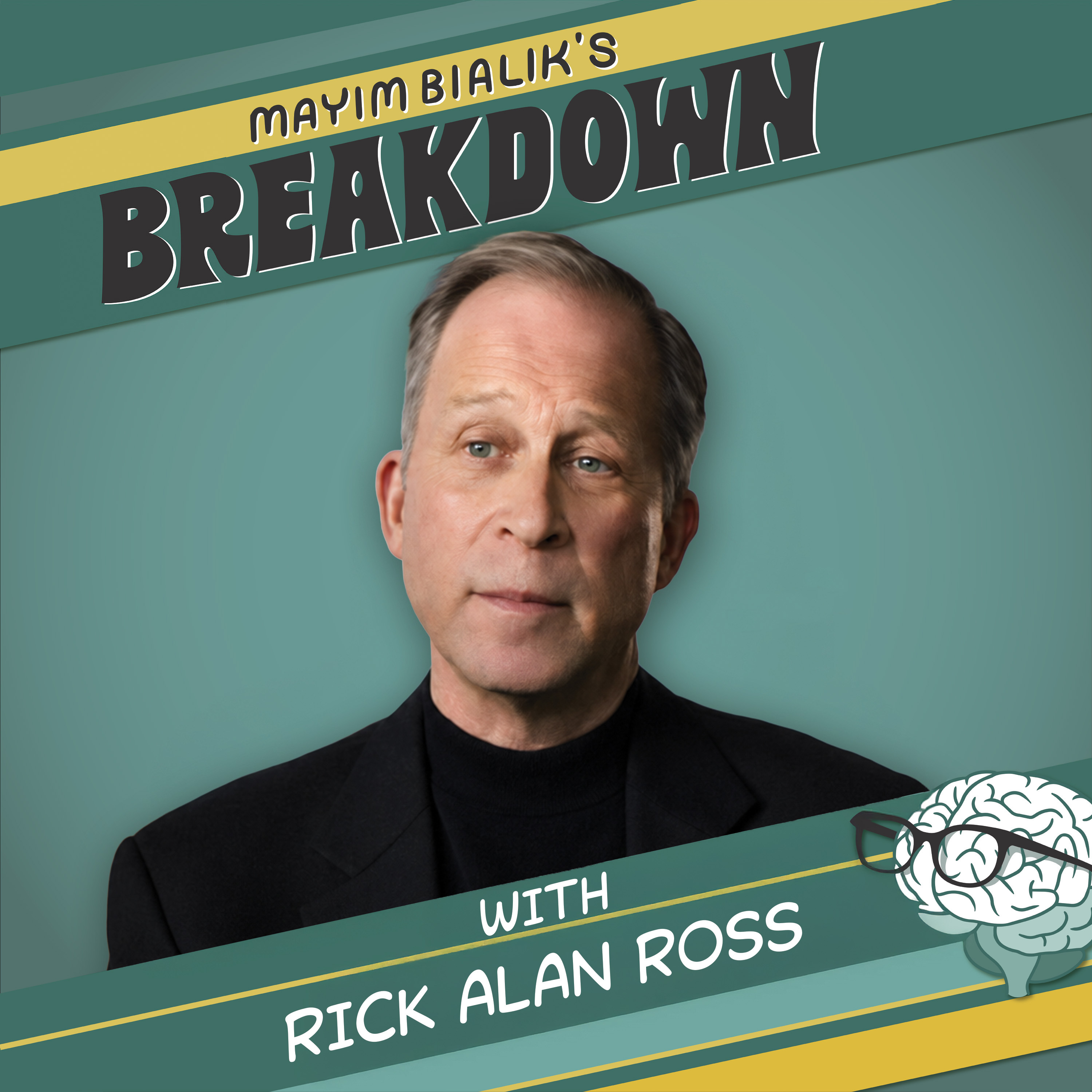 Cult Leaders Target You At Your Weakest. Never Confess This To Them | Rick Alan Ross
Sep 22, 2026 · 51 min
Mayim Bialik talks with cult expert Rick Alan Ross about how cults recruit and break people down, deprogramming, Scientology, AA, religion and Lev Tahor.
From the publisher
This week we’re revisiting an episode from 2021 with Rainn Wilson, best known as Dwight Schrute from the beloved series The Office. Rainn holds a special place here at MBB for a couple of reasons: he was our very first in-person guest and one of our first spiritual guests. In this episode he discusses his nerdy childhood, growing up with social misfit parents, and the evolution that therapy has provided to every area of his life. Rainn describes growing up in a petri dish of dysfunction, feeling unloved and alienated as a child, and how all of this led to anxiety, depression, panic attacks, and addiction issues. He learned early on in his acting career to embrace playing the alienated misfit, and opens up about his meditation process and the tools his faith gave him to find his own path and identity. Mayim and Rainn bond over being band geeks and chess club members, and all of the expectations, insecurities, and limitations that come with being a sitcom character actor. They examine the similarities between a recovery journey and spiritual journey, the benefits of going to AA even if you’re not an alcoholic, and the reasons that some people are resistant to therapy. Make your summer wardrobe feel easier. Go to https://www.quince.com/breakdown for free shipping on your order and 365-day returns. Upgrade your kitchen with Our Place today. Visit fromourplace.com/BREAK and use code BREAK for 10% off sitewide. Go to https://helixsleep.com/breakdown to receive 27% off sitewide. Follow us on Substack for Exclusive Bonus Content: https://bialikbreakdown.substack.com/ BialikBreakdown.com YouTube.com/mayimbialik See Privacy Policy at https://art19.com/privacy and California Privacy Notice at https://art19.com/privacy#do-not-sell-my-info .
Summary, chapters and key points were generated from the episode transcript on September 27, 2026. Quotes are checked word for word against the transcript.