
Your Top Health Questions Answered
Episode of Huberman Lab · July 27, 2026 · 1 h 44 min
Andrew Huberman answers listener questions on late-night workouts, light exposure, memory, smell, fertility, menopause, surgery recovery and finding a passion.
Summary
In a solo question-and-answer episode of the Huberman Lab Podcast, Andrew Huberman responded in real time to recorded questions submitted by listeners. He began with pre-workout strategies for people who train late at night, recommending alpha-GPC (600–900 mg) as a non-sympathomimetic alertness aid that does not impair, and may modestly increase, REM sleep, while cautioning that choline raises TMAO and suggesting 600 mg of garlic as an offset and limiting use to a few times per week. He also recommended a post-workout hot shower, physiological sighs, and eating slow-digesting protein or starch before bed after late training.
On light, Huberman argued that any ambient daylight in the first hour after waking is beneficial, that west-facing exposure still works, and that the suprachiasmatic nucleus integrates light across the prior two or three days, which allows flexibility. Asked about over-optimization culture, he said true optimization is adaptive rather than rigid, emphasized core pillars of sleep, light, hydration, exercise, nutrition and social connection, and warned that perfectionism can breed burnout and resentment.
Other segments covered memory (alertness, focus, error-making, sleep and especially self-testing, including using ChatGPT to generate tests), sniff training to improve olfaction, and fertility. On fertility he summarized conversations with Kyle Gillette, Natalie Crawford and Thais Aliabadi, describing body-fat ranges, the suppressive effect of exogenous testosterone on sperm count, the role of HCG, a low-inflammation diet with low-sugar fermented foods, and L-carnitine and CoQ10 for sperm and egg quality. He said the early large hormone replacement therapy studies were flawed and that hormone therapy started early enough appears beneficial for perimenopausal symptoms including anxiety.
Huberman advised a sunset wedding on chronotype grounds, recommended prehabilitation, hospital window light and eye masks for surgical recovery while criticizing hospitals' non-circadian environments, and closed with advice on finding a passion: stay structured, work, avoid drama and numbing out, follow Joe Strummer's "no input, no output," and "chop wood, carry water" until competent before bringing a unique spin to a field.
Chapters
- 0:00
Introduction to the listener Q&A
Huberman explains that he solicited recorded questions from listeners and is hearing them for the first time.
- 1:42
Late-night training and pre-workout supplementation
Huberman recommends alpha-GPC with garlic, a hot shower, physiological sighs and post-workout food for people who train shortly before bed.
- 16:12
Morning daylight, east versus west facing
He explains melanopsin cells, ambient daylight, and how the circadian clock integrates light over several days.
- 22:54
Over-optimization and protocol overwhelm
Responding to a physician's question, Huberman argues optimization should be adaptive, consistent and free of guilt or resentment.
- 34:48
Improving memory and sense of smell
He covers hippocampus-to-neocortex consolidation, exercise-driven arousal, error-making, sleep, self-testing, and multi-sniff training for olfaction.
- 53:11
Nutrition, supplements and fertility
Huberman discusses body fat and calories, testosterone therapy and HCG, low-inflammation diets, fermented foods, L-carnitine and CoQ10.
- 1:09:46
Perimenopause, menopause and mental health
He addresses hormonal change and anxiety and reassesses the conclusions of earlier hormone replacement therapy studies.
- 1:18:08
Sunrise versus sunset wedding and chronotypes
Huberman recommends an evening ceremony based on how chronotypes make it easier to stay up late than to wake early.
- 1:22:52
Kidney donation and surgery recovery
He advises prehabilitation, maintaining circadian rhythm in hospital, and explains muscle memory in regaining strength.
- 1:30:57
Careers in science
Huberman addresses a PhD student's question about postdocs privately and explains why.
- 1:32:05
Finding your passion
He outlines staying structured, earning money, avoiding drama and numbing out, Strummer's Law, and the chop-wood-carry-water apprenticeship phase.
Key points
What was said, by whom, with the exact words. Timestamps jump to the moment.
Linked moment · 2:14Skip to 2:14 using a listen link in the info box.
Andrew HubermanHuberman recommends 600–900 mg of alpha-GPC as a pre-workout that raises alertness via acetylcholine without impairing sleep.
“600 milligrams to 900 milligrams of alpha-GPC taken simply with water. will give you a increase in focus and alertness that you can devote to that high intensity or moderate to high intensity workout”
- Andrew Huberman
Huberman advises taking 600 mg of garlic alongside alpha-GPC to offset elevated TMAO production.
“anytime you're gonna take Alpha-GPC, you should take 600 milligrams of garlic along with it”
- Andrew Huberman
Huberman says alpha-GPC loses effect with frequent use and should be limited to roughly one to three times a week.
“So I would reserve taking the alpha GPC to just maybe once or twice a week, maybe three times maximum”
- Andrew Huberman
Huberman recommends a hot shower and long-exhale breathing after a late workout to lower core temperature and autonomic arousal before sleep.
“take a hot shower. Believe it or not, taking a hot shower by virtue of the fact that you warm up the surface of your body will trigger neurons in the medial preoptic area of your hypothalamus”
- Andrew Huberman
Huberman says eating slow-digesting protein or starch after a late workout is preferable to going to bed hungry.
“My suggestion would be after you work out, especially if it's a moderate to high intensity workout, that you should eat something”
- Andrew Huberman
Huberman argues that any ambient daylight in the first hour after waking is beneficial, and facing west is acceptable if east is not possible.
“Any amount of ambient daylight that you can get in the first hour after waking will greatly benefit you”
- Andrew Huberman
Huberman explains that the suprachiasmatic nucleus integrates light exposure across the previous two or three days, so a missed morning can be compensated later.
“it's your last two or three days of post-waking bright light exposure that really dictates your circadian rhythm”
- Andrew Huberman
Huberman says a neurotic pursuit of perfect protocol adherence risks a form of health optimization burnout.
“I do think that a neurotic approach to trying to get everything exactly right is going to harm our mental health”
- Andrew Huberman
Huberman contends that genuine optimization is adaptive rather than rigid and must fit real-life constraints.
“Optimization is not going to be about being rigid. It's going to be about being adaptive”
- Andrew Huberman
Huberman argues the main benefit of exercise for learning is its pro-arousal effect rather than any specific exercise modality.
“But the biggest effect of exercise is the pro-arousal effect. Put differently, it increases alertness, which allows you to focus better”
- Andrew Huberman
Huberman says making errors is required to trigger the plasticity underlying learning.
“You have to make errors, whether or not you're trying to learn dance, you're trying to learn do a crossword puzzle”
- Andrew Huberman
Huberman identifies self-testing as the most overlooked and powerful tool for forming and retaining memories.
“This is the most overlooked, powerful protocol for neuroplasticity”
- Andrew Huberman
Huberman says he uses ChatGPT to generate tests for himself on material he wants to consolidate.
“These days, I'll use ChatGPT to test myself on material, either from a podcast or even some material that I learned long ago”
- Andrew Huberman
Huberman says olfactory neurons turn over throughout life and their tuning is activity-dependent, so repeated deliberate sniffing improves smell.
“That turnover and their tuning to particular smells, which translates to your ability to smell is activity dependent”
- Andrew Huberman
Huberman relays Kyle Gillette's view that men above roughly 20% body fat benefit from a caloric deficit while lean men risk lowering testosterone by prolonged deficits.
“If a man is carrying excess body weight, if he's starting to carry more than say 20% body fat, then he would be wise to cut calories to a sub maintenance level and lose some of that body fat”
- Andrew Huberman
Huberman warns that any exogenous testosterone, even microdosed, will negatively affect sperm count unless offset with HCG.
“If you take exogenous testosterone, even a little bit, even if you're quote unquote microdosing it, so less than 100 milligrams per week or so, it will negatively impact your sperm count”
- Andrew Huberman
Huberman cites a Stanford study finding low-sugar fermented foods reduced inflammatory markers while increased fiber had mixed effects.
“What they saw is that many inflammatory markers were significantly reduced in the low sugar fermented food group”
- Andrew Huberman
Huberman says three fertility physicians he consulted all recommend coenzyme Q10 and L-carnitine to support sperm and egg quality via mitochondrial health.
“say yeah i recommend to my patients coenzyme q10 i recommend to my patients some l-carnitine”
- Andrew Huberman
Huberman says the early large-scale hormone replacement therapy studies reached conclusions now widely regarded as wrong.
“many, many people now conclude that the early conclusions of those studies were wrong”
- Andrew Huberman
Huberman states there is a mechanistic basis for linking hormonal change in perimenopause to anxiety and urges women to discuss hormone levels with a doctor.
“Is there a relationship between that and things like anxiety? Now, the short answer is absolutely yes”
- Andrew Huberman
Huberman recommends a sunset wedding because most people can push their bedtime later more easily than they can wake earlier.
“it's very hard for people to get into gear and be wide awake and alert earlier than their normal wake up time”
- Andrew Huberman
Huberman advises entering surgery as fit and rested as possible, citing surgeon friends who say athletic patients recover faster.
“the athletes that come in, even if they're dealing with major surgeries, even if they're not pro athletes, they're just sort of, you know, recreational athletes always recover faster”
- Andrew Huberman
Huberman says regaining previously built strength and muscle size is far easier than building it the first time.
“So regaining strength and muscle size is far easier than gaining it for the first time”
- Andrew Huberman
Huberman criticizes hospital environments as non-circadian-friendly and recommends window light, eye masks and earplugs to aid recovery.
“The environment in the hospital is not circadian friendly to the patients or the staff”
- Andrew Huberman
Huberman invokes Joe Strummer's 'no input, no output' to argue that discovering a passion requires active engagement with the world.
“which is no input, no output. You need to be interfacing with the world in order to have ideas and to discover what your passion is”
- Andrew Huberman
Huberman warns against two traps while searching for a vocation: being pulled into drama and numbing out.
“You need to avoid two things critically. These are the don'ts, avoid drama,”
- Andrew Huberman
Huberman advises apprenticing oneself to a field and mastering its core mechanics before attempting to add a personal spin.
“you got to get the core mechanics and the basics first. You don't get to come in there and be like, I'm me and I'm going to change the game. No, it's chop wood, carry water”
People
In the conversation
- Andrew HubermanAmerican neuroscientist, professor at Stanford School of Medicine and host of the Huberman Lab podcast
Discussed
- Kyle GillettePhysician specializing in male hormone health and fertility, previously a Huberman Lab guest
- Natalie CrawfordFertility physician and author of The Fertility Formula
- Thais AliabadiOB-GYN and fertility expert previously interviewed on the podcast
- Noam SobelNeuroscientist and expert on olfaction
- Justin SonnenburgStanford microbiome researcher who co-authored a study on fermented foods and inflammation
- Christopher GardnerStanford nutrition scientist and co-author of the fermented foods study
- Dorian YatesSix-time Mr. Olympia bodybuilder with whom Huberman trained in Spain
- Joe StrummerLate frontman of The Clash and The Mescaleros, credited with the saying 'no input, no output'
- Cody MorrisonListener and PhD candidate who asked about careers in science
Topics
- Alpha-GPC
- Circadian rhythm
- Memory consolidation
- Male fertility
- Olfaction and sniff training
- Testosterone replacement therapy
- Menopause
- Hormone replacement therapy
- Low-inflammation diet
- Fermented foods
- Surgery recovery and prehabilitation
- Finding one's passion
- Coenzyme Q10
- L-carnitine
- Trimethylamine N-oxide (TMAO)
- Chronotypes
- Physiological sigh
Related episodes
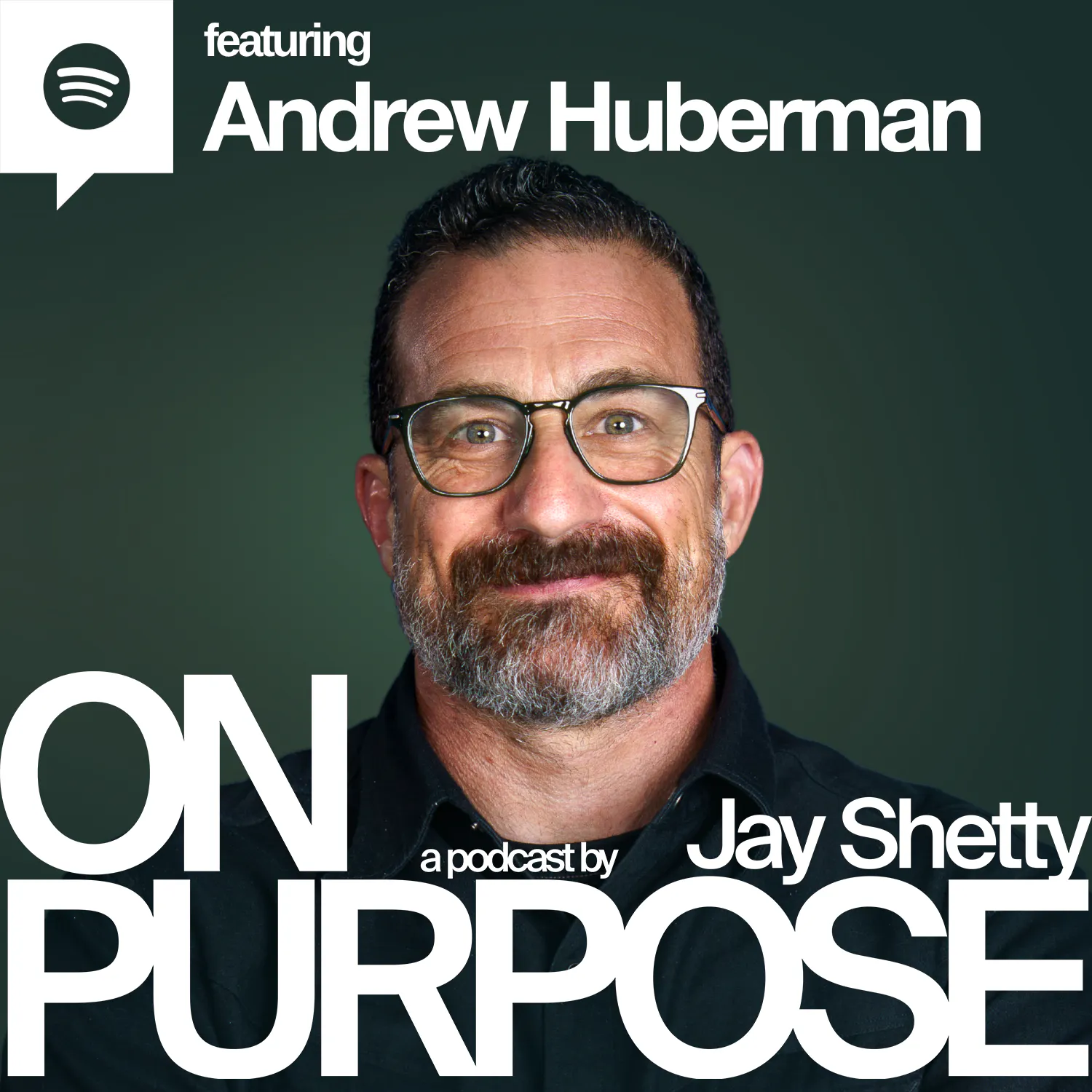 Andrew Huberman: The Simple Habits That Will Transform Your Health
On Purpose with Jay Shetty · Sep 7, 2026 · 1 h 42 min
Neuroscientist Andrew Huberman tells Jay Shetty how morning cortisol, light, movement and meditation shape health, and why prayer transformed his life.
More from Huberman Lab
 Best Tools for Gut Health & Weight Loss | Dr. Chris Thompson
Sep 21, 2026 · 2 h 28 min
Andrew Huberman and gastroenterologist Chris Thompson discuss gut anatomy, fiber and the microbiome, GLP-1 drugs, early metabolic testing, gut permeability, and endoscopic and gene-therapy obesity treatments.
- The Art of True Happiness | Dr. Arthur Brooks
Sep 14, 2026 · 2 h 50 min
Andrew Huberman and Arthur Brooks discuss the three macronutrients of happiness, the four worldly idols, leisure, addiction, faith, and questions for finding meaning.
- How Mitochondria Control Your Metabolism | Dr. Jared Rutter
Sep 7, 2026 · 2 h 4 min
Biochemist Jared Rutter explains to Andrew Huberman how mitochondria allocate cellular resources between energy and growth, shaping aging, heart failure, and cancer.
- How to Improve Motivation & Overcome Procrastination | Dr. Masud Husain
Aug 24, 2026 · 2 h 21 min
Andrew Huberman and Oxford neurologist Masud Husain discuss the neuroscience of motivation, apathy, dopamine, effort-reward decisions, attention, ADHD, and Alzheimer's resilience.
- Using AI to Increase Your Intelligence & Enrich Humanity | Dr. Fei-Fei Li
Aug 10, 2026 · 2 h 8 min
Andrew Huberman and computer scientist Fei-Fei Li discuss vision, how modern AI learns, its limits versus human cognition, AI in medicine and robotics, and education.
From the publisher
I answer questions submitted by listeners about topics ranging from how to ensure great sleep after nighttime exercise, effective no-caffeine pre-workouts (that also improve your sleep quality), neuroscience-supported tools for improving your memory and sense of smell, nutrition and supplementation for improving female and male fertility, the link between (peri)menopause and mental health, accelerating recovery from surgery, how to find your life’s passion, and more. Please note that if your question was not answered this time, we will keep it to consider for future Q&A episodes. A special thank you to everyone who submitted a question! Read the episode show notes at hubermanlab.com. Thank you to our sponsors AG1: https://drinkag1.com/huberman Eight Sleep: https://eightsleep.com/huberman BetterHelp: https://betterhelp.com/huberman LMNT: https://drinklmnt.com/huberman Timestamps (00:00:00) Your Questions Answered (00:01:42) Late-Day Training & Pre-Workout, Cortisol; Tools: Alpha-GPC, Garlic & TMAO, Hot Shower, Physiological Sigh, Post-Workout Food (00:13:57) Sponsors: Eight Sleep & BetterHelp (00:16:12) Morning Daylight, East vs West Facing, Melanopsin Cells; Tool: Ambient Daylight, Prior Light History (00:22:54) Over-Optimization & Protocol Overwhelm, Core Pillars, Consistency, Resentment, Alcohol (00:33:32) Sponsor: AG1 (00:34:48) Memory, Hippocampus & Neocortex, Exercise & Arousal, Errors, Sleep, Tool: Self-Testing; Sense of Smell, Tool: Sniff Training, Anosmia (00:53:11) Fertility & Nutrition, Body Fat, Testosterone Therapy, HCG & Sperm; Low-Inflammation Diet, Fermented Foods, CoQ10, L-Carnitine (01:08:24) Sponsor: LMNT (01:09:46) Perimenopause & Menopause, Anxiety, Hormone Therapy, Sleep (01:18:08) Sunrise vs Sunset Wedding, Chronotypes (01:22:52) Kidney Donation & Surgery Recovery; Tools: Prehabilitation, Circadian Rhythm in the Hospital; Muscle Memory (01:30:57) Careers in Science (01:32:05) Finding Your Passion, Structure & Work, “No Input, No Output”; Tool:…
Summary, chapters and key points were generated from the episode transcript on September 27, 2026. Quotes are checked word for word against the transcript.