
Derek Gaunt: Fight Less, Win More Through Tactical Empathy
Episode of Mick Unplugged · October 1, 2026 · 1 h 2 min
Mick Hunt talks with his coach Derek Gaunt about tactical empathy, hostage-negotiation lessons, and the ideas behind Fight Less, Win More.
Summary
Mick Hunt hosted his negotiation coach Derek Gaunt, a 29-year law-enforcement veteran who commanded hostage-negotiation teams in the Washington, D.C. area and now coaches with the Black Swan Group. Gaunt described his career beginning with the Alexandria Police Department in 1988, the pressures of being a Black officer during the crack cocaine era, and how interviewing suspects in major crimes pushed him toward tactical empathy, which he defined as acknowledging another person's perspective without agreeing with it.
Gaunt argued that people should hold their objectives in abeyance, let the other side go first, and avoid explaining too early. Hunt recounted how asking a client what success looked like revealed the client wanted a detailed 90-day onboarding plan rather than a price change. Gaunt explained the "60 Seconds or She Dies" training exercise, which he said shows how pressure leads people to lie and how tone of voice can dial a counterpart up or down, and urged listeners to find the "because" behind objections and to address negative signals before they derail agreements.
The pair discussed why sensitive back-and-forth should happen by phone rather than email, and Gaunt described Fight Less, Win More as a more field-oriented distillation and evolution of Never Split the Difference. Hunt offered free copies to 20 LinkedIn followers. In closing segments Gaunt emphasized coachability, warned against weaponizing common ground, named silence as an overlooked tactic, said trust precedes respect, and said he would want Denzel Washington to play him in a biopic.
Chapters
- 0:43
Introduction and gratitude
Hunt introduced Gaunt as his coach and described the deals and confidence he gained from Black Swan training.
- 4:12
Derek's because
Gaunt said he teaches as a give-back and argued global conflicts stem from refusing to acknowledge other perspectives.
- 6:11
Life as a Black police officer
Gaunt described policing during the crack era and how major-crimes interviews led him to tactical empathy.
- 11:45
Seeing the other side's view
Gaunt explained setting aside objectives, letting the counterpart go first, and not explaining too early.
- 17:33
Asking what success looks like
Hunt recounted a sales deal where one question revealed the client's real need, and Gaunt warned against ignoring warning signals.
Linked moment · 22:34Skip to 22:34 using a listen link in the info box.
22:3460 Seconds or She Dies
Gaunt broke down the training exercise, the three voice tones, and finding the because behind demands and objections.
- 31:56
Pick up the phone
Gaunt explained why email loses nuance and how to steer counterparts toward live conversation.
- 35:55
Fight Less, Win More
Gaunt described the book as an evolution of Never Split the Difference and Hunt offered free copies.
- 40:00
The room that changed his life
Gaunt recounted the lunch conversation that led him into law enforcement and described valuing coachability in clients.
- 45:59
Client success stories
Gaunt told stories of clients who resolved a stalled visa case and repaired a family rift using the skills.
- 49:05
Unplug five rapid fire
Gaunt answered rapid questions on weaponized common ground, silence, trust, sticking to training, and his biopic.
Key points
What was said, by whom, with the exact words. Timestamps jump to the moment.
- Derek Gaunt
Gaunt argues that global conflicts stem from one side refusing to acknowledge, not agree with, the other side's perspective.
“One side refusing to articulate their recognition of another side's perspective”
- Derek Gaunt
Gaunt says the story of the Black cop is one of the most unheralded in American history because such officers are caught between two groups.
“one of the most unheralded stories in American history is the story of the black cop”
Listen from 7:16 · Black police officers in the United States
- Derek Gaunt
Gaunt says reciprocation is among the most powerful aspects of tactical empathy, as people feel obligated to return the favor.
“That's probably one of the most powerful things aspects of tactical empathy is reciprocation. People feel obligated to return the favor to you”
- Derek Gaunt
Gaunt says that as a hostage negotiator he opened calls by acknowledging fear and asking how the situation arose rather than issuing commands.
“First question is, I know you're scared to death. How did we get here today? And immediately it catches them off guard”
- Derek Gaunt
Gaunt advises against leading with your goal because your decision is based on incomplete information and may change.
“I never encourage leading with your goal and objective because your goal and objective may change based on what you learn within that conversation”
- Derek Gaunt
Gaunt revises the maxim about explaining, saying the problem is explaining before the other side has explained and given permission.
“The reality is if you're explaining too early, you're losing. What does too early mean? Before you've let them explain and before you've been given permission by them”
- Mick Hunt
Hunt recounts that asking a CIO client what success looked like revealed the client only needed a detailed 90-day onboarding plan.
“A detailed 90-day onboarding plan because you were right. He's an analyst. So he wanted a detailed plan because he's the CIO”
- Derek Gaunt
Gaunt warns that ignoring negative signals in a deal leads counterparts to bail on agreements later.
“The negative emotions left unaddressed never die”
- Derek Gaunt
Gaunt says the exercise shows that people under pressure who cannot say no will lie to restore their equilibrium.
“under pressure, even if you're not a bad person, If you don't know how to say no, you're going to lie. Just to have your equilibrium restored”
- Derek Gaunt
Gaunt argues that tone of voice alone can raise or lower a counterpart's emotional state and that yelling makes people dumber in the moment.
“you can dial somebody up and you can dial them back just based on your tone of voice”
- Derek Gaunt
Gaunt says price-cut demands often signal that the counterpart was burned by someone similar in the past.
“When somebody says cut your price or go into a competitor, what they're telling you is, I've been burned by somebody that looks just like you in the past”
- Derek Gaunt
Gaunt ranks communication channels, with face to face best and email as a last resort for sensitive back-and-forth.
“But phone, face to face is best. Zoom, next best. Voice to voice is third best. Email as a very last resort”
- Derek Gaunt
Gaunt describes Fight Less, Win More as a less academic, more field-worthy distillation and evolution of Never Split the Difference.
“We were looking to produce something that was less academic and more field-worthy. Okay. And so it's a distillation of Never Split the Difference”
- Derek Gaunt
Gaunt says corporate trainings are often difficult because only a mid-level sponsor wants them, whereas self-funded clients are invested.
“we get into a room, 60 people, only five of them want to be there. And so it's like pulling teeth”
- Derek Gaunt
Gaunt warns against weaponizing common ground, saying 'me too' statements shift focus to the speaker and can shut the other person down.
“I've got a problem with people who weaponize common ground. who assume that because your son plays baseball and I coach baseball, we're going to come to an agreement”
- Derek Gaunt
Gaunt calls negotiation a guided discovery process and names silence as the most overlooked tactic.
“Negotiation is a guided discovery process. If you are talking, you are not discovering anything”
- Derek Gaunt
Gaunt holds that trust comes before respect and that people will do anything within their capability for someone they trust.
“Anybody anywhere on the planet would do anything for you if two things were true. Number one, it's in their capability, and number two, they trust you”
People
In the conversation
- Mick HuntHost of the Mick Unplugged podcast
- Derek GauntFormer law-enforcement officer and hostage-negotiation team commander, Black Swan Group coach and author of Fight Less, Win More
Discussed
- Chris VossFormer FBI hostage negotiator and author
- Denzel WashingtonAmerican actor Gaunt named as his choice to play him in a biopic
- Simon SinekAuthor known for the "Start With Why" concept
Topics
More from Mick Unplugged
 Chef André Rush: Strength Through Service
Oct 19, 2026 · 49 min
Mick Hunt talks with Army veteran and former White House chef André Rush about grief, PTSD, asking for help, his culinary path, and his memoir.
 Why Not Swing Big: Unlocking Your Undeniable Potential with Kwame Christian
Jul 16, 2026 · 55 min
Mick Hunt talks with negotiation expert Kwame Christian about difficult conversations, avoiding "why" questions, his Compassionate Curiosity framework, and his new podcast Big Swings Only.
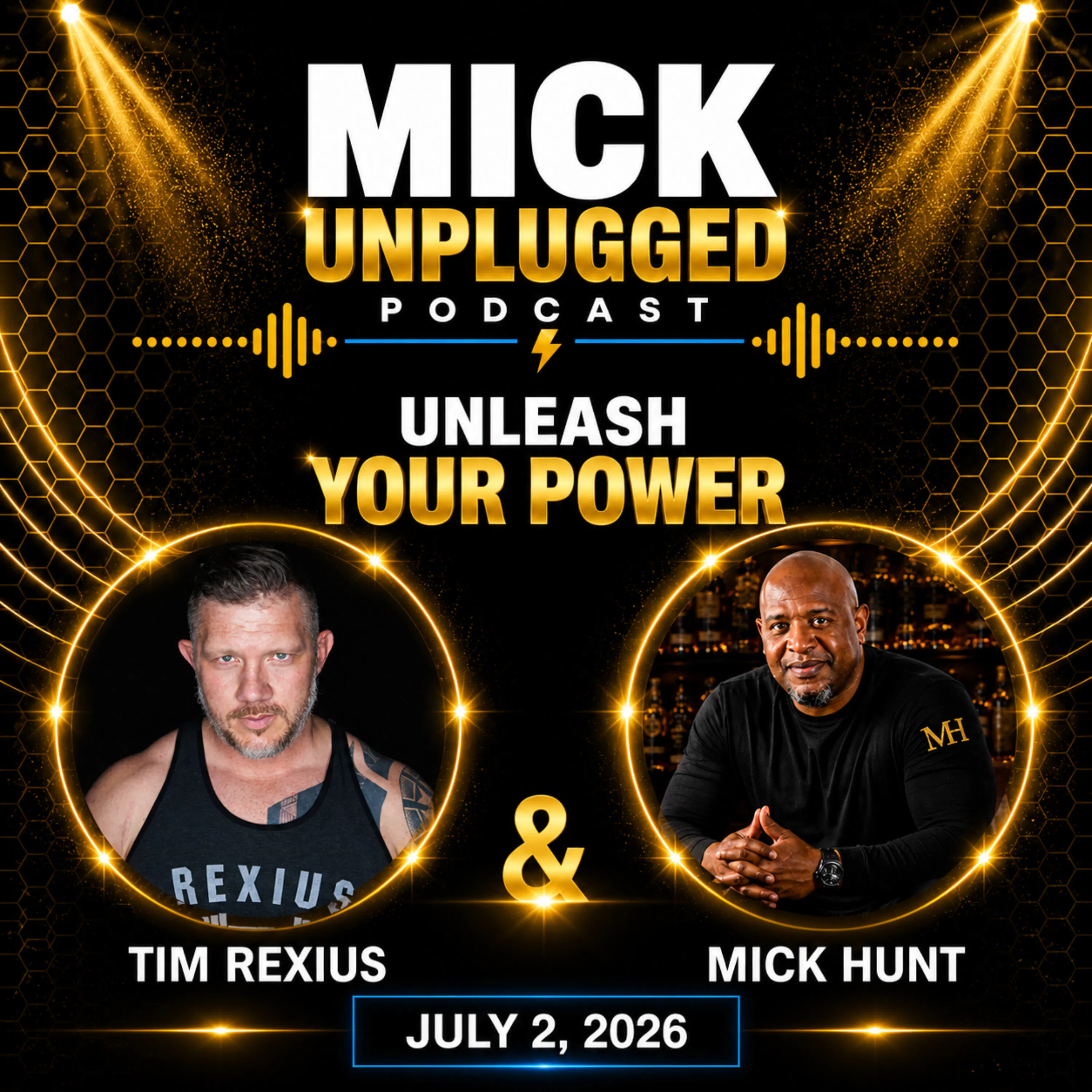 Unleash Your Power: Integrating Life & Work with Tim Rexius
Jul 2, 2026 · 51 min
Mick Hunt interviews Omaha entrepreneur Tim Rexius about partnership-based growth, work-life integration, fiscal discipline, and building Omaha Protein Popcorn.
 Service Above Self: A Memorial Day Tribute to the Heroes Who Defended Our Freedom
May 25, 2026 · 59 min
Mick Hunt's Memorial Day compilation revisits interviews with Robert Irvine, JoAnne Bass, Rob O'Neill, CZ Colón-López and Michelle Curran on service, purpose and leadership.
 How to Keep Going When Life Breaks You with Rickey Smiley
May 7, 2026 · 56 min
Mick Hunt talks with comedian and radio host Rickey Smiley about old-fashioned parenting, service, grieving his son Brandon, therapy, his memoir Sideshow, and cooking.
From the publisher
Your next difficult conversation may not need a stronger argument. It may need a better question. In this episode of Mick Unplugged, Mick sits down with his coach, Derek Gaunt, for a personal conversation about the communication skills that changed how Mick leads, negotiates, and approaches conflict. Derek draws on his law-enforcement and hostage-negotiation experience to explain tactical empathy: recognizing another person's perspective without having to agree with it. He breaks down why explaining too early creates resistance, how tone affects a conversation, and why an objection can point to a concern that has not yet been spoken aloud. Mick shares how asking what success looked like to a client uncovered a need he had missed. Derek also discusses the practical ideas behind Fight Less, Win More, the role of curiosity, and why difficult conversations often deserve a phone call instead of another long email. The conversation closes with lessons on coachability, silence, trust, and staying grounded under pressure. In this episode Why acknowledging a perspective is different from agreeing with it. How listening helps uncover the information missing from your assumptions. Why you should ask what success looks like before deciding what someone needs. What a hostage-negotiation training exercise reveals about tone and pressure. How unaddressed concerns can resurface after an agreement. Why Derek encourages live conversation for sensitive back-and-forth discussions. What coachability looks like when someone is already successful. How silence creates space to learn. Takeaways Before your next difficult conversation, replace one assumption with a question. Listen to the answer before preparing your response. Follow Mick Unplugged for more conversations about the because behind how we live, lead, and grow. Connect & Discover: Instagram: @derekmgaunt LinkedIn: @derek-gaunt-2943a824 Website: The Black Swan Group Book: Fight Less, Win More: How Master Negotiators Influence He…
Summary, chapters and key points were generated from the episode transcript on October 2, 2026. Quotes are checked word for word against the transcript.