
Couples Therapist: Why Your Brain Turns Your Partner Into An Enemy - Stan Tatkin -#1146
Episode of Modern Wisdom · September 5, 2026 · 1 h 9 min
Couples therapist Stan Tatkin tells Chris Williamson why attachment biology, threat memory and the absence of explicit agreements wreck long-term relationships.
Summary
Dr Stan Tatkin, a psychologist and couples therapist, argued to Chris Williamson that love should be "earned" daily through deliberate design rather than relied upon as a feeling. He described romantic adult partnerships as primary attachment relationships that echo the earliest caregiving bond, and therefore carry an unusually long memory and a survival-level intensity he called "the I can't quit you biology." Because feelings are fickle, he said, couples need a shared purpose, a shared vision and explicit agreements, and should plan for their "devils" rather than their "angels," borrowing the practice of predicting and preparing for failure from medicine, the military and business.
Tatkin explained the neuroscience he believes underlies chronic conflict: the subcortical salience and threat networks operate faster than executive function, so a partner's face can become a threat cue, and once arousal rises the brain diverts resources away from the ability to error-correct or consider the other's interests. He cited Robert Sapolsky's work on how little stress hormone it takes to stop caring about another person. Accumulated unrepaired injuries, he said, become long-term threat memory that intrudes on the present and sabotages attempts at future repair, drawing an analogy to intergenerational cycles of grievance between Israelis and Palestinians.
His central practical prescription was fast repair: apologise without qualification, for what the other person believes happened rather than what you think happened, ideally within 30 minutes, and continue until you can see the other person's face relax. He said memory itself is unreliable and reshaped by the present, so arguing over whose recollection is correct is futile. He also warned against conducting relationship business over phone or text, since the loss of face-to-face visual information sharply raises the error rate, especially under stress.
Tatkin distinguished true incompatibility — pointing in different directions on deal-breakers such as children, monogamy or transparency — from differences in interests or libido, which he considered manageable. He described curiosity as the antidote to the energy-conserving automation that makes partners assume they already know each other, shared that he and his wife Tracy have a rule allowing them to go to bed angry only if they touch toes, and directed listeners to the PACT Institute and a new video product, The Win-Win Couple.
Chapters
- 0:00
Earned love versus felt love
Tatkin reframes Williamson's "love by design" summary as earned love, achieved by designing a relationship that protects both people under stress.
- 1:36
Why romantic attachment is the hardest bond
Tatkin explains that adult romantic attachment mimics the earliest survival relationship, giving it a long memory and making breakups uniquely painful.
- 3:36
Purpose, vision and planning for your devils
He argues feelings are too unreliable a foundation and that couples, unlike militaries or hospitals, fail to predict, plan and prepare for what could go wrong.
- 9:50
Deal breakers and the role of agreements
Tatkin says big-ticket incompatibilities should be surfaced early and that social contracts and explicit agreements are all that keep people from harming each other.
- 16:56
Threat memory and the sensitised system
He describes how negative memory is favoured, how threat cues proliferate with repetition, and why quick repair prevents encoding into long-term memory.
- 28:06
The neurochemistry of losing your partner as an audience
Tatkin details the salience network, the resource cost of executive function under arousal, and co-regulation between partners.
- 32:54
Resentment, injustice and the past intruding on the future
He links sustained anger to injustice and helplessness, and explains how accrued memory sabotages couples' attempts to rebuild.
- 40:15
Memory's unreliability and distance communication
Tatkin argues present states rewrite memories of the past and warns against handling relationship conflict by phone or text.
- 46:42
What compatibility really means
He defines true incompatibility as irreconcilable direction on big-ticket items rather than mismatched interests or sex drives.
- 49:48
Attachment glue, features and bugs, and curiosity
Tatkin describes attachment as nature's glue, discusses his own marriage, and argues energy conservation kills curiosity unless rituals are built.
- 55:17
Mutual wounding and being an expert on your partner
He explains how partners poke each other's core vulnerabilities and why couples should treat themselves as a survival team.
- 1:02:53
Closing principles: repair fast and design the relationship
Tatkin gives his two headline recommendations and points listeners to the PACT Institute.
Key points
What was said, by whom, with the exact words. Timestamps jump to the moment.
- Stan Tatkin
Tatkin argues love must be earned daily through deliberate design of the relationship rather than relied on as a feeling.
“I think I prefer earned love, earned love on a daily basis by knowing how to hack the brain, the neuroendocrine system”
- Stan Tatkin
Tatkin says the adult romantic attachment relationship resembles the earliest survival bond, which is why it has such a long memory and why breaking up is so hard.
“the attachment system is actually an existential glue that holds us together. It's the, I can't quit you biology. We confuse it for love”
- Stan Tatkin
Tatkin states that love is not sufficient to maintain a relationship because feelings fluctuate and definitions differ.
“Absolutely not. No feeling is, because feelings come and go. And besides, who knows what your definition of love is?”
- Stan Tatkin
Tatkin argues couples need a shared purpose and vision not based on feelings in order to survive long term.
“you have to have first a shared purpose, a reason for being in this relationship, not based on feelings”
- Stan Tatkin
Tatkin says couples should plan for their worst selves rather than their best, as other institutions do.
“we plan on our devils, not our angels, right? Couples plan on their angel. That's a big mistake”
Listen from 7:17 · Relationship agreements and social contracts
- Stan Tatkin
Tatkin contrasts medicine's postmortems with couples' failure to review what went wrong.
“In medicine, we do postmortems, right? Let's not kill the patient again. But couples don't do that. They just repeat, repeat”
- Stan Tatkin
Tatkin argues couples are uniquely lacking in governance structures to protect each other from each other.
“Couples don't have any governance, any way of protecting each other from each other because they don't set it up”
Listen from 8:48 · Relationship agreements and social contracts
- Stan Tatkin
Tatkin says deal breakers such as wanting children or monogamy must be known in advance because they cannot be reconciled.
“deal breaker is, should be known ahead of time. I want a baby. I have to have a baby. You hate kids and let's get married”
Listen from 10:12 · Relationship agreements and social contracts
- Stan Tatkin
Tatkin explains that repeated unrepaired hurts expand the array of threat cues a partner scans for.
“I'm using pattern recognition to sweep the environment for cues. And every time you repeat something or we repeat something that's threatening, the array of threat cues that I'm looking for increase”
- Stan Tatkin
Tatkin says quick repair prevents a conflict from consolidating into long-term memory.
“Quick repair is a way to keep memory from going into long-term memory where it's the gift that keeps on giving”
- Stan Tatkin
Tatkin claims partners in close proximity detect each other's social-emotional cues faster than their own bodily states.
“we're psychobiologically wired in close proximity to pick up social emotional cues faster from the other person than we are from our own bodies”
- Stan Tatkin
Tatkin says rising arousal strips the brain of executive capacity because resources are diverted to the muscles.
“As soon as my blood pressure and heart rate go up to a certain level, my brain changes. I literally don't have a capacity to do that because the executive areas demand a lot of resources to run”
- Stan Tatkin
Tatkin identifies injustice and helplessness as the greatest causes of sustained anger and says unfair systems cannot last.
“One of the greatest causes of anger, sustained anger, is injustice, right? The other is helplessness”
Linked moment · 34:42Skip to 34:42 using a listen link in the info box.
Stan TatkinTatkin argues the only way to change the past is to change the future, since memories cannot be erased.
“You can't get rid of these memories and you don't want to”
- Stan Tatkin
Tatkin uses the Israeli–Palestinian conflict as an analogy for how accumulated justice-seeking memory traps both couples and nations in loops.
“They cannot get out of this loop because there are generations upon generations of memory where everybody is getting their justice”
- Stan Tatkin
Tatkin says present relationship quality retroactively reshapes how couples remember shared events, making memory arguments pointless.
“Their present state of mind changes our memory, which is why memory is completely unreliable, folks. If you're arguing about memory, you're engaged in something where you're both wrong”
- Stan Tatkin
Tatkin advises never handling relationship matters by text and limiting phone use to light exchanges.
“Never do relationship stuff or text. You send a picture of your goofy face, I love you, emoticons, what time's dinner?”
Listen from 42:33 · Texting and digital communication in relationships
- Stan Tatkin
Tatkin says couples under stress cannot discuss more than one topic or hold an emotional conversation while driving without it going badly.
“Like you and I under stress can talk about more than one topic without fighting. That's impossible”
- Stan Tatkin
Tatkin defines true incompatibility as irreconcilable positions on big-ticket items, not mismatched libido or hobbies.
“We're incompatible. We're not wrong, we're just incompatible. That's true incompatibility. Not you have a greater sex drive than I do”
Listen from 48:40 · Relationship agreements and social contracts
- Stan Tatkin
Tatkin says attachment biology, not the rationalisations people offer, is the main reason people stay in abusive relationships.
“that glue is likely to keep you in this relationship, and you'll justify it in all sorts of ways”
- Stan Tatkin
Tatkin argues energy conservation makes partners automate each other, so rituals and curiosity must be deliberately built.
“Curiosity is the flame. Curiosity is the dopamine”
- Stan Tatkin
Tatkin says partners are drawn to people whose behaviour fits their wounds, so they unwittingly poke each other's core vulnerabilities.
“we're both likely to have the bite that fits the other person's wound. We're not those people, but we kind of play them on TV”
- Stan Tatkin
Tatkin's primary recommendation is to repair to the other person's visible satisfaction, immediately or within 30 minutes.
“Repair, fix, make it right, make amends, properly, immediately, or within 30 minutes”
- Stan Tatkin
Tatkin describes his own rule with his wife permitting anger at bedtime provided they make physical contact.
“We can go to bed angry, but we have to at least touch toes. And that's harder than you might think”
- Stan Tatkin
Tatkin insists relationship arrangements must be explicit rather than implied because implied terms invite abuse.
“But it's all explicit. It's never implied, right? Because if it's implied... I'm going to abuse that reality”
Listen from 1:06:32 · Relationship agreements and social contracts
People
In the conversation
- Chris WilliamsonBritish podcaster and host of Modern Wisdom
- Stan TatkinAmerican psychologist, couples therapist and author, founder of the PACT Institute
Discussed
- Robert SapolskyStanford neuroscientist cited as a pioneer of public science education
- Tracy TatkinStan Tatkin's wife, referenced in his account of his own marriage
Topics
- Attachment theory
- Conflict repair in relationships
- Marriage and long-term partnership
- Secure functioning relationships
- Threat memory and hypervigilance
- Salience network
- Co-regulation
- Memory reconstruction and unreliability
- Relationship agreements and social contracts
- Apology and amends
- PACT Institute
- The Win-Win Couple
- Obsessive-compulsive disorder
- Israeli–Palestinian conflict
- Texting and digital communication in relationships
- Resentment in relationships
Related episodes
 Druski: They're Lying To You About Overnight Success!
The Diary Of A CEO with Steven Bartlett · Sep 24, 2026 · 1 h 49 min
Comedian Druski tells Steven Bartlett how an abusive childhood, a college dropout and an armed robbery shaped his pursuit of comedy greatness.
 Alanis Morissette: Anger, Attachment, & Postpartum
Call Her Daddy · Sep 9, 2026 · 1 h 5 min
Alanis Morissette tells Alex Cooper about her 1990s breakthrough, industry misogyny, attachment wounds, postpartum depression and the freedom of menopause.
- Fearful/Disorganized Attachment 101
Call Her Daddy · Aug 30, 2026 · 47 min
Alex Cooper concludes her attachment style series with a solo explainer on fearful (disorganized) attachment, trauma bonds, and healing.
 #880: Relationship Tools That Work — Esther Perel, Brené Brown, Dr. Sue Johnson, Terry Real, and More on Conflict, Repair, and Lasting Love
The Tim Ferriss Show · Aug 19, 2026 · 57 min
Tim Ferriss compiles advice from Esther Perel, Brené Brown, Brad Feld, Sue Johnson, Terry Real and others on sustaining long-term relationships.
 You’re Not Broken: Why You People-Please, Feel Anxious, & Never Feel Good Enough – and How to Heal
The Mel Robbins Podcast · May 21, 2026 · 1 h 12 min
Mel Robbins talks with psychotherapist Kelly McDaniel about 'mother hunger,' the unmet childhood needs for nurturing, protection, and guidance, and how adults can heal them.
 489: No Coincidence, No Story!
This American Life · Oct 19, 2026 · 1 h 1 min
Guest host Sarah Koenig presents listener coincidence stories—grandmothers, love, coins in the shower, lost fathers, and a pocketknife—while weighing skepticism against meaning.
More from Modern Wisdom
 How To Go Hard, Even When You Don’t Want To - Sam Sulek - #1157
Oct 1, 2026 · 1 h 41 min
Chris Williamson and bodybuilder Sam Sulek discuss training hard over optimising, married life, winter discipline, bodybuilding culture, self-coaching, and peptides.
 James Sexton, Matt McCusker & Rick Glassman - Mostly Wise #4 - #1156
Sep 28, 2026 · 3 h 2 min
Chris Williamson, divorce lawyer James Sexton and comedians Matt McCusker and Rick Glassman riff on marriage, prenups, sex, dating standards, politics in relationships, sitcoms and masturbation.
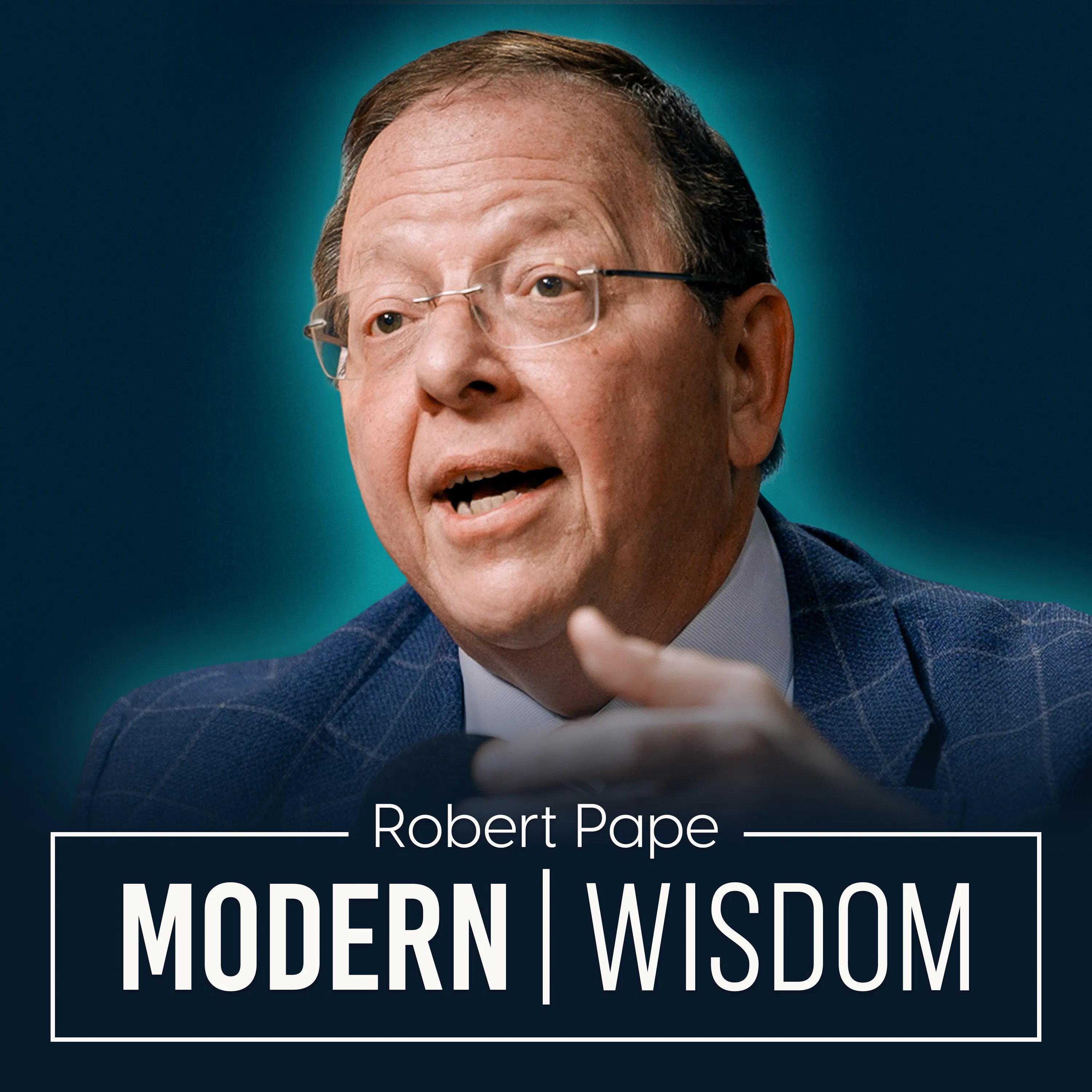 “This Will Be The Most Violent Election Of Our Lifetime” - Robert Pape #1154
Sep 24, 2026 · 1 h 43 min
Political scientist Robert Pape tells Chris Williamson that mass public support for political violence makes the coming US midterms the most dangerous election in living memory.
 The New Way For Ordinary People To Build Wealth - Tony Robbins - #1153
Sep 21, 2026 · 1 h 30 min
Tony Robbins and Christopher Zook tell Chris Williamson how ordinary investors can access private equity, sports teams and alternatives to diversify risk.
 Why Sydney Sweeney Has Two Big Targets On Her Chest - William Costello - #1152
Sep 19, 2026 · 1 h 8 min
Chris Williamson and evolutionary psychologist William Costello examine the backlash to Sydney Sweeney's Novig sports betting ad and why women in particular criticise her.
From the publisher
Dr Stan Tatkin is a psychologist, couples therapist, researcher and author. How can couples effectively navigate and repair emotional wounds? While many believe it’s best to sleep on a conflict, could repairing the rupture quickly actually be healthier? What other habits help a relationship not only survive conflict, but flourish? Expect to learn why romantic attachment relationships are neurochemically the hardest ones to navigate, if love is enough to maintain a relationship, what the most important agreements couples should make are, why it’s important to have the ability to repair disagreements quickly, why resentment tends to accumulate in relationships, if we learn to truly love ourselves even if no one else ever truly has and much more… Sponsors: See discounts for all the products I use and recommend: https://chriswillx.com/deals Sign up for a free trial from Shopify at https://shopify.com/modernwisdom Get up to 20% off Timeline’s leading longevity and cellular health supplement at https://timeline.com/modernwisdom Get up to $50 off the RP Hypertrophy App at https://rpstrength.com/modernwisdom Get 15% off your first order of my favourite Non-Alcoholic Brew at https://athleticbrewing.com/modernwisdom Get ChatGPT to explore ideas, solve problems, and learn faster at https://chatgpt.com Extra Stuff: See me live in the UK & Ireland this October: https://chriswilliamson.live/ Get my free reading list of 100 books to read before you die: https://chriswillx.com/books Try my productivity energy drink Neutonic: https://neutonic.com/modernwisdom Episodes You Might Enjoy: #577 - David Goggins - This Is How To Master Your Life: lnkfi.re/SN-Goggins #712 - Dr Jordan Peterson - How To Destroy Your Negative Beliefs: lnkfi.re/SN-Peterson #700 - Dr Andrew Huberman - The Secret Tools To Hack Your Brain: lnkfi.re/SN-Huberman - Get In Touch: Instagram: https://www.instagram.com/chriswillx Twitter: https://www.twitter.com/chriswillx YouTube: https://www.youtub…
Summary, chapters and key points were generated from the episode transcript on September 27, 2026. Quotes are checked word for word against the transcript.